
Basketball Half Court Printable: A Coach's Weekly Diagram Guide
Basketball half court printable: a practical weekly coach workflow to plan drills, scout opponents, and share diagrams with assistants and players using PDFs and boards.

Key takeaways
- Make the printable half-court diagram your weekly planning anchor to align staff and players.
- Standardize visuals so assistants, video staff, and players share a universal diagram for cohesive execution.
- Export as PDF or PNG and print to keep the diagram accessible on paper and screen.
- Pair diagrams with video clips or playlists to close the loop between planning and practice.
- Tailor diagrams to your league: adjust spacing for HS, NCAA, and FIBA style play.
Why printable half-court diagrams fit a coach's weekly workflow
From a coach's desk, a basketball half court printable is more than a pretty image—it's the daily driver of a winning week. It provides ready-to-print visuals to anchor your drills and scouting notes, so the plan you draw Sunday night translates into concrete practice blocks Monday through Saturday. You hand one diagram to an assistant, another to a video coach, and you all stay on the same page. In short, a printable half-court diagram becomes a true weekly planning anchor that travels from plan to chalk to court.
Consistency across staff and players is the big payoff. When everyone is looking at the same diagram, spacing, timing, and options stay aligned, even on busy days. A universal half court diagram translates into a shared language for your half court diagram and a matching basketball drills diagram, so the hallway chatter doesn’t drown the plan. It also pairs well with a PDF basketball court diagram that you print for scouting binders and post-game reviews.
These assets scale across levels: NBA, NCAA, FIBA—your diagrams can reflect different dimensional standards and pace, with blank templates ready for customization. A coach can swap in callouts for conference play, set plays, or transition cues without recreating the wheel. That flexibility makes the printable assets a long-term reference, not a one-season gimmick. Think of it as a living library of court visuals you can tune by level and matchup.
Finally, printable diagrams slot neatly into the workflow: in planning libraries, on the tactical whiteboard, and in short video clips linked to plays. You sketch a play on the whiteboard with BLOB/SLOB/ATO/PnR notations, export to PDF, print, and then share with your staff and players who review at home. The diagram visuals become anchors in weekly plans, scouting notes, and video playlists—simple, repeatable, and coach-ready.

From download to drill-ready: a practical workflow
Each week starts with selecting the right half-court variant—NBA, NCAA, or FIBA—based on the opponent and the drill focus. I grab a basketball half court printable diagram that matches the plan and concepts we’re teaching—spacing, reads, and ball-screen timing—and use it as the central anchor for the week. If we need a quick change, I swap in a new half court diagram downloaded earlier, keeping the flow intact with the rest of the scouting notes. Bold: half-court variant, basketball half court printable diagram.
From there I export as PDF (PDF basketball court diagram) or PNG and print it for the chalk talk or share the file with staff digitally so assistants can annotate on their own devices. This keeps the diagram accessible on both paper and screen, so everyone stays aligned during early-week walkthroughs and late-week adjustments.
Back in the plan, I attach the diagram to the weekly practice plan as a visual anchor, linking it to the day’s drills and progression. It keeps the “why” clear when we transition from warm-ups to team scenarios and lets assistants quickly pull up the same reference during meetings. Bold: visual anchor, weekly practice plan.
On the court, I annotate on the diagram using the tactical whiteboard—BLOB/SLOB/ATO/PnR notation—mapping rotations, spacing, and reads. The diagram becomes a live reference as we walk through counter-moves and decision points, so players know where to be and why. Bold: tactical whiteboard, BLOB/SLOB/ATO/PnR notation.
Finally, I pair the diagrams with video clips or playlists so players can study movements in motion, connect the visuals to what they see in practice, and review it later—keeping planning, scouting, and video in one cohesive workflow. Bold: video clips, playlists.
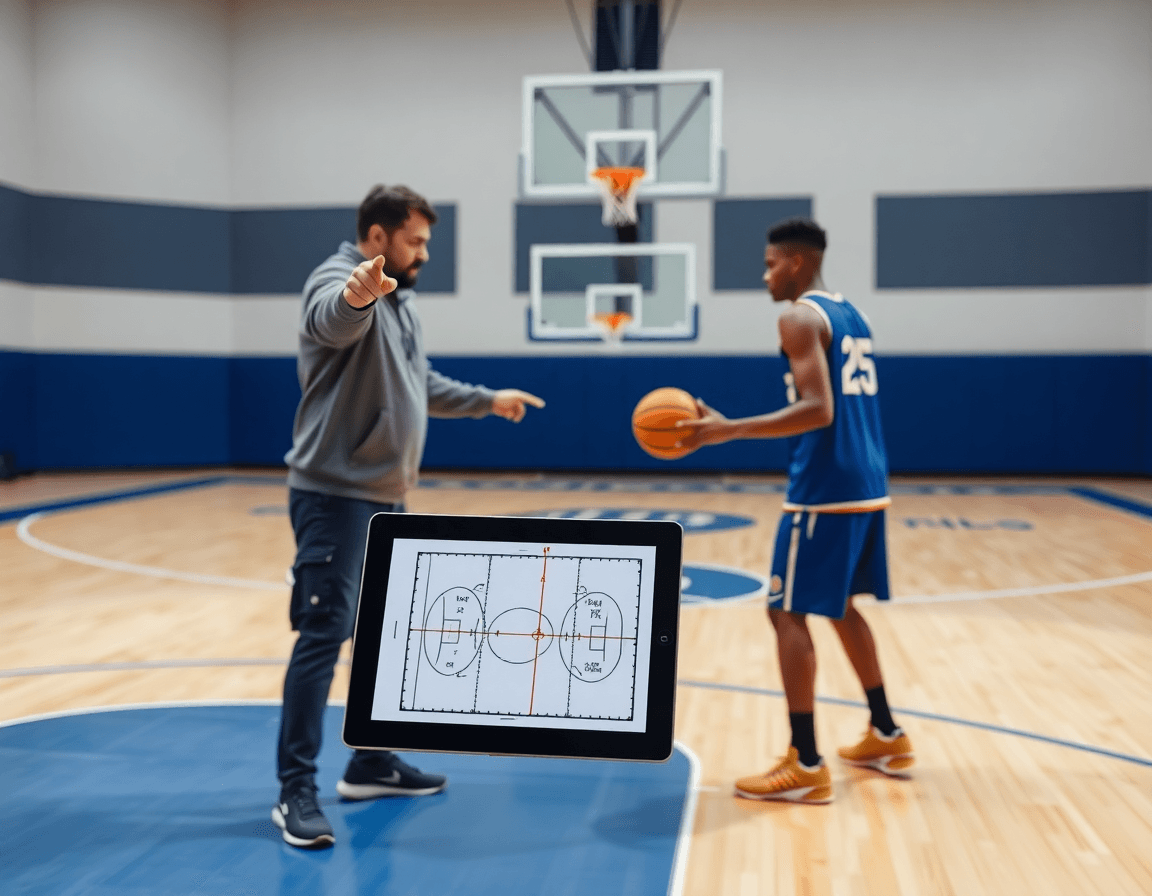
Tailoring half-court diagrams to your team and league
Tailoring half-court diagrams to your team and league starts with the markings. Adjust spacing to reflect HS, college, and international rules. For example, a clean NCAA half court diagram keeps rotations tight, while a FIBA half court layout nudges spacing to mirror international play. Those tweaks matter because they change how players read options and time their actions in a tight half-court sequence. Start with a consistent scale so the printable version matches what you draw on the whiteboard during practice.
Use blank templates to sketch your own plays and terminology. Start with a blank basketball court diagram and sketch your plays in your team’s language. As you annotate on the tactical whiteboard, keep the notation tight for assistants and players. Save your work as a PDF basketball court diagram for printing handouts and binders. When a scout or assistant asks about a setup, you can share the same diagram with clear BLOB/SLOB/ATO/PnR notes right on it.
Align diagrams with your team’s playbook and preferred terminology. Make the diagram a cornerstone of your weekly plan: it anchors drills, BLOB/SLOB/ATO/PnR sequences, and video clips linked to the same diagram. Align it with your playbook and your preferred terminology so assistants and players read from the same page. Export the week’s layouts as a PDF basketball court diagram and share a link to video playlists for quick review in between sessions.

Using diagrams for scouting and opponent prep
Each week, I start with a basketball half court printable loaded into the plan. On that diagram I embed opponent tendencies—where their guard pressures, how their big shows on ball screens, and their rotations in late clock. The board becomes the quick-reference during prep. We export the page as a PDF — a printable basketball court diagram — for printouts and quick handouts to assistants and staff on gameday.
From there, we translate those tendencies into scout plays on the half court to rehearse counter-actions. We sketch traps, rotations, and counters right on the diagram and run through them in walk-throughs. This is where draw plays on half court matter; it’s a living blueprint for what to expect and how to respond. We attach notations where needed to show the exact decision points.
Finally, attach notes and observations to the diagrams and share with staff for rapid collaboration. Our scouting notes—observations on tendencies, counters that worked in practice, and gaps we’ve spotted—live on the same diagram. With a couple of clicks, teammates can comment, adjust, and link to video clips or playlists for player review. The diagram becomes a living tool that evolves with the prep week.
Export, share, and annotate: PDFs, PNGs, and shareable links
Exporting diagrams to PDF or PNG makes it easy to print, share, and attach to your weekly plan. When I lock in a basketball half court printable for a drill, I save it as a PDF for the plan binder and as a PNG for quick drops into slide decks. This simple step turns a diagram into a ready-to-run asset that staff can reference during planning and review.
Shareable links let players and staff review on their own time. I generate a link to the diagram and attach the related video clips or playlists for that drill, so the shooter who’s recovering from an injury or the guard who missed film can still study the action. Use these links across the planning, scouting, and video workflows so everyone stays synced.
Annotate during practice review and tie diagrams to specific drill plans. On the tactical whiteboard, I drop notes in clear BLOB/SLOB/ATO/PnR language, then export or copy that annotated diagram into the current drill plan. The visuals become anchors for the week, guiding how we pair diagram work with live reps and subsequent scouting notes. A quick remark on a half-court diagram can pivot a drill from a routine to a game-ready sequence.
In a typical week, the workflow is fluid: update the basketball half court printable, export a PDF for printing, drop a PNG into the plan, share a link with assistants, and pair it with a short video clip for player review. The diagram visuals stay central, linking planning, scouting, and video into a cohesive cycle.
Weekly checklist: maximize impact of half-court printables
This weekly cadence makes the basketball half court printable actionable—diagrams become drill motions, not static pictures. The workflow ties planning, the tactical whiteboard, and video, using a few core visuals as anchors for the week.
Sunday: print the applicable half-court diagrams for the week’s drills and drop them into the weekly plan. I pull the latest looks from the diagram library, lay out the exact shapes, and hand PDFs to assistants so prep work starts early. The prints serve as quick references in the locker room and a backbone for practice scripts.
Tuesday: update scouting diagrams with any new opponent tendencies. After a light film session, I tag changes and push fresh notes into the scouting diagrams. Those updates feed the game plan and can be linked to PDFs or short clips for fast player review.
Thursday: integrate diagrams into practice plans and whiteboard sessions. We annotate on the tactical whiteboard with BLOB/SLOB/ATO/PnR notations, aligning each diagram with the drill sequence on the floor. It keeps the group on the same page during walkthroughs and live reps.
Friday: finalize notes and handouts for players and assistants. Crisp printouts get attached to the PDFs and paired with a short video clip playlist so everyone has a precise reference during prep and post-practice reviews.
End of week: review with staff and refresh playlists for player review. In a quick film-room debrief, we compare outcomes against the diagrams, prune what didn’t work, and refresh the video playlists for next week’s sessions.
If you build plans like this every week, CourtSensei keeps your drill library, whiteboard, and video clips in one place — try it free.
FAQ
What is a half-court diagram used for?
From a coach’s desk, a half-court diagram isn’t art—it's the playbook you carry to practice. It anchors your weekly plan, tying drills, scouting notes, and situational reps into one visual. Share it with assistants and the video staff so everyone traces the same spacing and options on chalk and on the court. When the diagram travels plan-to-court, your team stays aligned.
Where can I download printable basketball court diagrams?
Look for ready-to-use, printable options that cover HS, NCAA, and international courts. The best sources offer printable basketball court diagrams in PDF or PNG formats, plus blank templates you can customize. Download once, print handouts for binders, and share digitally with staff for quick updates.
Do you offer diagrams for high school, NCAA, and international courts?
Yes—diagrams exist for HS, NCAA, and international play. Start with a consistent scale, then tweak spacing and timing cues for each level. A labeled NCAA half court diagram and a FIBA half court layout keep your players reading options correctly in tight sequences, while your staff uses the same base diagram across opponents.
How do I print or export a half-court diagram and share with my staff?
To print or export, keep the file in a shareable format and choose the right size. I export as PDF or PNG, then print for chalk talks or hand out to staff. A digital copy lets assistants annotate on their devices and stay aligned during walkthroughs and reviews.
What markings are on a typical basketball court diagram?
A typical diagram carries standard court markings: boundary lines, center line, lane and free-throw area, 3-point arc, and hash marks. You’ll also include play callouts like BLOB/SLOB/ATO/PnR so players see spacing, timing, and reads at a glance. Clear markings keep drills translating from whiteboard to game-speed actions.
How can I draw plays on a half-court diagram and tailor them to my team?
Draw plays directly on the half-court diagram using clear coaching notation and a language your players understand. On it, map rotations, spacing, and reads with BLOB/SLOB/ATO/PnR so the team rehearses the exact action. Save it as a PDF for handouts and pair with video playlists for review.