Basketball Practice Template: Build Your Weekly Plan
Master a basketball practice template to structure weekly plans—warm-ups, drills, team concepts, and film review for HS/club coaches.

Key takeaways
- Build a reusable six-block template (Warm-up, Skill Development, Team Concepts, Scrimmage, Conditioning, Cool-Down) to standardize weeks.
- Time management matters: use both 60-minute and 90-minute plans to cover season phases and adjust emphasis.
- Anchor plans to season goals; tailor drills for defense and transition offense, keeping assistants aligned throughout the week.
- Save blocks as reusable templates and label progressions as blocks to reuse across opponents; build Playlists for quick assembly.
- Attach video clips to drills and link scouting notes to plan blocks, shaping reps around opponent tendencies.
- Adopt a practical workflow: plan, run, and refine with Practice Plans and Video Clips, then export for sharing.
Build a weekly basketball practice template you can reuse
Building a weekly basketball practice template you can reuse starts with a reliable skeleton. I load up the Practice Plans module and map a standard 6-block structure: Warm-up, Skill Development, Team Concepts, Scrimmage, Conditioning, Cool-Down. Each block has a couple of drills and a clear progression path. With the centralized library, I pull in proven drills, tailor them for the week, and save everything as a template for future use.
Time management matters. Use both 60-minute basketball practice plan and 90-minute basketball practice plan to cover different levels and phases of the season. A shorter day emphasizes sharp transitions and execution; a longer window lets you install two or three concepts more deeply.
Anchor the plan to season goals and position-specific needs. If the focus is defense and transition offense, I slot more drills into Skill Development for closeouts and outlet passes, and tilt Team Concepts toward pressure on ball handlers. The template keeps that intent clear across the week and helps assistants stay aligned.
Save blocks as reusable templates to accelerate future weeks and opponent-specific tweaks. That means I can label a drill progression as a block and reuse it across opponents. In the library, drills, progressions, and notes stay organized, so you’re never digging for the right worksheet.
Workflow in practice: in the plan, I drop a Whiteboard diagram for a pressing trap, attach a short Video Clips showing a shell drill, and jot a scouting note about the opponent’s zone alignment. When Friday rolls around, I export a PDF to share with assistants and players—clear, consistent, scalable.
Create a reusable plan library that your staff can access
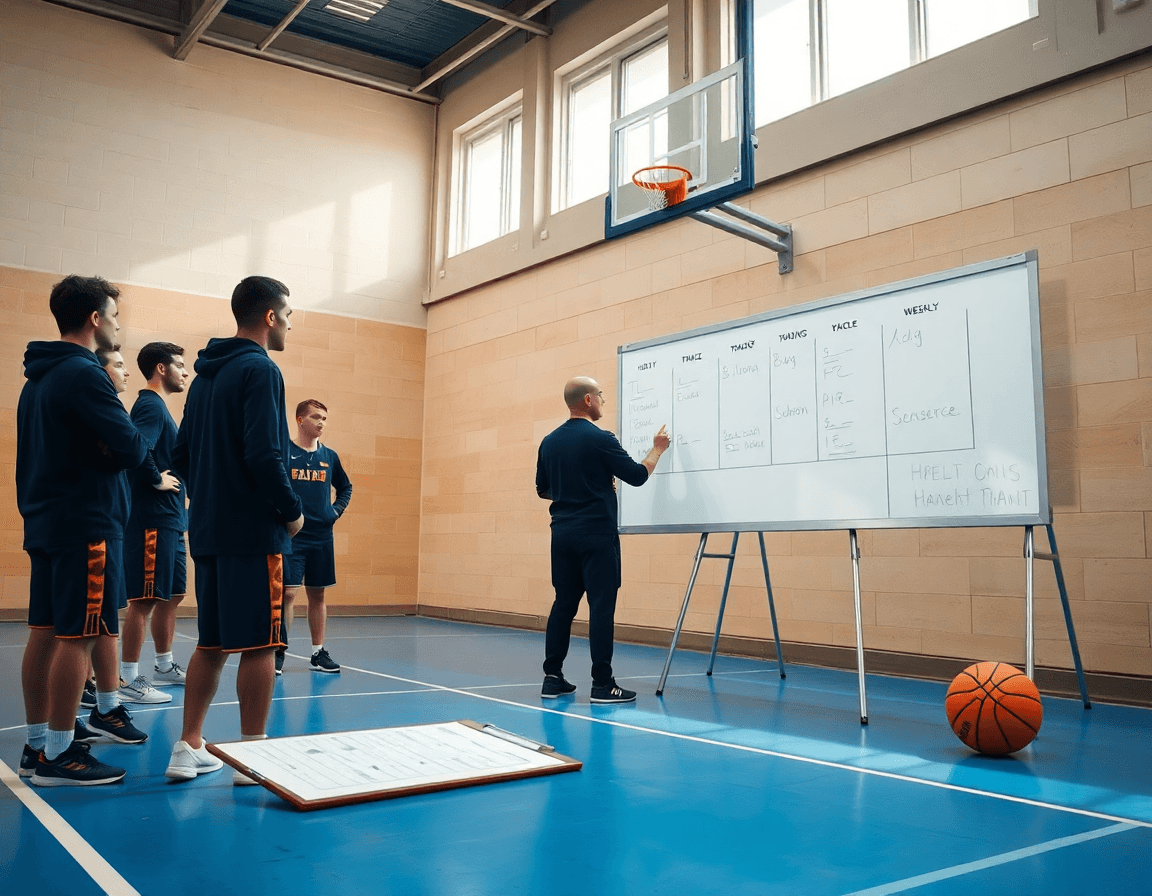
As a head coach, I start the week by building a reusable plan library that the staff can access. In the plan, I map each block to a set of drills and plays (BLOB/SLOB/ATO/PnR) that we’ll reuse. Think of this as a basketball practice template that scales: one proven sequence can become a few Playlists for different groups, with Practice Plans serving as the backbone of the week.
Every item in the library carries a single path: attach instructions, reps, and time allocations to each drill or play for consistency. This keeps assistants aligned whether they’re running a 60-minute or 90-minute session. If you’ve built a solid drills plan template, you’ll see the effect in daily execution, and you can add links to short video clips for quick visual cues.
Sharing is where the library proves scalable. Plans can be shared via secure links or exported as PDFs (PDF export) to keep everyone on the same page, from assistants in your gym to staff at away venues. This is how a weekly plan stays consistent, no matter who is running it.
Tag and categorize drills by skill, age level, and game situation to speed planning. A few consistent tags let you pull a 60-minute or 90-minute practice plan template in seconds, then drop them into your weekly block. This is where the 'playlists' concept shines, letting coaches assemble related sets without reinventing the wheel. Use Tags and Categories to organize drills by the cues you actually use on the floor.
Finally, reuse past practices as starting points and adapt them for the current opponent. A single, proven combo—like a ball-screen action against a 4-out look—can be repackaged for a different age group or tempo. By keeping a living library, you’re not rebuilding from scratch; you’re refining with scouting notes and video clips that you drop into the plan.
Incorporate video and scouting into the weekly plan
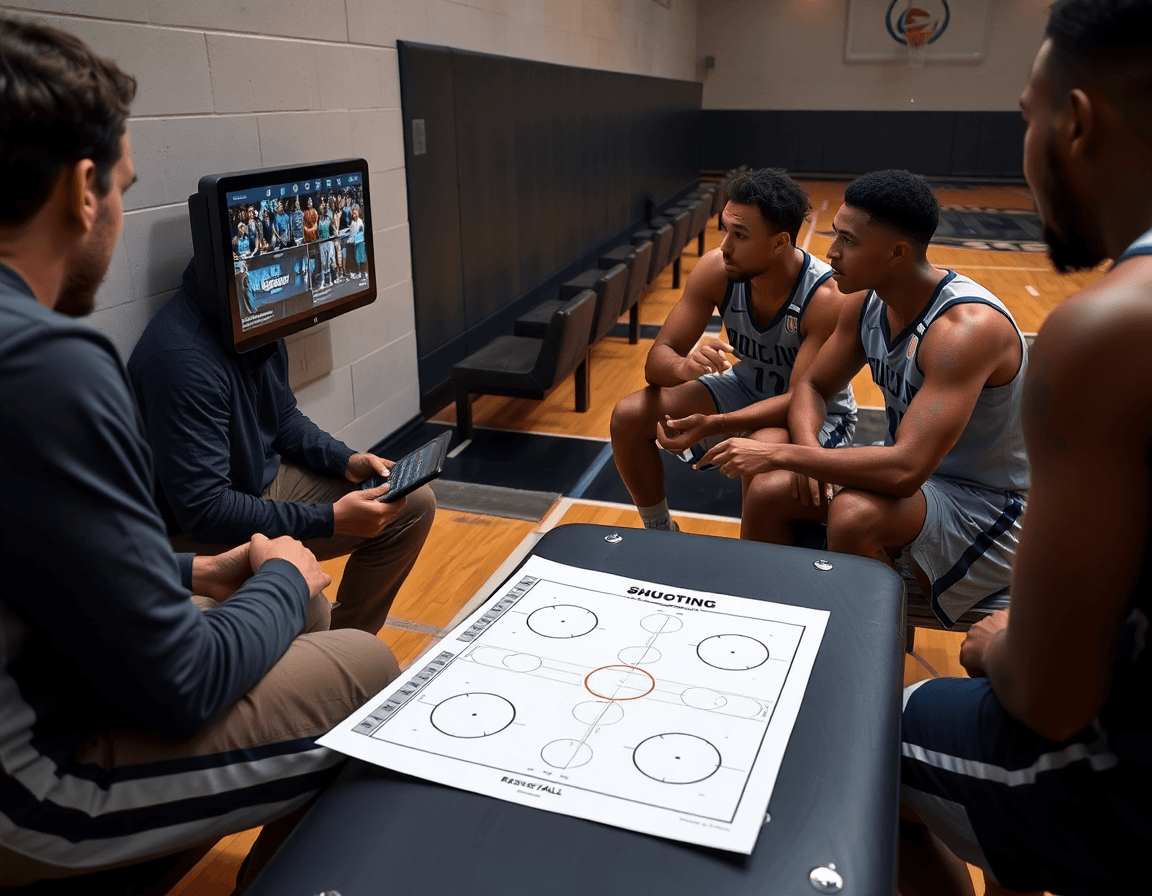
In the weekly basketball practice template, you’re not just jotting down drills—you’re layering context that players can actually see and feel. Attach video clips to drills and plays to provide visual references for players. For a ball-screen sequence, I drop a clip from Friday’s game right into the drill block so the guys understand spacing and timing before we even start reps. This is the kind of concrete link between planning and execution that keeps our basketball drills plan template tight and actionable.
Next, link scouting notes to plan blocks to tailor practice to opponent tendencies. If scouting reports show a team struggles with pressure in the half-court, I connect a “pressure defense” plan block and annotate the drill with cues that address that weakness. The goal is to have a living plan that nudges decisions on the floor based on what we saw a week ago, not what we hope happened. This is where scouting reports feed straight into our practice flow, so every rep has a purpose.
Organize video into playlists for quick on-floor access during sessions. I’ll prep a pre-practice playlist for warm-ups, a post-practice clip reel for quick review, and a scout-playlist that corresponds to the night’s opponent. When time is tight, players can flip to the right clip without missing a beat, keeping the tempo high and the learning tight.
Finally, use embedded plays and motion diagrams to clarify diagrams and actions on the whiteboard. On the board, we pull up an embedded play, trace the motion with arrows, and confirm reads with a quick pass-through drill. This integrated approach—video clips, scouting notes, playlists, and clear whiteboard visuals—drives coherence across the weekly practice plan.
Practical workflow: plan, run, and refine your weekly template
Your weekly basketball practice template is the backbone of how I coach. CourtSensei keeps the core workflow tight: build blocks in Practice Plans, store them in a reusable library, attach drills and plays, link Video Clips, and export or share with assistants. When you have this template in place, your practice plan timeline becomes predictable, scalable, and repeatable from week to week.
Step 1: Plan the blocks and time allocations for the week. I map a weekly rhythm: 15–20 minutes of dynamic warm-up basketball, 30–40 minutes of skill blocks, 15 minutes of team concepts, and a 10–15 minute scrimmage. In a 60-minute or 90-minute session, this spine sits on the Whiteboard as a visual plan, with each block tagged and ready to run.
Step 2: Run the practice with the team, using the template as your guide. On court, I pull plays from the library, diagram BLOB/SLOB/ATO/PnR on the Whiteboard, and drop in short Video Clips for quick feedback. The template keeps us moving with purpose instead of chasing moments.
Step 3: Log what worked and what needs adjustment in a simple practice log. I note timing, player buy-in, and whether a drill translated to game reps. Those notes feed into scouting reports and team concepts, so the next week’s run starts faster and tighter.
Step 4: Iterate the template for the next week, reusing and updating blocks as needed. The library grows with new drills and adjusted plays, keeping the plan fresh. Step 5: Share the updated plan with assistants and players via secure links or PDFs. A quick export helps the team stay aligned and moving toward the weekly goals.
Tailor templates by age and level with dynamic warm-ups and progression
As a coach, I tailor our basketball practice template to the players in front of me. The core workflow—Plan blocks, pull drills and plays from the library, link video clips, and share with assistants—works, but it only thrives when you tilt it by age and level. Start with dynamic warm-up basketball to wake the hips and ankles, then flow into skill work and team concepts.
Adjust block lengths and intensities for youth, high school, and college levels. Youth players benefit from shorter blocks (4-6 minutes) and lighter loads, with plenty of rest to absorb new movements. At the high school level, many teams run a 60-minute basketball practice plan or a 90-minute option, with sharper transitions and more reps. College squads push longer blocks (8-12 minutes) and game-like reps to sharpen decision-making. If time is tight, include 5-on-0 walkthroughs and 5-on-5 half-court options depending on objectives.
With workflow in mind, use the Practice Plans library to store templates and clone them for weeks. Attach drills and plays inside each block, and link video clips to show exactly what the drill looks like. Then export to PDF to share with assistants or run a quick staff meeting. This approach also supports season-long progression by gradually increasing complexity and game-like reps.
Picture this: a gym buzzing as we kick off with a dynamic warm-up basketball, then run through a 90-minute basketball practice plan. We start with 3 short blocks (6–8 minutes each) focused on ball handling, footwork, and decision-making, then a 5-on-0 walkthrough, followed by 5-on-5 half-court reps to lock in reads and spacing. Afterward, the team huddles to recap adjustments for the upcoming game.
Print, export, and share your weekly template
After I lock the weekly template in CourtSensei, I generate printable templates for the floor and for a quick staff huddle. This weekly basketball practice template keeps us aligned across sessions. The exportable PDFs capture drill names, durations, and notes, so an assistant can run a 60-minute basketball practice plan without me at the clipboard. It makes the week scalable and keeps everyone on the same page.
Then I push a couple of shared links to the plan and the video playlist. Anyone with the link can pull up the Practice Plans, leave a note, or grab a diagram from the Whiteboard. This workflow fits right into our practice planner app, especially on travel days when the staff needs to stay aligned without a long chat.
I attach a short video playlist and scouting notes to the week’s template so, during a timeout, I can pull up a clip—say a ball screen option or a defensive rotation—and show it to the group. The Video Clips module makes this quick; coaches can link to the clip, annotate with notes, and save it to the player's packet.
Finally, a simple practice log helps close the week. I jot what clicked, what needs refinement, and a couple of action items for next week's plan. With the log, I can quickly review progress, adjust the practice plan timeline, and go into the next cycle with a clear path for the team.
If you build plans like this every week, CourtSensei keeps your drill library, whiteboard, and video clips in one place — try it free.
FAQ
What should a basketball practice template include?
A solid basketball practice template includes a clear weekly rhythm built around a 6-block structure: Warm-up, Skill Development, Team Concepts, Scrimmage, Conditioning, and Cool-Down. It should specify drills, reps, and time allocations, plus weekly goals. Add linked video clips and scouting notes, and keep a reusable library for easy future use—this is your basketball practice template.
How long should a basketball practice last for different ages?
Target 60-minute sessions for youth or beginners and 90-minute blocks for older players or tougher weeks. The shorter format sharpens transitions and execution; the longer window lets you install two to three concepts more deeply. Start with a dynamic warm-up and a tight shooting block to stay on schedule, then adjust minutes based on goals.
How do you structure a basketball practice for maximum efficiency?
Start with a tight flow: Warm-up, Skill Development, Team Concepts, Scrimmage, Conditioning, Cool-Down. Time-box each block to keep momentum and make roles clear for assistants. Build a centralized library of drills and plays—attach video clips and whiteboard cues to each block. Reuse past blocks as templates, naming them as Playlists within Practice Plans for quick setup.
How can I reuse past practices to save planning time?
Treat past practices as a living library. Save blocks as reusable templates and tag drills by skill and game situation. Reuse sequences for different opponents, age groups, or tempos by swapping cues. Attach notes, video clips, and scouting insights so new weeks start from solid starting points instead of rebuilding—your reusable library becomes fuel for efficiency.
What is a dynamic warm-up for basketball?
A dynamic warm-up is movement-rich prep that raises heart rate and primes multiple muscle groups before practice. It blends activation drills (glute bridges, lateral shuffles), mobility (leg swings), and sport-specific movement (cone-to-cone runs). Aim for 5–10 minutes so players are ready without fatigue. Pair it with a quick mobility reset if needed, and connect to your first block.
Which skills should I prioritize in a weekly basketball practice plan?
Prioritize a balance that fits your team: defense and transition, ball handling, spacing, and shooting mechanics. In a weekly plan, devote more time to the areas showing the most need—closeouts, outlet passes, and decision-making. Use a rotation that cycles through individual skills, team concepts, and live reps in 60- or 90-minute blocks.