2-3 Basketball Offense: Weekly Zone Attack Plan for Coaches
Coaching guide to the 2-3 basketball offense: a weekly workflow to plan, diagram zone attacks, review video clips, and tailor scouting for opponents.

Key takeaways
- Integrate 2-3 zone offense concepts into your weekly plan to standardize practice and reps.
- Start with general zone concepts, then layer in reads like high post and skip pass to keep spacing.
- Emphasize ball movement and quick skip passes to the weak side to stretch the zone.
- Follow a 5-step weekly cycle: Plan, Diagram, Clip, Scout, Share for repeatable execution.
- Balance interior entries with perimeter movement, avoid early threes, and tailor reads via opponent scouting.
Why the 2-3 Zone Offense fits into a weekly plan
Consistency: integrate zone-attacking concepts into your standard weekly practice plan. The 2-3 zone offense gives you a stable framework, so players and assistants know what we’re repping every session. In the plan, we install the zone attack basics, then layer in options as the week unfolds.
Progression: start with general zone offense concepts, then layer in specific plays as the season and scouting dictate. Emphasize high post reads and the ability to skip pass to the weak side. We pace drills from ball reversals to more advanced actions—all tracked in the weekly plan.
Rebounding and ball movement: stress second-chance opportunities and quick ball movement to stress the defense. The zone attack thrives when the ball moves from the top to the baseline/short corner, and players learn to attack the gaps quickly after a drive. Short video clips from practice help reinforce the sequence on the whiteboard.
Coordinate with assistants: assign roles for scouting notes, diagramming, and clip curation. In the plan, one coach handles scouting notes, another diagrams a zone attack on the whiteboard, and a third curates video clips for quick player feedback. This setup keeps the weekly workflow clean and repeatable.
Product tie-in: feed the routine with practice plans and syncing features to keep the workflow aligned with your game plan. A tight loop—planning, diagramming on the whiteboard, a quick video clip, and a scouting note—lets you execute the 2-3 zone offense with confidence. Week over week, you’ll see the plan translate to better spacing and more efficient possessions.

Core concepts to exploit against a 2-3 in a weekly cycle
During the weekly cycle, I map out the 2-3 offense in the plan, diagram the zone attack actions on the whiteboard, and pull clips that illustrate our reads. The first staple is using a high post entry to pull the weak side into action, creating lanes for a skip pass. We label this in our plan as a core read to practice with a short corner feeder and a baseline cut. Bold terms to lock in: high post and skip pass.
Next up, we stress how to attack the gaps with timely passes and dribble penetration to collapse the defense. Our film notes highlight quick floor balance and smart ball movement as the trigger for driving gaps and kicking to shooters. In drills, we simulate the exact sequence: reverse ball, punch a pass to the middle, then a decisive skip to the opposite corner. This is where the concept of ball movement becomes non-negotiable.
Screening the zone is the third pillar, with emphasis on offensive rebounding to sustain pressure. We practice set pieces that free the weak side and create second-chance looks, pairing screens with aggressive pursuit of misses. The goal is to keep bodies moving and secure the glass, so the defense isn’t allowed to reset. Think of it as combining Screen the zone with relentless offensive rebounding.
Balance interior entries with perimeter movement to avoid stagnation. We balance post feeds and skip passes with off-ball actions from the short corner and baseline, preventing predictability. Our scouting notes feed this idea, showing where a 1-3-1 or overload alignment pressures the zone. Emphasize patient, deliberate spacing and a steady rhythm between inside and outside looks, keeping the defense guessing with smart reads and consistent practice.
Avoid forcing threes early; prioritize patient, smart ball movement. We teach players to value the quality of each touch, not the clinic of early shots. When the ball finds an open three, take it; if not, reset with purposeful passes and two feet in the paint before re-spreading the floor. The rhythm is clear: keep moving, stay patient, and let the team’s collective reads drive the offense. Bold: ball movement and threes.

Practical workflow: 5-step weekly cycle to implement
Step 1 — Plan: in your weekly workflow, start by building or adapting your 2-3 offense plays inside the practice plan. Name them for quick recall—Carolina, Zone-1X, overload—and tie each to how you want the team to attack the gaps and hit skips off the high post. This is where you set the tempo for ball movement and decision timing, not just drills.
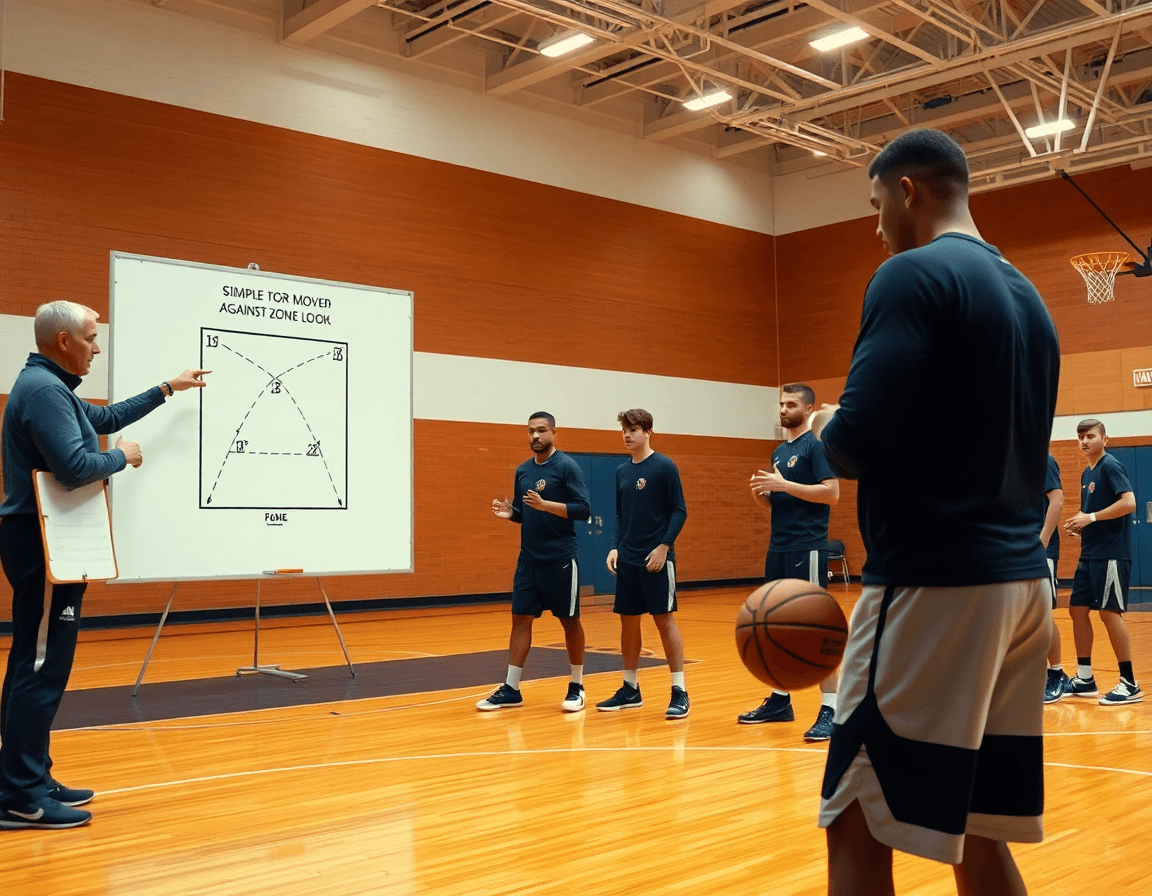
Step 2 — Diagram: on the whiteboard, sketch zone-attack actions (BLOB/SLOB/ATO/PnR) and the flow from entry to attack, then export or share with assistants. You’re mapping reads and spacing as you would in a real game, so the team sees clear routes for ball reversals and skip passes that loosen the defense.
Step 3 — Clip and review: pull game/training clips that illustrate successful zone-entry, high-post actions, and skips. Break them down by concept—ball movement, skip pass timing, and attacker angles—and discuss what changed when the defense rotated. A quick highlight reel in a short clip can lock in the idea before you try it in practice.
Step 4 — Scout and tailor: assemble opponent scouting reports focused on 2-3 zone tendencies to inform adjustments. Note where baseline/short corner options, overloads, or screen the zone pressure gave your players options to attack the gaps, and plan tweaks you’ll test in the next session.
Step 5 — Share and assign: create playlists of clips for players, circulate links, and track comprehension. Give each player a few clips to study, then check understanding with a quick drill or live decision-making rep during the week.

Diagram and template: turning plays into repeatable diagrams
Use a whiteboard-based diagramming approach to map BLOB/SLOB/ATO/PnR actions against a 2-3 defense. Start with repeatable visuals that show how entry points—like a High Post Entry or a skip pass to the weak side—influence ball movement and gaps that the offense must exploit. This is how a weekly plan becomes a living diagram you can teach week after week, not a one-off play call.
Create templates for the core actions and label them consistently. Think High Post Entry, Skip to Corner, Baseline Cut, and Baseline/Short Corner movements as your baseline diagrams. Keep a library of these zone-attack diagrams so you can pull the right sequence for different scouting reports or opponent tweaks. When you’re naming, stick to a clear vocabulary so assistants and players can recall quickly in drills.
Export PDFs of the diagrams for assistants and players, and store them alongside your practice plans. The goal is to have a ready-to-share library that honors your weekly workflow: plan in advance, diagram on the board, and hand out the PDFs for review. Align the diagrams with your plan so players see the same actions on the board that you’ll work through in practice. A short video clip after you diagram helps reinforce the motion, and a quick scouting note can tailor the diagram to a specific opponent.
In the 2-3 zone offense, you’ll repeatedly work concepts like attack the gaps, overload looks, and screen the zone. Use these visuals to teach the rhythm of 1-3-1 offense quirks or variations, always tying back to the plan on the board and in drills.
Video and scouting: tailoring the attack to each opponent
Video and scouting: tailoring the attack to each opponent
In the weekly workflow for the 2-3 offense, you start with collecting opponent scouting reports focused on 2-3 tendencies: gaps in the zone, weak-side rotations, and rebounding spots. These insights become your map for the week, guiding where you emphasize adjustments in practice. When you populate the plan, tag these as opponent adjustments and attach specific drills and sequences to address them. The goal is to translate scouting into concrete actions on the floor, not just notes on a page.
Link video clips to specific concepts so players study concrete examples. For every scouting finding, pull clips that highlight high post reads, skip passes over the top, and the ball movement that freezes the defense. Tie each clip to a concept—whether it’s overload cues or baseline/short corner options—so players can study in their own playlists. If a clip shows a precise action against a particular alignment, tag it accordingly and drop it into the practice plan for quick reference.
Use clips to illustrate both successful actions and breakdowns to accelerate learning. A clean sequence where the high post entry leads to a clean skip pass, versus a misread that triggers a weak-rotation scramble, gives you live teaching moments. Show the contrast: the overload setup that forces the defense to react, and the breakdowns that teach players when to attack the gaps or reset with ball movement. These observations feed your player playlists and scouting notes, so everyone sees the same language around the 2-3 zone.
Adjust weekly practice emphasis based on scout findings. If the opponent leans into a strong weak-side rotation, you stress reads from the high post and quick skips to punish that lane. If rebounding off the baseline/short corner becomes a concern, layer in box-out and timing drills into your plan. This is how you turn a weekly scout into a sharper, more precise attack against that opponent.
Playlists and sharing: turning clips into player-ready learning
In my weekly workflow for the 2-3 basketball offense, I turn video into action-ready learning by building labeled playlists around concepts like high post, skip pass, ball movement, and baseline/short corner. These playlists aren’t just a folder of clips—they’re the backbone of planning, making it easy to pull a concept from scouting to drill in one clean sequence during the plan.
I tag clips for quick access with terms like “attack the gaps,” “screen the zone,” “overload,” and “1-3-1 offense.” When I diagram a zone attack on the whiteboard, I pull clips that illustrate the same concept and drop them into the corresponding playlist. It’s a tight loop: plan in the schedule, diagram the action, then lock in the clips that show the exact read and reaction.
Shareable clips matter here. Shareable links let players study clips on their own time, reinforcing understanding without waiting for the next film session. The video sharing workflow keeps everything aligned—from the practice plan to a short clip a player can rewatch between drills.
I assign clips to players or groups to target roles: guards for ball movement and skips, forwards for post entries, and wings for cutting actions. This isn’t random distribution—it’s targeted development, driven by the week’s zone attack focus. When a player logs in, they see their personal playlist and the broader team playlist that ties into the weekly plan.
Finally, I track engagement to close the loop. I can see who opened which clips and when, then follow up with targeted drills in the plan for the next session. It’s about turning passive viewing into deliberate practice—hunting for mastery in the concepts like high post, ball movement, and attack-the-gaps through structured playlists and thoughtful video sharing.
If you build plans like this every week, CourtSensei keeps your drill library, whiteboard, and video clips in one place — try it free.
FAQ
What is the best way to initiate offense against a 2-3 zone?
Start with a high post entry to pull the zone and create gaps. Use a quick skip pass to the weak side after a ball reversal. Emphasize ball movement and decision timing. Early looks to the top and short corners keep the defense off balance. Rehearse the sequence until reads become automatic.
How important is shooting from the high post against a 2-3 zone?
It's critical, not just for a shot but for decision space. A confident high post presence forces defenders to collapse, opening weak-side shots and cuts. Train reads: if the high post is covered, swing quickly to the corner; if the lane opens, drive and kick.
Can I beat a 2-3 zone with just dribble penetration?
Dribble penetration helps but needs support actions: drive-and-kick, skip passes, and a strong weak-side shooter. The defense will close lanes; you must collapse the middle then reverse to shooters. Don’t rely on one action; combine reads and ball reversals.
What are the key weaknesses of a 2-3 zone that offenses should target?
Look for gaps between the top and corners, offensive rebounding, and slow rotations on misses. Attacking the middle with high-post actions creates driving lanes; quick skip passes keep the defense stretched. Short, multi-action sequences beat the 2-3 more than a single move.
How can I improve my team's passing in a zone defense?
Drill for crisp, rapid ball reversals from top to weak side; emphasize passing lanes and two-pass sequences to reset. Teach call-and-response communication so players know when to skip and when to reset. Clip-based feedback reinforces timing and accuracy.
Are there specific offensive sets designed for the 2-3 zone?
Yes. Use overloads, BLOB/SLOB entries, and high-post actions to create angles against the 2-3. Tailor the plan to your scouting report, with weekly templates that repackage these concepts into repeatable actions. Practice the setups until players own the reads.