4-out 1-in motion offense set plays: weekly coach workflow
Learn practical 4 out 1 in motion offense set plays and a weekly coaching workflow—from planning and scouting to video review and shareable playlists today.

Key takeaways
- Start with a clear weekly install plan for the 4-out 1-in motion offense, mapping daily looks.
- Allocate practice blocks to core actions (BLOB, SLOB, ATO, PnR) and emphasize spacing.
- Use the whiteboard to map reads, then connect actions to live drills for consistency.
- Build a PDF print-and-teach library and share it with assistants for on-spot reference.
- Create a video clip library and tag actions for quick retrieval during reviews.
Understanding the 4-out 1-in motion offense set plays
At its core, a 4-out 1-in motion offense set plays places four players on the perimeter and a single post on the weak side. That geometry creates spacing and multiple entry points for action. The weak-side post sits in a high-value area, ready to flash for the ball or set a screen, while the rest of the floor flows as distributors and finishers.
Spacing around 18 feet is critical. It pulls defenders away from the lane and gives the driver clean angles to attack or to skip-pass to the weak-side post. Keeping the post in that high-value area also supports quick post feeds if help comes to the ball.
Common actions in this frame include BLOB/SLOB/ATO/PnR. These actions generate quality shot opportunities by combining misdirection, ball movement, and decisive reads. BLOB/SLOB get you clean out-of-bounds entries; ATO sequences tighten the defense after a stoppage; PnR with the weak-side post creates pressure on the ball-handler and opens kick-out options.
To keep pace with defensive adjustments, frame coaching reads and reactions as part of the weekly routine. Use the planning library to stage drills that stress reads off the ball, live-ball handling, and post-entry timing. On the tactical whiteboard, mark cues for when to reverse, drive, or flare the post. And build a short video clip set showing real-time reads to reinforce decision-making.
Practical weekly workflow step: install and practice the 4-out 1-in offense
Pre-week, the plan starts with outlining install goals and assigning plays to each day. This is where weekly planning comes into play, mapping the 4-out 1-in motion offense set plays to the five practice blocks. You mark which looks go on which day and prepare diagrams that teammates can study before the sessions. The result is a clear blueprint that keeps the staff aligned.
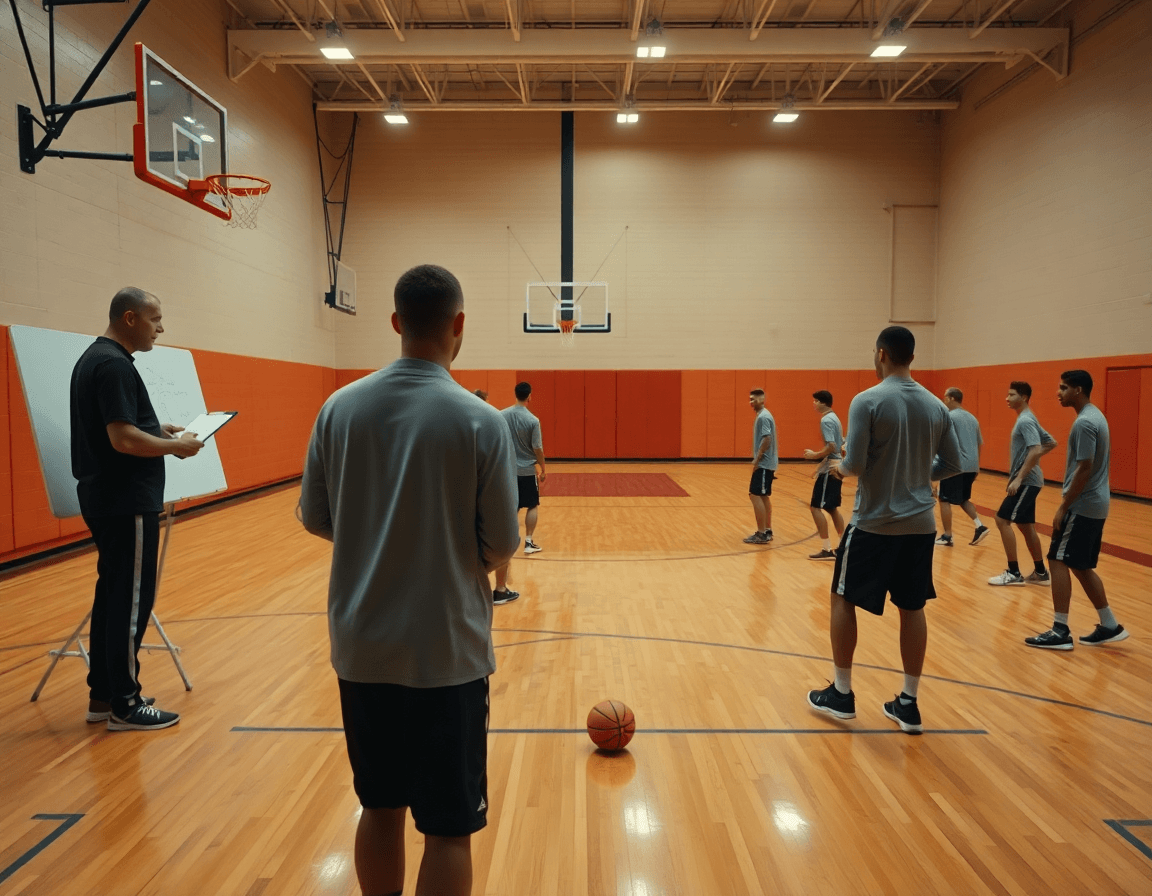
Day 1-2: install core actions on the whiteboard, then walk-through with players using line drills. You sketch the actions, spacing rules, and timing for entries, so the team can visualize the reads and options. The whiteboard becomes the map for the week, and the players start to feel the rhythm.
Day 3: work on reads and reactions in controlled shell drills; incorporate ball movement and spacing rules. Emphasize decision points off the drive, passes, and skip actions to stress the flow of the 4-out 1-in motion offense.
Day 4-5: integrate into 5-on-5 scenarios; monitor decision-making and shot selection. Start layering the offense into live groups, while you track shot quality and the tempo of ball reversal. The focus is on translating the shell work into game-like spacing and timing.
End of week: assess progress and adjust plan for the next cycle. Review the weekly library of diagrams and clips, then use short video clips to reinforce what clicked and what needs refinement. Shareable playlists help players study concepts on their own, and scouting notes tweak which actions you emphasize in the next install. This is where weekly planning and install 4-out 1-in become a repeatable workflow.

Diagramming and drills: mapping actions with a whiteboard
Diagramming is where theory becomes action. On the whiteboard I map our 4-out 1-in motion offense, breaking it into primary actions—BLOB, SLOB, ATO, PnR—with clean arrows showing spacing and flow. I keep the diagrams simple: five silhouettes, gaps between wings, the ball carrier at the top. The goal is to give every player a mental map of what they do with the ball, without overloading them with options at once.
Next, I sketch secondary options: hi-lo entry and a post-entry from the weak side. I attach notes about reads at each node—when the wing passes to the corner, when the post seals, when the big yells for a ball screen. The diagrams live in the plan, but I call out the exact actions we want in drills: space, timing, decision points.
After the board is filled, I export the plays to PDF export for print-and-teach. I circulate the PDF to assistants and players, so everyone has a reference sheet in practice and on game day. The PDF export becomes a reliable anchor for our weekly walkthroughs, reconciling what we diagram with what we teach on the floor.
With the diagrams in place, I link each action to a live drill that reinforces spacing and reads. A BLOB sequence becomes a quick inbound drill into a ball-screen curl; SLOB flows into a lateral pass-and-drive sequence; ATO and PnR are paired with timing drills and decision-making reps. The drill library keeps our practice focused and our players seeing the same lanes each week.
That linkage between the whiteboard, the drills, and the print-ready guides is what makes a weekly workflow durable. When we revisit the board midweek, we can re-route a sequence, swap the secondary option, or add a new PDF page, all without losing the thread of the 4-out 1-in motion offense.
Video clips for player feedback: clipping, tagging, and playlists
After Friday’s practice, I pull the week’s clips into the planning library and map them to our 4-out 1-in motion offense. The goal isn’t to ghost-run plays from a cookbook, but to highlight real sequences: where spacing clicked, where timing drifted, and how the reads evolved after the ball swung. I flag the most telling moments—both the successes and the breakdowns—so they become a learning ledger players can access before the next session. This is where the power of video clips starts to show in the workflow.
With clip editing I slice each sequence into concise moments: clean UCLA screens, decisive hi-lo actions, ball-screens that opened a drive, and even weak-side posts when options mattered. Tagging by action type keeps the library searchable—UCLA screen, ball-screen, post on weak side—so a coach or assistant can pull exactly what we need in a pinch. Clip sequences that illustrate successful actions and common breakdowns help everyone see not just what happened, but why.
From there I build player-facing playlists that reinforce specific 4-out 1-in concepts and reads. One playlist might center on how spacing shifts after a screen, another on the reads off a secondary action in the motion offense. I keep the playlists tight: short clips, clear outcomes, and labeled reads that map to our install. These are not random clips; they’re focused, repeatable cues that players can digest in a quick study window.
Sharing feedback is where the loop closes. I push the shareable playlists to players ahead of the next practice, and they study reviewed clips before they set foot on the court. Efficient feedback means faster adjustment, quicker adjustments, and a more intentional weekly rhythm for the 4-out 1-in offense. Clip editing, video clips, and player feedback all work together to sharpen reads and timing on both on-ball screens and off-ball action.
Scouting and opponent prep: turning film into actionable decisions
As a head coach running a 4-out 1-in motion offense, the week starts with turning film into usable scouting notes. I pull opponent clips and tag opponent tendencies—where they overhelp in pick-and-roll, how their wings recover on weak-side slips, and where they bracket shooters. The result is a concise set of scouting reports focused on vulnerabilities we can attack with our 4-out flow. This isn't a laundry list; it's prioritized, install-ready insight for the week ahead.
From there I translate those tendencies into scout plays—specific sets that exploit spacing, quick ball reversals, and late-action screens we can install fast. If a defense overcompensates against ball-screen action, we script adjustments that open kick-outs and secondary options. For zones, we include zone defense adjustments to keep the ball moving and create clear reads on the weak side. The goal is one clear action per scouting note that every assistant can coach.
Back in the planning library, I weave data into practice planning and the whiteboard diagrams. The diagrams map 4-out motion with counters and quick notes from video clips. A simple PDF export to install meetings keeps the staff aligned. This workflow turns a film library into a practical, day-to-day plan that travels from the shelf to the floor.
One week in, a coach notices that late reversals against aggressive denial can trigger a reliable look if we include a quick post option. We install a scout play that nudges the ball to the wing and threads a post action on the weak side, preserving 4-out spacing and flow. That’s how opponent tendencies become actionable decisions for our 4-out offense.
Adapting the offense against defenses: zone, man, and late-clock situations
Facing defenses with a 4-out 1-in motion offense requires smart, quick reads and clean spacing. In our weekly workflow, we map zone and man concepts as separate video notes, then practice them in small groups with rapid feedback. When the defense slides into a zone, the spacing must stay wide and purposeful. We focus on quick ball reversals and skip passes to pull the zone out of position, while keeping the post-on-weak-side active to occupy interior angles. Our diagrams show a weak-side post flash and a quick reversal to the top, so shooters have a clear window for a 3-pointer or a mid-range pull-up. These are classic examples of bold zone defense adjustments that you can pull from the planning library and run in the warm-up as you progress into live reps.
Against man-to-man, the offense stays patient but decisive. The post-on-weak-side option remains a constant misdirection, forcing the help side to decide early. Ball-screen action up top (on-ball screen or ball-screen from the backside) creates optionality for drives or kick-outs. We’ll practice two reads from the same set: slip to the basket if the hedge is shallow, or pop out for a clean catch-and-shoot if the defender traps the ball handler. The goal is to keep flow intact—your 4-out motion looks the same, just with smarter angles.
End-of-clock scenarios demand reliable 4-out motion answers. We script quick-hitters that you can pull from the playbook in a pinch: a UCLA screen into a shot, a dribble-hand-off into a ball-screen, or a designed flare to create a clean 3-point attempt. In the plan, these end-of-clock options live alongside the regular reads so you’re never scrambling when the clock winds down.
Putting it all together: a one-week example schedule
Here's how I structure a typical week when implementing a 4-out 1-in motion offense set plays with CourtSensei. I lean on a clean workflow: a weekly schedule in the planning library, crisp whiteboard diagrams, and bite-size video clips you can push to players. The goal is to have a ready-to-run practice plan that layers installs, reads, and scout updates without losing tempo. I keep the focus on the whole workflow, not just individual drills.
Mon: install key actions with whiteboard diagrams and shell drills, a quick 4-out 1-in install to get the reads lined up. I sketch the action triggers (where to slip, when to screen) and pair them with shell reps until spacing feels natural.
Tue: 4-on-4/5-on-5 progressions emphasizing reads and spacing. We move from half-court corridors into full-lineups, preserving the 4-out 1-in framework while players practice decision-making in real pressure. The emphasis is on reads and spacing to keep the offense unpredictable.
Wed: clip review and playlist assignments for specific actions. I pull clips that illustrate a weak-side post entry, an on-ball screen misdirection, or a UCLA screen, tag the action, and push a short playlist to each player so they study before the next session.
Thu: scouting prep based on upcoming opponent, integrate into practice. I fold in scouting notes and strike a couple counter-actions to exploit tendencies, then translate that into quick practice tasks that fit the plan.
Fri: controlled scrimmage focusing on install vs live defense. We simulate live pressure but keep the install intact, testing reads and timing against a rotating defense.
Sat/Sun: optional film session or light review as needed. If things are tight, a quick film session helps players lock in on the action, otherwise a light review via the playlists keeps the rhythm.
If you build plans like this every week, CourtSensei keeps your drill library, whiteboard, and video clips in one place — try it free.
FAQ
What is a 4-out 1-in motion offense?
At its core, the 4-out 1-in motion offense spaces four perimeter players around a single weak-side post. That geometry stretches the defense and opens multiple entry points: the post sits high so it can flash, screen, or feed the ball, while the wings and top ball-handler create driving lanes and kick options. Core actions include BLOB, SLOB, ATO, and PnR, all built on quick ball movement and decisive reads.
How do you run a 4-out 1-in motion offense?
Start with a clear install plan that maps the plays to daily blocks. Day 1-2 focus on whiteboard walkthroughs and line drills to lock spacing and timing. Day 3 develops reads and reactions in shell drills. Day 4-5 bring in 5-on-5 integration, monitor shot selection and tempo, and collect feedback for adjustments.
What are common 4-out motion offense plays?
The backbone actions are BLOB and PnR as primary entry points, with SLOB, ATO, and post entries creating options after a stop. A post feed on the weak side and a timely hi-lo add spacing and decision points. The goal is continuous ball movement, misdirection, and quick reads that pull defenders and open clean shots.
How should I structure the weekly workflow to install the 4-out 1-in offense?
Plan the week around a repeatable weekly workflow. Pre-week, set install goals and assign plays to blocks. Day 1-2: whiteboard install and line drills to lock spacing. Day 3: reads and reactions in shell drills. Day 4-5: 5-on-5 integration, track shot quality and tempo. End with progress checks and adjustments.
How do you diagram and teach the 4-out 1-in offense?
Diagramming turns theory into action. On the whiteboard we map the 4-out 1-in motion offense into primary actions—BLOB, SLOB, ATO, PnR—with clear spacing. Add secondary options like hi-lo and post-entry. Attach reads at each node, then convert diagrams into PDF export for print-and-teach. Link each action to a live drill that reinforces spacing and reads.
Can 4-out attack zone defenses effectively?
Yes, when you keep spacing, move the ball, and attack the gaps. A strong weak-side post entry and quick reversals force a zone to overcommit, opening kick-outs or feeds. The system adapts with zone-specific actions in the weekly plan, emphasizing reads, decision points, and tempo—the result is reliable conversion against zone defenses and options like a drive-and-kick.