
Basketball Quick Hitters: A Weekly Install Plan for Coaches
Master basketball quick hitters with a coach-focused weekly install plan—formations, diagramming, video clips, and scouting to drive quick scoring opportunities.

Key takeaways
- Install concise quick hitters this week using Plan/Diagram/Video workflows to accelerate buy-in.
- Map formations ahead of time: 1-4 High, 5-out, Box-Set and Horns templates for week.
- Follow a five-step weekly workflow: scout, diagram, clip, assign, then test in practice.
- Create playlists and a clip library to reinforce reads consistently across the roster.
- Keep it living: map rosters and opponent tendencies, updating plans weekly together.
What are basketball quick hitters and why they matter this week
Basketball quick hitters are concise, high-percentage actions designed to create quick scoring opportunities from a brief, scripted sequence. They’re not big movement systems; they’re repeatable, easy-to-teach actions you can install this week and trust under pressure. For a coach running a weekly game plan, quick hitters plug into practice plans and give you reliable options to take advantage of favorable looks or counter a tough matchup. They’re a toolset you can dial up in the Plan, diagram on the whiteboard, and verify in a short video clip.
Tailored to this week's game plan, quick hitters adapt to opponent tendencies and your roster. If you’re facing a team that overplays ball screens, you lean into 3-out 2-in quick hitters to create kick-and-drive opportunities; against a switch-heavy front, 1-4 High Quick Hitters provide backside options. Here are concrete examples by formation: 1-4 High Quick Hitters use early pin-downs and a back-cut to force a read, while 3-out 2-in creates spacing for a quick drive or kick. 4-out 1-in leans on a dribble handoff into a drive, and 5-out amplifies reads off a single-side action. Box Set quick hitters bundle stacked reads with screen-and-roll options, while Horns offers multi-reads through cross screens and a short pop.
Your library of quick hitters accelerates installation and in-game adjustments through Plan/Diagram/Video workflows. In the plan, you drop in the action; on the whiteboard you map the sequence; in a short video clip you show the read and the action. Pair that with scouting notes and shareable playlists, and you can deploy the same plays week after week with faster buy-in from players and assistants.

Common formations and how to choose the right one for your roster
Common formations give you a menu of quick hitters for the week. In your plan, you’ll want a few go-to looks: 1-4 high quick hitters, 5-out quick hitters, and box-set or horns templates. Each formation nudges your actions—dribble handoffs, staggered cuts, and screening sequences—so you can diagram the flow on the whiteboard and export a PDF for the staff.
A 1-4 high quick hitters alignment puts your big at the elbow and your guards spaced for direct passes, action off a dribble handoff, and a flare. Reads are fast: rim attack off the first screen, or a kick-out 3 if the help arrives late. Clip a few sequences for quick review in practice.
With 5-out quick hitters, spacing becomes the engine. You pull the defense side-to-side, drive-and-kick, and look for quick-release threes or a post-entry if you have a mismatch. This look thrives with multiple shooters; time reversals and a lively weak side keep the ball moving.
Box-set quick hitters and horns offense give you different start points. A box-set push can start from a high post screen into a backdoor or slip, while horns invites ball reversals into a shooter ready at the corner. Your plan should keep a couple of each as short video clips for study.
Roster considerations matter more than the trend. A guard-heavy squad benefits from spacing and drive-and-kicks to generate clean looks; bigger lineups need angle screens and post options to create shots around the rim. Spacing shapes whether finishes are rim attacks, kick-out 3s, or post-ups; note these in scouting.
Bookmark a few go-to quick hitter options that fit your roster and your opponent scouting. In CourtSensei, map formations to your weekly plan, store diagrams on the whiteboard, and attach short video clips for players to review in playlists. Treat this as a living library you can update as scouting evolves.

A practical weekly workflow to install quick hitters
Here's a practical weekly workflow to install basketball quick hitters, designed to plug directly into your existing plan. It treats each week as a compact product cycle: scout, diagram, clip, assign, and test in a low-risk setting. The goal is steady, repeatable growth without overloading the rotation.
On Monday, you do scouting of the opponent and pull a few actions you expect to stress them—an easy win to start. Turn that into a concise scouting note and a couple of quick hitters to prep for Tuesday’s diagramming session. Keep it tight so players see the reads clearly.
Tuesday is for the whiteboard work. Create a handful of plays (BLOB, SLOB, or PnR variants) and label each with the read the guard must make. The diagrams become the spine of your practice plan and a clear reference for players as they move through drills.
Wednesday is clip day. Pull video clips, tag each clip with the intended action (screen-and-roll, dribble handoff, or horn set), and drop them into a shareable library. A quick clip paired with a single action helps players visualize the concept faster.
Thursday brings player-specific playlists. Assign clips to individuals or groups, and use your assistants to reinforce reads and responsibilities during the install. When a kid sees themselves handling a read in a clip, the progression from 'what to do' to 'when to do it' clicks faster.
Friday is a light scrimmage to install what the team learned midweek. Run the quick hitters in live motion, then circle back with a quick debrief and a couple of retention checks. The goal is to turn the week’s work into durable reads that transfer to game tempo.
Diagramming, labeling, and exporting quick hitters
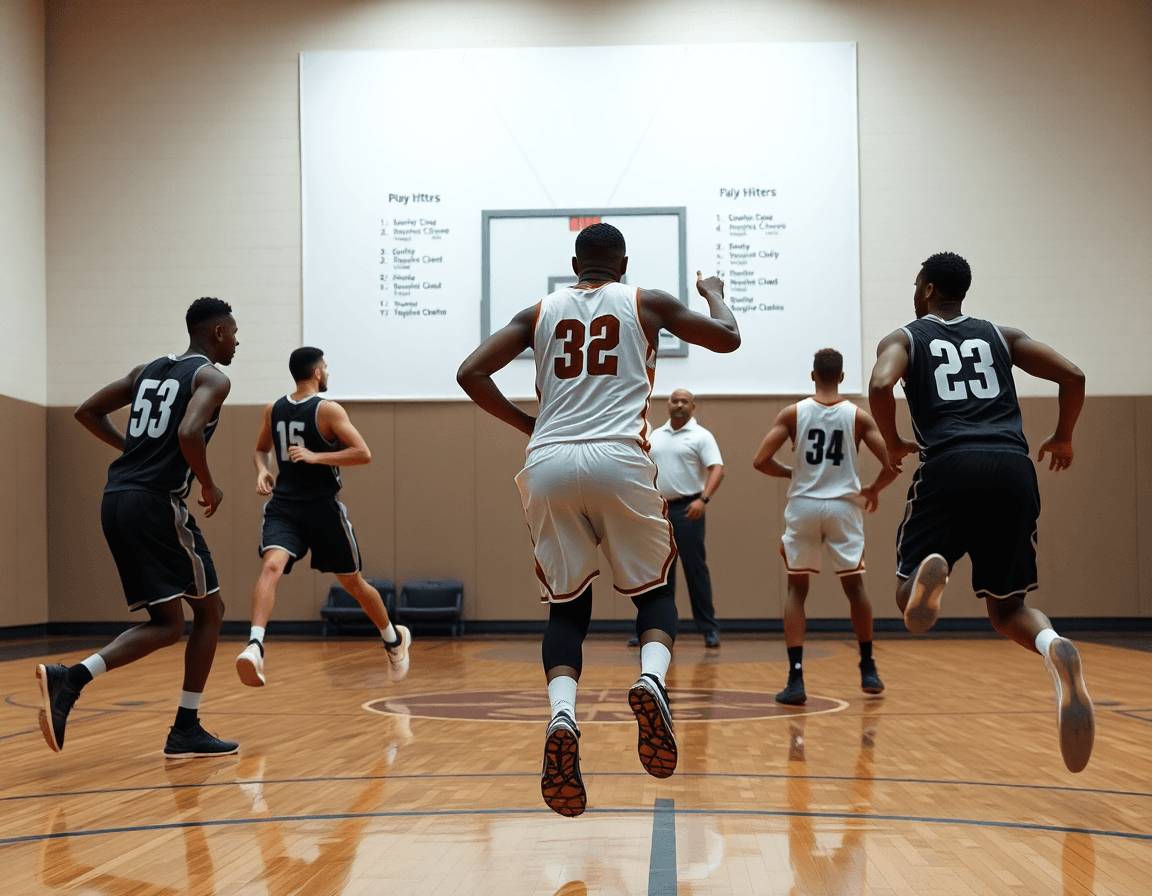
When I'm mapping basketball quick hitters for the week, I start on the whiteboard. I diagram each action with clear labeling and consistent terminology so any coach or scout reads the same language. On the whiteboard, they become whiteboard plays quick hitters with the same BL, ATO, PnR reads in the same frame, with arrows showing movement and spacing that matches the play type—whether it's a 1-4 high quick hitter, a box set sequence, or a horns offense entry. The goal is a single, sharp diagram that communicates the intent fast, so when we walk through it in practice, there’s no guesswork.
From there, I export the diagram as a PDF for handouts to assistants, scout reports, and quick-access references in the film room. The PDF export quick hitters let us annotate changes with the staff and keep a clean, shareable version for the next opponent. It also gives players a tangible piece they can study during walkthroughs.
All the action sequences—BLOB/SLOB/ATO/PnR—are captured in a diagram library for quick retrieval before meetings or drills. These diagrams aren’t scattered post-its; they’re organized templates you can pull up during planning, tweak on the fly, and drop into a scouting note or playbook section for next week.
Bridge the diagrams to your practice plans so players see the exact sequence during installations. On the floor, we run the diagram with a quick clip from earlier video, then pause to correct timing. The goal is immediate transfer from plan to action, so the crew can execute the sequence without overthinking—ready for that installations window.
Video clips and playlists: building a film library for quick hitters
Video clips are the teaching engine behind basketball quick hitters. I pull targeted clips from last game film or practice, trim them to the exact action, and tag them by the reads players face. The clip library becomes the go-to source for showing exact reads, timing, and spacing in a single session.
I organize by formation and action: 1-4 high quick hitters, horns, 5-out, box set quick hitters, dribble handoffs, and screen-and-roll. Each clip carries tags for formation, action type, and the read, so I can assemble a concise reel for a specific scenario before practice. This lets us tailor the teaching to what we’ll install that week.
In plan of training, I bring a short video clip to the floor, point to the whiteboard, and walk through the reads. We pause at the decision point, then run a quick drill to reinforce timing and spacing. The loop closes when players rewatch the clip between reps, and you see the reads clicking faster.
Shareable playlists let me customize content for individuals and groups: guards, wings, bigs. A clip library grows into shareable video playlists that players can study between sessions. I add player-facing notes to each clip so shooters and post players know exactly what to watch and why the read matters.
Used weekly, this workflow accelerates uptake of quick hitters. Clips bridge on-court reads with practice rhythm, and the library keeps everyone aligned as formations shift, whether we’re citing a 1-4 high set or a horns/5-out sequence.
Scouting and countering: making quick hitters work against opponents
As a coach, I treat basketball quick hitters as living modules inside our weekly workflow. I attach scouting quick hitters to opponent scouting reports to anticipate defensive responses. When the scout shows a team running a 1-4 high or horns, we diagram a quick hitter on the board and map the reads: if they blitz, we counter with a slip and pop, or a dribble handoff to the trailer. This is how we turn a plan into a run-ready sequence—quick hitters against opponents that we can actually practice and trust.
From there, we develop scout plays for basketball that exploit likely defenses. If the opponent habitually fronts in a box set or flips to a 5-out look, we script box set quick hitters that attack the short corner and open a back-cut on the wing. If they hinge to a drop, we add a dribble handoff into the action. Each scout play is mapped to a read on the whiteboard and saved as a short video clip for the team, so players know what to expect during the game.
Use weekly updates to refine which quick hitters to install based on opponent tendencies. If a scout report flags aggressive help on drives, we tweak the quick hitter to include a late drop or a flare screen. We test adjustments in practice and re-record the clips, updating the shareable playlists so assistant coaches and players stay synced during game week. The cycle keeps our planning tight: in the plan, on the whiteboard, in the video clips, and in the scouting notes.
If you build plans like this every week, CourtSensei keeps your drill library, whiteboard, and video clips in one place — try it free.
FAQ
What are basketball quick hitters and why do they matter this week?
Quick hitters are concise, high-percentage actions designed to yield quick scores from a short scripted sequence. They’re repeatable and easy to teach, so you can install them this week. They plug into your weekly plan, adapt to opponent tendencies and your roster, and you verify reads with a short video clip.
Can you give an example of a quick hitter offense from a 1-4 High look?
In a 1-4 High look, the big sits at the elbow with guards spaced for direct passes. Use an early back-cut and a pin-down to force a read; the rim attack is the default if the screen is solid, or you swing a kick-out three if help arrives late. Clip a few sequences for practice.
What does a quick hitter look like in a 5-out motion?
In a 5-out motion, spacing is the engine. The action moves the defense side-to-side, with a drive-and-kick for quick threes or a post-entry if you get a mismatch. This look works best with multiple shooters; emphasize time reversals and a lively weak side to keep the ball moving.
How about a quick hitter from the Box Set?
Box-set quick hitters start from a stacked look, then options unfold into a backdoor or slip off a high post screen, with occasional screen-and-roll reads. Horns entries can surface from box-set looks, too. Keep a couple of box-set sequences as quick-study clips for practice and scouting.
What’s a practical weekly workflow to install quick hitters?
A practical weekly workflow: Monday is scouting and pulling a few actions to prep for Tuesday diagramming. Tuesday is whiteboard work, labeling each read as you diagram. Wednesday collects video clips into a shareable library. Thursday assigns playlists to players; Friday is a light scrimmage and quick debrief.
What are the potential advantages of quick hitters?
The advantages of quick hitters include more reliable options against favorable looks and a steady counter to tough matchups. They plug into your weekly Plan/Diagram/Video workflow, speeding installation and boosting buy-in from players and staff.