
How to Create a Basketball Practice Plan
How to create a basketball practice plan: a coach-focused guide to a weekly structure with warm-up, skill work, team concepts, scrimmage, and conditioning.

Key takeaways
- Frame weekly goals and tie every drill to outcomes like skill development and game prep.
- Craft a time-block schedule that aligns drills with weekly goals and perceived progress.
- Use a six-block template to cover warm-up, skill, team offense/defense, competition, and conditioning.
- Create weekly templates you can copy, swap drills, and annotate actions for consistency.
- Leverage video and whiteboard visuals to reinforce spacing, timing, and decision points.
Frame the Week: Goals and Time Blocks
Frame the Week with clear weekly goals—skill development, team concepts, and game prep. A coach sets these targets and ties them to the plan so every drill, decision, and clip reinforces what’s being built. In CourtSensei, those goals sit in the coaching workspace alongside the plan, keeping the weekly plan aligned with the system and players’ progress.
Next, outline a time-block structure that fits your level—a typical 60- to 90-minute session divided into six blocks. For example: 1) warm-up and dynamic movement, 2) ball handling and footwork, 3) skills and drills, 4) shell drill and decision-making, 5) 2v2/3v3 formats, 6) 5-on-5 half-court or controlled scrimmage with a quick turnover review. You can map each block to drills or plays in your library and annotate how it builds toward the weekly goals. This is where workflow comes alive—linking content to the blocks to build a cohesive practice.
Adjust targets for youth vs varsity while preserving a consistent framework. Scale intensity, complexity, and tempo without breaking the structure, so younger groups master fundamentals before advancing to more complex decisions. The framework remains the backbone, even as you tailor everyday drills to fit the team’s development stage.
Align the plan with your offensive/defensive system so decisions reinforce habits. In this approach, every block, drill, and clip should echo your system, helping players internalize routines and improve decision-making on the court. The coaching workspace makes it easy to reference plays, annotate actions, and keep the weekly plan centered on the team’s approach—without losing sight of the season’s priorities.

Build a Balanced Practice Template
Build a balanced practice around a six-block template that fits into a 60-90 minute window. The goal is to cover Warm-Up, Skill Development, Team Offense, Team Defense, Competition, and Conditioning in a fluid sequence that mirrors how a game unfolds.
For a practical 60-90 minute session, allocate clear time blocks: Warm-Up 8-10 min (dynamic movement plus a light ball-handling circuit); Skill Development 20-25 min (ball handling, shooting form, footwork); Team Offense 12-15 min (shell progression, spacing, 2v2/3v3 formats); Team Defense 12-15 min (communication and closeouts, transition principles); Competition 8-12 min (short 3v3 on half court to test decision-making); Conditioning 5-8 min (sprint bursts, relevant drills off the ball). This structure keeps a plan tight and repeatable across weeks, while still leaving room to emphasize a team’s core system.
Create templates you can copy weekly and tailor for different levels or camps. A coach can mirror the same six blocks, then swap in different drills from the library of drills and plays to fit junior varsity speed or varsity pace. In the plan layout, annotate actions for each block—ball movement in practice, defensive rotations, and read-and-react cues—and keep a concise playbook linked to the on-ccourt work. The aim is to build a repeatable process that translates to how the team plays.
Finally, use a printable or exportable format to keep everyone on the same page. A clean PDF or a read-only link lets assistants, video staff, and captains stay aligned with the weekly cadence, play ideas, and scouting notes embedded in the coaching workspace.

Curate Drills and Actions for Your System
Curate drills and actions for your system by collecting drills that reinforce your offensive and defensive principles. Build a centralized library of drills and plays you can pull from as you design weekly plans. When you add a drill, tag the coaching points, pace, and expected outcomes, and attach the corresponding actions you want players to visualize—so the plan on your time-blocked schedule translates into concrete on-court repetition.
Make sure your formats fit your athletes. Incorporate age-appropriate formats (2v2/3v3 formats) and clear coaching points. Start with a purposeful warm-up and dynamic movement before touching the ball, then layer in ball handling and shell drill variations to build discipline under pressure. A few crisp cues in each format keep players anchored to the system while you rotate through reps efficiently.
Link drills to plays and decision points to improve transitions. Create flow by tying each drill to a specific action in a play (set a screen, pinch, or cut) and to a decision point (attack vs. retreat). Use a centralized library to reuse proven progressions, keeping spacing, pace, and read-and-react timing consistent across sessions.
With CourtSensei, you can annotate and animate actions, store clips for quick reference, and export PDF practice plans for staff and players—all within a dedicated coaching workspace. This keeps your weekly rhythm aligned: plan, drill, review, clip, adjust, and share.
Incorporate Video and Visual Aids
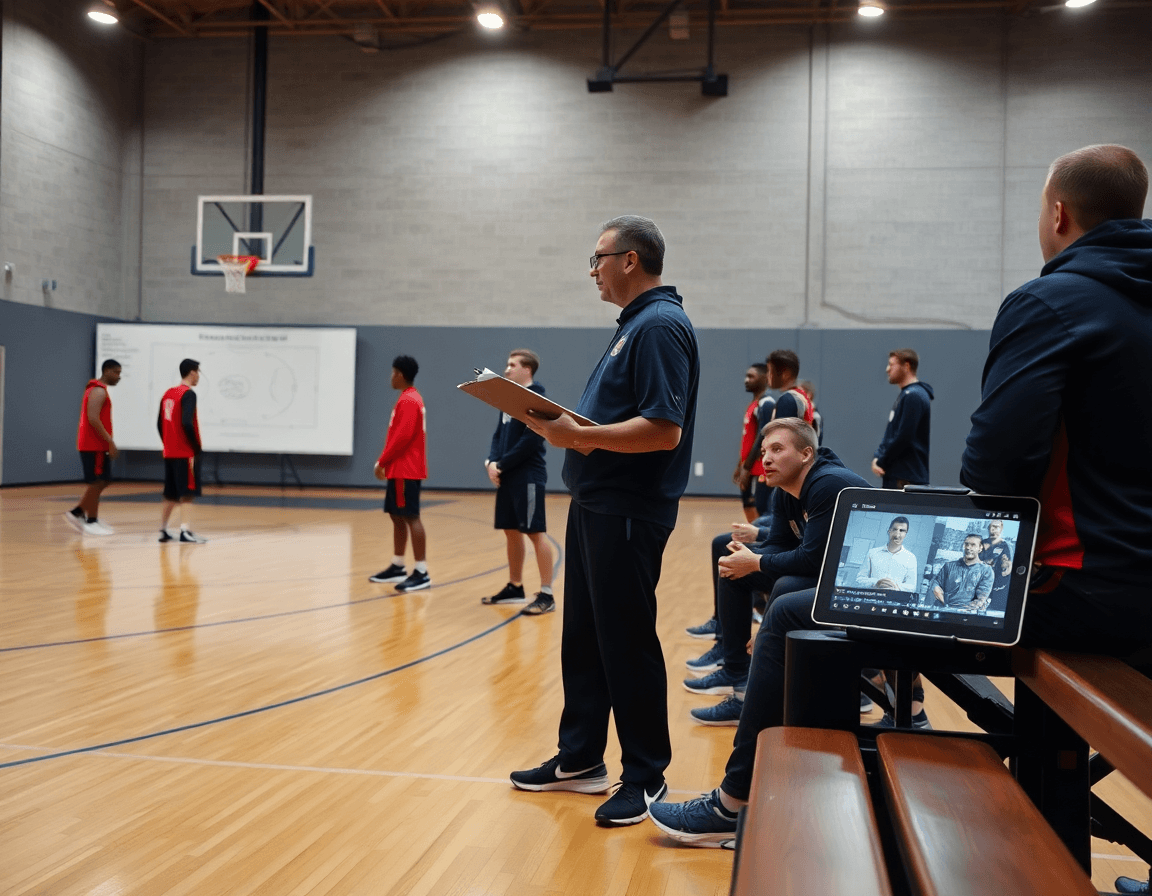
During the weekly plan, let your setup lean on a clean library of clips. Upload video clips, cut and organize them for quick reference. When you’re setting up a shell drill or a 2v2/3v3 format, pull a clip to illustrate spacing and timing. A short video can reinforce warm-up pacing and core elements of skills and drills—without slowing down your flow.
Use whiteboard diagrams to reinforce decisions and plan execution. On the board, sketch angles for a 5-on-5 half-court sequence, outline spacing, and responsibilities for a shell drill or a 3-on-3 in transition. Attach a short video to the diagram so players can picture the action as you call it, then pause to discuss options before stepping into the drill.
Attach video clips to specific drills or plays to provide context. For a ball-handling progression or a transition 5-on-5 half-court set, link a clip showing correct spacing and decision points. This keeps your plan cohesive—you’re pairing a clip with the related drills or plays and allowing the staff to reference it during walkthroughs and on the sideline.
Finally, keep visuals aligned with your plan without implying automated analytics. Use them to clarify intent—where to position players, how to execute the rotation, and what success looks like in a given phase of the plan. The combination of clips, diagrams, and context-ready notes helps you move from planning to execution without breaking concentration on the main objectives: warm-up, dynamic movement, ball handling, and the shell drill in a 5-on-5 half-court setting.
Scout, Prep, and Plan for Game Situations
In your weekly cycle, scouting reports and tactical notes should drive how you allocate practice time. The right notes translate into concrete drills and decisions. With CourtSensei, you can create and store scouting reports that capture opponent tendencies, pace, sets, and pressure points, then braid them into your time-blocked practice plans. Annotate observations, attach video clips, and keep everything in your dedicated coaching workspace. When ready, export a clean PDF summary for assistants and staff. Bold-typed references to the week’s focus help everyone stay aligned.
Your game-prep notes become the compass for the week. Outline counter ideas for the opponent’s go-to actions and map them to drills and plays. If the opponent relies on a ball-screen in late clock, slot in 2v2/3v3 formats to sharpen ball handling and decision-making, then test rotations in a 5-on-5 half court scenario. Include a shell drill to reinforce disciplined rotations and connect each drill back to the scouting notes so the team rehearses the plan under pressure.
Workflow and sharing: store opponent tendencies and counter ideas within your coaching workspace, linked to your library of drills and plays. Upload video, clip sequences, and annotate actions to build a focused scouting playlist for pregame or in-game adjustments. The result is a connected system where scouting informs warm-up, dynamic movement, and game-specific execution, from a quick drill catalog to a full 5-on-5 half court game plan. This keeps your weekly practice decisions aligned with the opponent’s tendencies without losing sight of your team’s system.
Practical Weekly Workflow: From Plan to Practice
Begin the week by finalizing your weekly goals and scout insights. This step anchors the plan to your team’s system and the intel you’ve gathered. In your coaching workspace, capture these into a concise weekly goals digest and attach relevant scouting notes. That digest becomes your weekly checklist for training week.
On Tuesday, install plays and run foundational drills. Translate plays into time-blocked sessions on the floor, then layer in warm-up, dynamic movement, and ball handling. Use shell drills to teach spacing and decision-making before you move to 2v2/3v3 formats. The goal is to build a reliable foundation for execution.
Wednesday is video review. Review clips, annotate key decisions, and adjust the plan accordingly. Use the video to reinforce decision-making and situational reads, linking clips to your plays and drills. This keeps the plan responsive while staying aligned with your team system.
Thursday tightens execution under game-like conditions. Rehearse sequences at pace, simulate transitions, and challenge players with quick decision windows. Use a mix of drills and live reps in 5-on-5 half court or full-court formats to sharpen timing and communication.
Friday is scrimmage and conditioning, followed by sharing. Run a controlled scrimmage to test the week’s install, then finish with conditioning to reset for the weekend. Export PDFs and circulate read-only links to assistants, so everyone stays on the same page.
FAQ
How do I create a basketball practice plan?
Start with clear weekly goals—skill development, team concepts, and game prep. A coach sets these targets and ties them to the plan so every drill reinforces what’s being built. Use a 60–90 minute session divided into six blocks—the time-block structure: warm-up, ball handling, skills, shell/decision-making, 2v2/3v3, and 5-on-5 with a quick turnover review. In CourtSensei, those goals sit in the coaching workspace, keeping the plan aligned with progress and priorities.
What should a basketball practice plan include?
Include a six-block template that fits a 60–90 minute window: Warm-Up, Skill Development, Team Offense, Team Defense, Competition, and Conditioning. For a typical session, map Warm-Up 8–10, Skill Development 20–25, Team Offense 12–15, Team Defense 12–15, Competition 8–12, Conditioning 5–8. Create templates you can copy weekly and tailor by swapping drills from the library, with a concise playbook linked to on-court actions.
How long should a youth basketball practice last and how should I adjust?
For youth players, aim for about 60–75 minutes, keeping the six-block framework but dialing back intensity and tempo. Use shorter blocks, more water breaks, and fundamentals-first progressions. Maintain a steady cadence so players know what to expect and can build confidence week to week.
How can I make practice more engaging for young players?
Mix dynamic formats like 2v2/3v3, quick competitions, and purposeful warm-ups. Use crisp coaching cues and relevant read-and-react decisions. Link drills to plays with visuals, and annotate actions in your coaching workspace so players see the flow. Short video clips can illustrate spacing and timing without slowing the pace—keep the plan cohesive with engaging elements.
Should I use the same practice plan every day?
Not every day. Build a flexible set of templates you copy weekly, but rotate drills and plays to keep things fresh. Use your library to swap in age-appropriate progressions while preserving the core six blocks and weekly goals. This approach supports consistency for players and staff while adapting to scouting notes and development.
Why is a practice plan template important?
A strong template provides structure, ensures you cover priority areas, and keeps your system aligned week to week. It helps staff stay coordinated, makes it easy to annotate actions, link clips, and share plans via print-ready PDF exports or read-only links. With CourtSensei, the template sits in the coaching workspace and stays connected to your library of drills and plays.