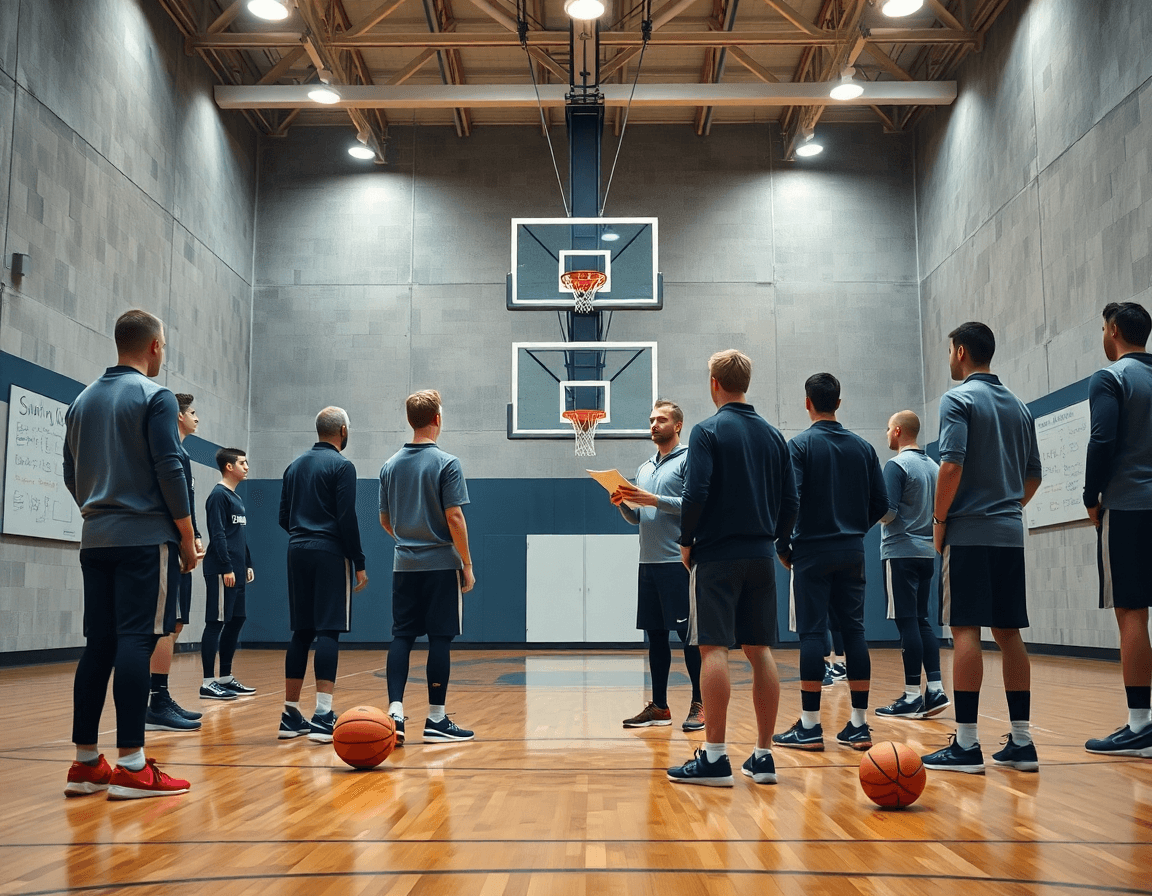
Free Basketball Practice Planner: A Coach’s Weekly Workflow
Learn how to use a free basketball practice planner to shape your weekly plan with time blocks, scouting notes, and printable exports for staff sharing.

Key takeaways
- Define the weekly rhythm with a five-phase structure and strict time blocks for consistency.
- Assign clear roles and a staff division to speed transitions and reduce downtime.
- Embed coaching points beside each drill so any assistant delivers consistent cues and technique.
- Plan data capture and exports to PDF or shareable links for week-at-a-glance review.
- Use a free basketball practice plan template as a living blueprint that adapts with roster shifts and season goals.
- Celebrate documentation and review cycles to convert practice data into actionable improvements.
What a weekly basketball practice plan should include
A weekly plan starts with the core blocks: warm-up, skill work, team concepts, scrimmage, conditioning, and cool-down, each with clear time blocks. I use a free basketball practice planner as a baseline, then turn it into a coach-ready workflow in CourtSensei. In the plan, you map who does what, when, and how long each piece should run. The idea is to keep the flow smooth so the staff can execute without stepping on each other. Emphasize the rhythm of practice with a focus on the tempo you want from drill-to-drill, and make the time blocks feel realistic for your squad.
Embed coaching points and cues for each drill to standardize execution across assistants. For example, a ball-handling drill can include cues on stance, ball security, and palm pressure, while a passing sequence might specify target alignment and eye contact. Those coaching points live alongside the drill in the plan so any assistant can jump in and deliver the same instruction. This approach keeps every repetition consistent and makes it easier to review later.
Assign roles for staff and volunteers to maximize efficiency during practice. One coach can lead the warm-up, another runs the ball-handling and passing stations, and a third manages communication with players on the floor. When roles are clear, subbing and transitions move quickly, and you minimize downtime. A clean division also helps during the data-and-notes phase, since you’ll know exactly who captured which detail.
Plan for data and notes to inform future sessions, including how you’ll export or share the plan. Keep a simple log of what clicked and what didn’t, plus any observations from the scrimmage or cues that stood out. When it’s time to push the plan to the team, you can export a PDF or generate a shareable link so assistants get the same week-at-a-glance view. This is where the weekly workflow really proves its value.

From free templates to a season-ready plan
I start with a free basketball practice plan template and tailor it to my roster, age group, and season goals. It’s not a one-size-fits-all sheet; it’s a living blueprint I can adjust as players shift roles or as we pivot to a new phase. I map the week to a consistent 5-phase structure that travels with the season: Dynamic Warm-Up; Ball Handling & Shooting; Team Concepts; Situational Plays; and Review & Recovery. That structure keeps weekly workouts predictable and scalable, whether we’re in early December or the midpoint of conference play. Within each phase I lock in time blocks, assign drills, and trace a path from warm-up through team reps to decision-making. The result is a printable basketball practice plan that I can hand to the staff and reference on the court.
Next comes implementation: I drop the plan into the plan library and attach variations by age group or opponent. A simple shareable link gets to assistants and managers so everyone works from the same sheet and can add notes in parallel. For on-court use, I export to PDF or print the plan for quick clipboard references. I also attach video clips and build playlists to align player review with scouting reports and scout plays. When we adjust after a Friday session, the updates flow back into the week’s workflow without chasing edits. This is how a free template grows into a season-ready plan that supports weekly planning, execution, and review.

Five-phase structure to run efficient practices
To keep a weekly cycle efficient, I rely on a simple five-phase structure to run practices. I pull a free basketball practice plan from the library, map it into time blocks, and lay out the sequence on the tactical whiteboard so every assistant and player knows what comes next.
Phase 1: Dynamic Warm-Up—this is about prep, mobility, and footwork. In roughly the first 12 minutes we blend dynamic stretches, ladder drills, and light ball-handling cues. The aim is to wake up hips and ankles while getting passes and finishes dialed in with a controlled tempo.
Phase 2: Individual Skill Work—ball handling, shooting, and finishing. We run two stations with short, sharp blocks of work, then rotate. Each player logs touches and I pull clips later for quick feedback, turning reps into personal progression through match-ready drills.
Phase 3: Team Concepts—spacing, ball movement, and defensive schemes. We diagram actions on the whiteboard and connect them to on-court timing. When players see how screens, cuts, and rotations fit together, the team breathes in rhythm rather than reacting to chaos.
Phase 4: Competitive Play—apply concepts in situational drills and a controlled scrimmage. We run short games that emphasize earlier work, then save selected possessions as clips for the playlist so players study decisions after practice.
Phase 5: Cool-Down and reflection—soft-tissue work, stretching, and a quick debrief. We capture notes for next session, classifying what to repeat, what to adjust, and which video clips to assign. A printable basketball practice plan or PDF export makes it easy for the staff to reference later.

Incorporating scouting and video into the weekly plan
In the weekly plan, I keep scouting notes alongside plan sections to target opponent tendencies. If we’re seeing a team trap out of the top of the arc or switch ball screens late in quarters, I drop a quick note in the relevant drill or period (shooting, transition, or defense) so the staff and players feel the thread from warm-up through review. This keeps our practice flow tight and ensures every session has a clear purpose grounded in what we’re anticipating on the next opponent.
Clip and organize video clips that illustrate execution of specific plays or drills. A quick cut from last week’s film shows how a 1-4 high action flows into ball reversal and a kick-out option. I tag time stamps, save it under a weekly folder, and attach it to the corresponding plan section. When we walk through a shell drill on the plays in the whiteboard, players can see the live result and the exact move we’re aiming for.
Create playlists linked to drills or game concepts for easy player access. I link clips to a drill library—ball handling progression, shot-fake reads, or defensive rotations—so players can review at the end of practice or during shootaround. A clean, centralized game concepts playlist means they’re not hunting through apps; they’re picking up the tempo of the week in a few taps.
Use notes and video to drive coaching points during practice and post-practice review. On the whiteboard, I translate the scouting context into concrete coaching points, then pull the corresponding video to reinforce the message. A quick recap clip after practice highlights the adjustments we made and what to carry into the next session. This is where the weekly workflow truly closes the loop.
Practical workflow: from Sunday prep to Friday export
Sunday night is when I lock in the weekly plan. I open the free basketball practice plan template and pull from the planning library to set clear goals for the week—defensive communication, ball-handling under pressure, and late-game execution. I assign staff roles and map the session flow into time blocks: a quick dynamic warm-up, ball-handling blocks, and a couple of team drills to build rhythm. The Sunday plan becomes the anchor, and the printable basketball practice plan helps me share the vision with assistants before the first session. free basketball practice plan template, time blocks.
Monday through Wednesday I let data drive tweaks. If player development flags a weakness or scouting notes call for a different look, I adjust the plan and reassign roles as needed. I attach relevant video clips to the plan segments and keep scouting notes attached so the staff can reference on the bench. The workflow stays steady because I can swap in specific drills from the library while preserving the overall structure.
Thursday is the fine-tuning day. I diagram key plays on the whiteboard—PnR options, spacing, and defensive rotations—and capture crisp coaching points for the staff. I verify matchups, adjust timers, and lock in the PDF export. The diagrams give clear guidance for players and assistants and keep us aligned with the weekly goals.
Friday is about sharing and archiving. I export the plan to PDF, generate shareable links, and attach segments to coaching playlists for quick on-court access. I archive last week’s plan for reference so we can review outcomes on Sunday. Throughout the week, I attach video clips and scouting notes to plan segments for fast, on-court use.
Quick-start checklist to implement this week
Here's a quick-start checklist to implement this week as you turn a free basketball practice plan into a coach-ready workflow. If you're starting from a free basketball practice planner, this quick-start checklist helps convert it into a coach-ready workflow. The key is your weekly planning cadence and the time-block structure you’ll run with the group—60 minutes for a tight, focused session, or 90 minutes when you need extended work. With a planning library, whiteboard diagrams, and a few ready-made video clips, you can map a clean, repeatable routine.
First, choose your weekly goals and lock in the time blocks (60 vs 90). Then fill in drills for each phase and assign assistant responsibilities. In the plan, put a dynamic warm-up at the top and weave in ball handling drills in the early segment. Let one assistant handle transitions while another tracks defensive rotations or rebounding—keeps the workflow smooth and accountable.
Next, add scouting notes and link relevant video clips to the plan. Keep the notes concise: opponent tendencies, pressure windows, and primary initiators. Attach clips from recent games or practices to a dedicated section so players can review on their own, and point the staff to the right clip during drills for quick context.
Finally, export a PDF as a printable plan and distribute it to staff before practice. Use that printable plan to guide the session on the floor, then review outcomes and notes at week’s end to inform the next cycle. That wrap-up feeds the weekly planning loop and sharpens next week’s plan.
If you build plans like this every week, CourtSensei keeps your drill library, whiteboard, and video clips in one place — try it free.
FAQ
What should a weekly basketball practice plan include?
Your weekly plan should map the core blocks: Dynamic Warm-Up, skill work, team concepts, controlled scrimmage, conditioning, and a short cool-down. Include clear roles for staff, who leads each block, and how long it runs. Add coaching points beside each drill so everyone delivers the same cues. End with a simple notes log and an export option (PDF or shareable link) for a consistent week.
How long should a basketball practice last?
Most basketball practices run about 60–90 minutes for youth programs; older groups push toward 90–120 minutes with longer scrimmages. The goal is rhythm: start with a tight warm-up, shift quickly through stations, and finish with a quick debrief. If time is tight, trim conditioning and keep the core blocks that build ball handling, shooting, and decision-making.
What is the five-phase structure of a basketball practice?
The routine rests on a simple framework: a five-phase structure guiding each practice. Phase 1: Dynamic Warm-Up to prep joints and reflexes in ~12 minutes. Phase 2: Individual Skill Work—ball handling and shooting at two stations. Phase 3: Team Concepts—spacing, ball movement, and defense. Phase 4: Competitive Play - drills with a controlled scrimmage. Phase 5: Cool-Down and reflection—stretching and notes for next session.
How do you structure a youth basketball practice?
For youth sessions, structure around age-appropriate stations and short blocks with quick rotations. Keep drills fundamentals-first, with a light touch on complex plays. Balance work with a live scrimmage to translate skills. Assign clear staff roles so everyone contributes—warm-up lead, station coaches, and on-floor communicators—and map practices to a season plan (season map) to keep progression aligned.
How can I export or print a basketball practice plan?
Most planners let you export or print as a PDF or generate a shareable link so staff can view the same week at a glance. Look for a plan library button, then choose export or print. Save multiple versions for opponent scouting or age-group variations, and keep a quick notes section for follow-ups.
Are there free printable basketball practice plan templates?
Yes. There are free basketball practice plan templates you can customize to your roster, age group, and season goals. Start with a template, add time blocks, drills, and variations, then attach coaching cues and notes. Export to printable PDFs or shareable links, and keep it in a library for easy updates as your season evolves.