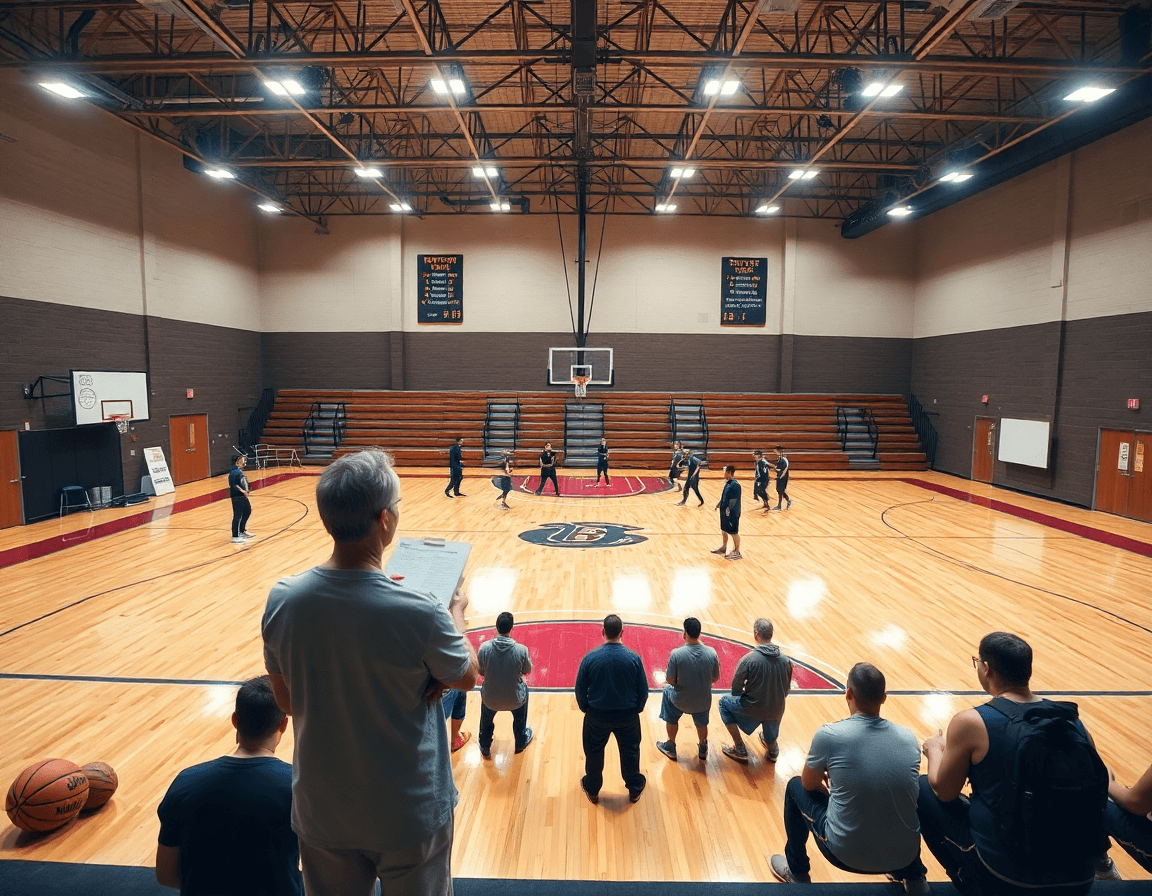
How to Structure a High School Basketball Practice Week
Master a weekly high school basketball practice with ready-to-use plans, game-like drills, video clips, and scouting prep to build consistency on game night.

Key takeaways
- Establish a weekly structure from Monday to Friday with clear themes and predictable tempo.
- Set time blocks (10-min warm-up, 25-min skill, 25-min team, 20-25 min live) to reduce decision fatigue.
- Leverage ready-made sequences and feedback clips to align coaching vision and accelerate learning across drills.
- Turn drills into game-like flows with pace-and-space to sharpen decisions under pressure for late-game reps.
- Prepping opponents with scouting reports and scout plays to tailor practice emphasis each week.
Build a weekly practice framework
To structure a high school basketball practice week, I start with a clear framework that carries the team from Monday through Friday. The daily focuses are simple: warm-up to prep the body, skill work to build fundamentals, team concepts to connect players, and live practice to test it all in real time. I assign a theme for each day and lock in a predictable tempo so players know what to expect. On Day 1 we sharpen shell drill and half-court offense, Day 2 carries that into pace-and-space work, and Friday winds down with game-based practices that feel like a real 5-on-5 sprint to the finish. This approach keeps our tempo steady and makes the weekly practice plan repeatable.
Set time blocks and standard routines to reduce decision fatigue. I map each session into clean segments: a 10-minute warm-up, 25 minutes of skill work, 25 minutes of team concepts, and 20–25 minutes of live practice or scrimmage. The predictability lets players focus more on execution than logistics. We mix in different secondary concepts—full court 5-on-5 sequences one day, a sharp half-court offense installation another—so the week stays fresh without losing structure. The result is a weekly practice plan that scales with a team’s size and skill level, while keeping the core rhythm intact.
With a unified workflow, I lean on the Practice Plans library to pull ready-made sequences, map Xs and Os on the whiteboard diagrams for quick clarity, and pull a short video clip for feedback right after practice. Scouting reports plus scout plays guide how we frame competition prep, and a shareable playlist reinforces the week’s concepts after hours. It all ties back to the same cadence—planning, diagramming, clipping, reviewing, and replaying concepts until they stick.
Turn drills into a cohesive plan
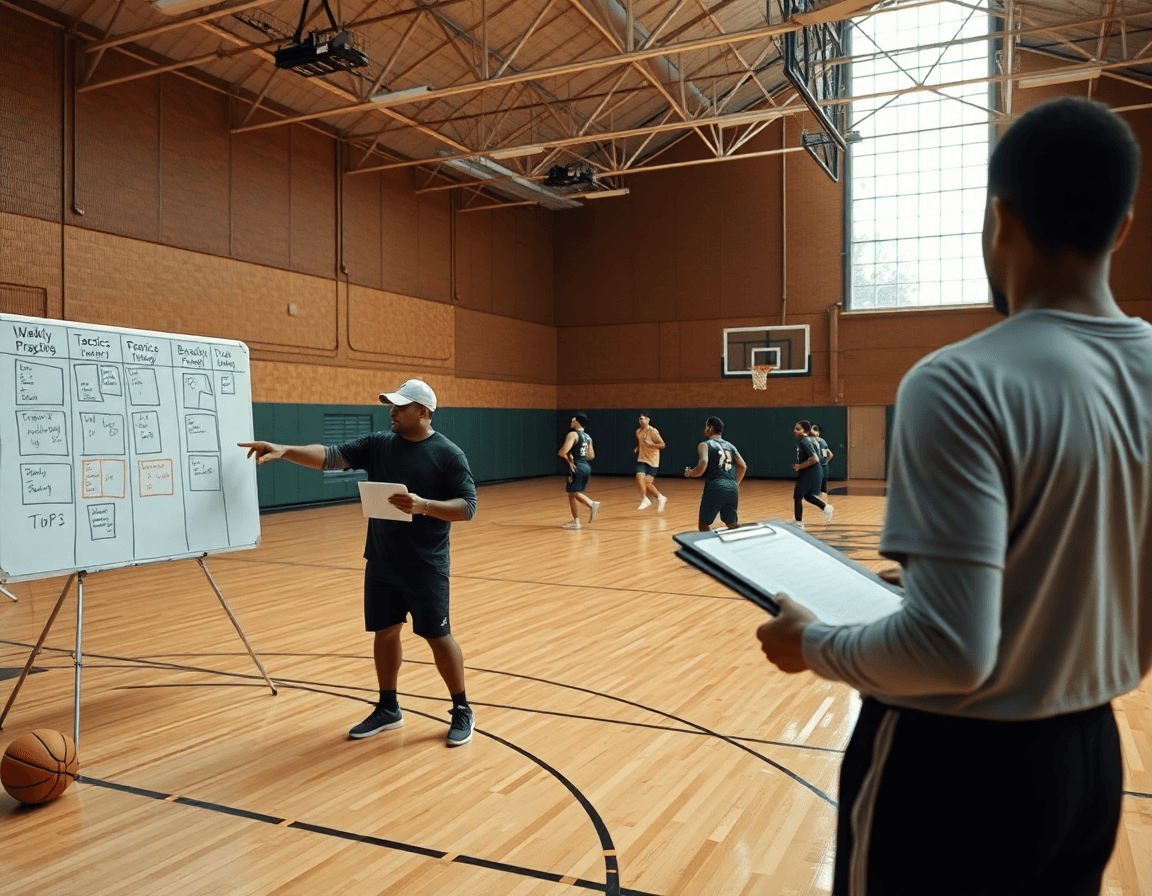
As a high school coach, turning a handful of drills into a cohesive weekly rhythm starts with pulling from the drills library. I map a clean progression: start with early-season ball-handling and dribbling drills, then layer in half-court offense sequences, move into shell drills for defensive stance and communication, and cap the day with game-like live periods in full court 5-on-5. The goal is clear: every rep builds toward the next, and nothing feels random.
To land this with your players, you must align drills with age/skill level and the season phase. I adjust complexity, tempo, and spacing accordingly. Early in the year the focus is fundamentals and simple reads; mid-season I add pace and space, faster decision points, and two-way teaching to reinforce both ends. Later, I tilt toward game-based practices that simulate late-game decision making while still threading in shell drills and dribbling drills to keep fundamentals sharp.
All of this sits inside a single workflow: use a Practice Planner to schedule the week, attach the drill progression, and share it with assistants for quick input. When everyone sees the plan in one place, the staff can lock in on one vision and execute the same sequence across practices. A clean, visible plan reduces confusion and makes feedback faster, especially after reviewing video clips from earlier sessions.
Make drills game-like and efficient
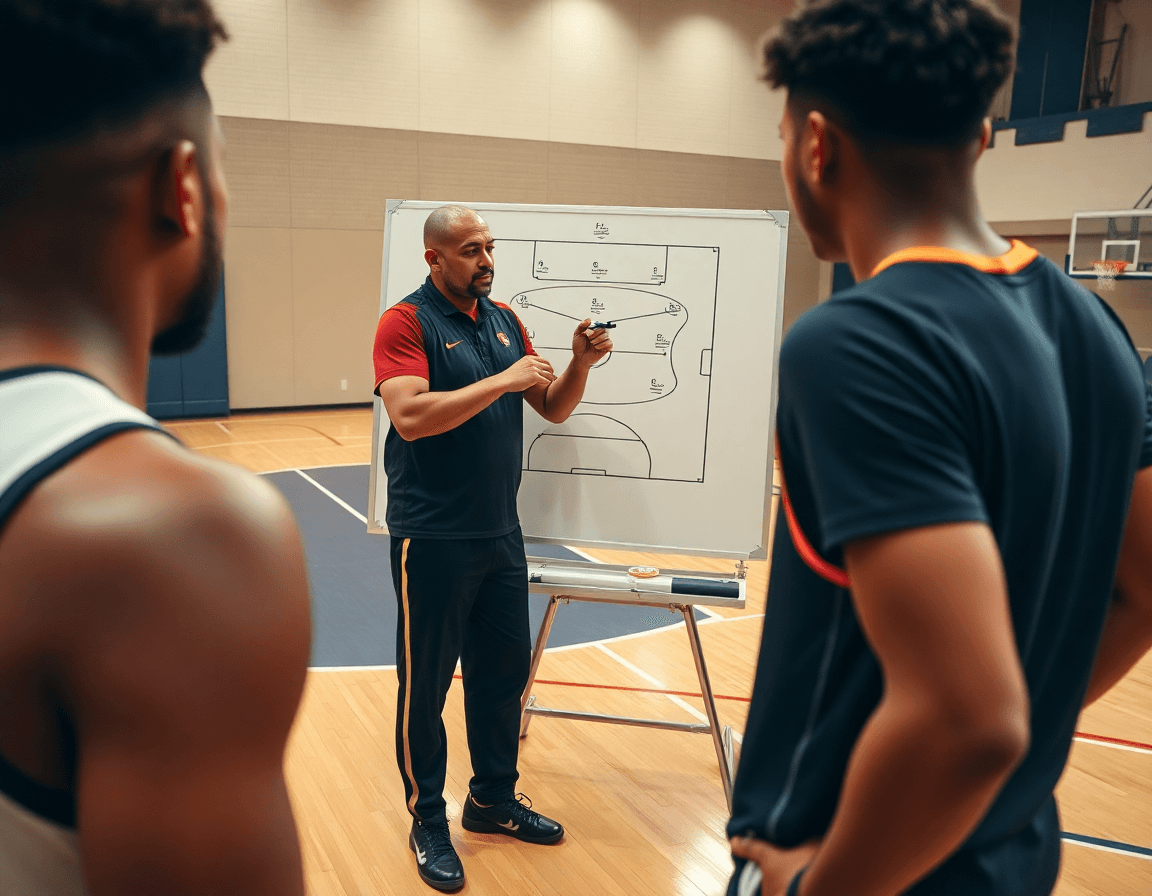
To make drills game-like and efficient, I design the week with pace-and-space concepts at the center. We run shell drill variations to enforce spacing and decision timing, then push into game-like flows that mimic the tempo of a close game. The goal is to keep players moving, decisions crisp, and the downtime minimal. We start with individual ball handling, move to two-on-two, then three-on-three, and finish with a driven sequence that leaks into a full-court transition.
On the whiteboard, diagrams for BLOB/SLOB/ATO/PnR anchor the teaching. I sketch routes, options, and reads in one frame, then load a quick clip that shows the concept in action. This isn’t just chalk; it’s a two-way teaching moment—players ask questions, I annotate, and the assistant runs the drill as we review the reads. The diagrams stay visible as players execute and adjust in real time.
Progression matters. Start with individual instruction, move to small groups, then 5-on-5. The path translates to both full court 5-on-5 and half-court offense, depending on the day. Each stage uses the same concepts, just with more defenders or tighter timing. We reinforce two-way teaching—players verbalize what they’re reading, errors are corrected on the spot, and we loop back to the exact clips in the plan to lock it in.
All of this ties together in the weekly flow: pull a couple of drills from the Practice Plans library, sketch the play on the whiteboard, capture a quick clip for feedback in the video clipping workflow, and assign a shareable playlist to reinforce concepts. This is how we turn game-like drills into a repeatable, coach-friendly routine.
Prep opponents with scouting and scout plays
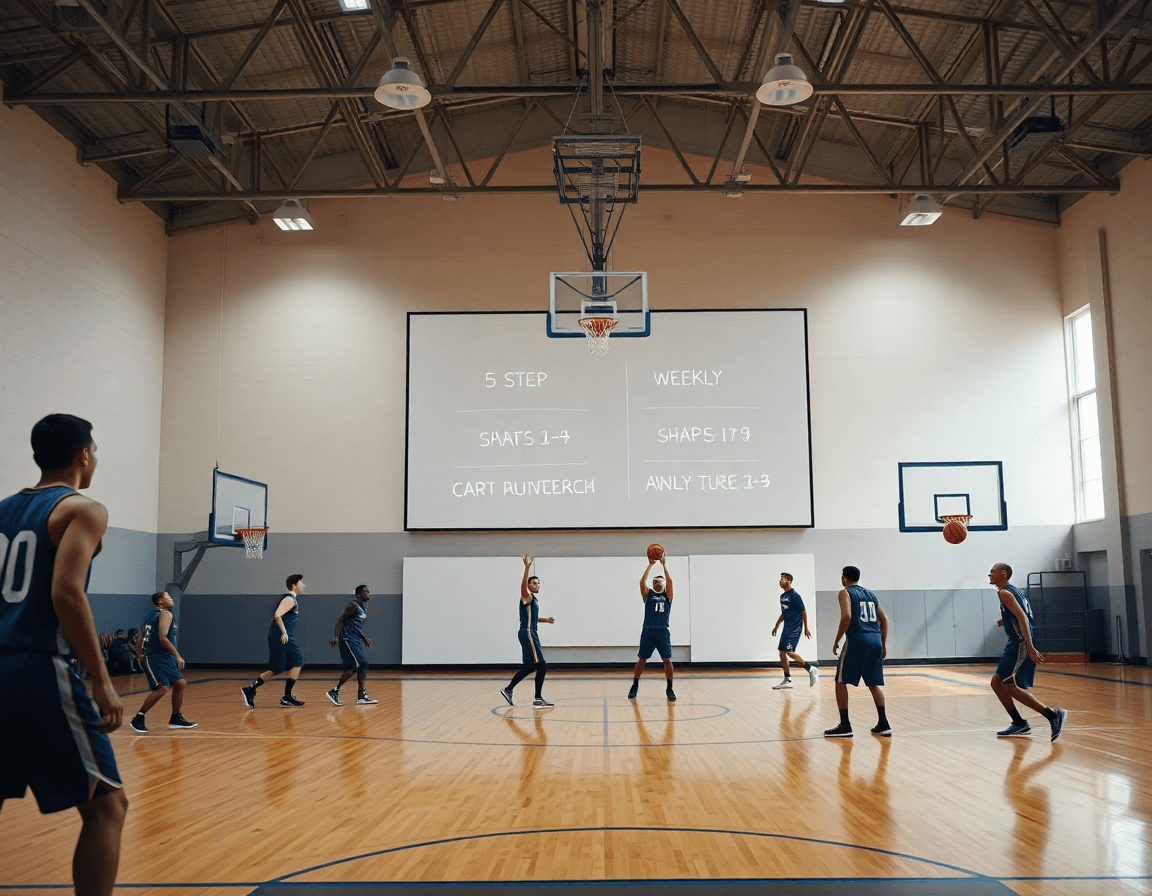
For a head coach prepping a week of high school basketball practice, scouting is the compass. You start with a clean set of scouting reports that highlight opponent tendencies: how they pace a game, how they attack ball screens, and who finishes plays in crunch time. The point isn’t pages of data; it’s spotting patterns you can turn into action. With clear notes, you can translate those insights into workable scout plays your team can feel in practice.
Translate those notes into concrete on-court action. In the plan, land 2–3 scout plays and build practice segments around them. If the opponent presses in the half-court, include a pressure defense sequence in a shell drill to slow transition and force decisions. If they rely on one primary scoring option, design a late-clock sequence that targets that matchup. Then run these looks in game-based practices, weaving in both full court 5-on-5 and half-court offense to train decisions under pace and space.
To keep everyone aligned, export the scouting package as PDFs or shareable links for assistants and players. A concise one-pager posted in the locker room or emailed after film review makes it easy to reference as you walk into practice. With the notes and scout plays in hand, players know what to expect and how to respond to the tendencies outlined in the report.
On the floor, you’ll see the flow come together: a quick whiteboard diagram for the scout plays, a short clip highlighting a defender’s read, and then a live drill—two-way teaching to reinforce habit. A focused shell drill, a quick dribble drill sequence, and a pace-and-space pattern all reinforce the opponent’s tendencies without losing the rhythm of your weekly plan.
Leverage video clips to teach and track progress
Clip relevant moments and categorize by skill or concept. After a practice, I pull a handful of video clips from the latest session—moments from half-court offense, shell drill, and pace and space sequences—that illustrate what we’re emphasizing this week. I tag them by concept (ball handling under pressure, decision-making in transition, rotations in a dynamic defensive shell) and drop them into a small library for quick review. The point isn’t to post a show reel; it’s to give the staff a quick reference when we plan the week, especially in a two-way teaching moment where reads matter.
Build playlists and shareable links for players. I bundle clips into compact playlists by topic—dribbling drills, shell drill adjustments, or specific game scenarios—and generate shareable links that players can open on any device. They rewatch at home, see the exact move to replicate, and come to practice with questions. That consistency helps us lock in concepts like pace and space and the timing of decisions in both full court 5-on-5 situations and tighter half-court offense blocks.
Use video to reinforce adjustments during drills and games. In the drill block, I pause a rep and pull up a clip on the tablet—showing a correct read in a two-way teaching moment or pointing out spacing gaps in a shell drill. We discuss it briefly, then run it live, using clips from dribbling drills or game-based practices to anchor the correction. Over the week, players build a personal library of video clips they can reference during in-game moments, reinforcing adjustments until they become habit.
Practical weekly workflow: 6-step routine
Step 1: Sunday plan using a template. I kick off the week for our high school basketball practice by outlining goals and priorities. I pull from the Practice Plans library, tailor a template to our roster, and lock in a concise checklist for weekly practice with a single measurable objective.
Step 2: Monday install plan with assistants. In the morning I brief my assistants, lock Xs and Os on the whiteboard, and assign stations for the day's drills. We confirm who handles video tagging and practice the shell drill and pace-and-space sequences. That quick install sets the tone for the week.
Step 3: Tuesday practice with video capture. We run through our blocks and capture clips for feedback. The video clipping workflow starts with tagging key moments, then exporting clips for players. We lean on game-based practices and targeted dribbling drills to reinforce concepts.
Step 4: Wednesday scout prep. Midweek we switch to scouting: I review scouting reports, mark patterns on the board, and prepare scout plays we can install Thursday. The prep feeds our install and keeps decisions anchored in opponent tendencies.
Step 5: Thursday adjust based on feedback. We compare clips and notes, tweak the Practice Plans library entries, and revise Xs and Os. Players contribute to the feedback loop in quick huddles, reinforcing two-way teaching before Friday's wrap.
Step 6: Friday recap and next-week planning. We recap progress, log improvements in the library, and publish shareable playlists for quick reinforcement. Then we outline next-week planning priorities and assign responsibilities, closing the loop on a practical weekly workflow.
If you build plans like this every week, CourtSensei keeps your drill library, whiteboard, and video clips in one place — try it free.
FAQ
How long should a high school basketball practice last?
Most high school practices run about 80–90 minutes. Structure it with clear time blocks: roughly 10 minutes for warm-up, 25 minutes of skill work, 25 minutes of team concepts, and 20–25 minutes of live practice or scrimmage. This cadence helps players stay focused and execute the plan consistently. Adjust slightly for your roster, but keep the cadence intact.
Which drills are essential for high school basketball?
Start with solid ball-handling and footwork, then add basic reads and decision points. Move into shell drills for defense, followed by half-court offense sequences and finally live 5-on-5. Include pace-and-space progressions to develop spacing and quick decisions. Tailor pace and complexity to your players and season phase.
How do you structure a high school basketball practice week?
Use a clear weekly framework. Day 1 focuses on shell drills and half-court offense; Day 2 expands pace-and-space; Friday ends with game-like 5-on-5 scrimmages. Maintain consistent time blocks and a unified workflow so everyone stays aligned. Pull sequences from your Practice Plans library and diagram plays on the whiteboard for quick feedback.
What is pace-and-space offense in basketball?
Pace-and-space is a tempo-driven attack built on generous spacing and quick decision-making. It leans on ball movement, screening, and attack-the-gap reads. In practice, start with shell drills, then progress to 2-on-2, 3-on-3, and 5-on-5 flows that mirror game tempo. The aim: cleaner reads and more open shots.
How can I make drills more game-like in practice?
Make drills feel game-like by centering the week around pace-and-space concepts and using progressive drills. Start with individual ball handling, then two-on-two, then three-on-three, and finish with 5-on-5 flow. Use quick clips and whiteboard diagrams for feedback. Keep downtime short and emphasize two-way teaching so players articulate reads and corrections.
What is a shell drill and how is it used in practice?
A shell drill focuses on defensive stance, positioning, spacing, and communication. It builds recognition and rotations without live ball movement, then blends into live sequences. Start with shell drills early to establish habits, then layer in full-court or transition looks to test reads under pace. Use it as a foundation for late-clock decisions.