Sideline Out of Bounds Plays: A Coach's Weekly Workflow
Master a weekly workflow for sideline out of bounds plays—plan SLOBs, diagram routes, export PDFs, and deliver end-game options with video-ready clips.

Key takeaways
- Adopt a 2–3 base SLOBs plan each week as the starting toolbox.
- Store base plays in Practice Plans, assign variants, and track weekly progress.
- Diagram the paths on the Whiteboard, export PDFs, and keep a short video clip playlist.
- End-of-game plan: identify 1–2 scalable SLOBs and practice them under pressure regularly.
- Create a weekly rhythm: install, reps, film, share, and pull the playbook into one system.
Why sideline inbound plays matter in a weekly plan
Sideline out of bounds plays—aka SLOBs—provide reliable, quick scoring options from the sideline that fit neatly into a coach's weekly schedule. When a possession needs a spark, a well-rehearsed inbound option can be installed, drilled, and trusted by players in a heartbeat. That’s why these plays belong in our toolbox, not as an afterthought. For a coach building a season-wide rhythm, sideline inbound options act like a steady heartbeat—simple, executable, and adjustable to pressure from different defenses. This is where weekly sideline inbound planning comes in.
Think of the week as install, reps, and variation days for SLOBs. We pick 2–3 base inbound plays to install—a box set, a stack set, and a wing-to-weak-side action—that cover typical defensive looks. Store the base plays in Practice Plans, assign variants to assistants, and track progress over the week. If you're wondering how to plan sideline inbound plays into a weekly routine, this approach keeps it clean. As you sketch routes and reads, the playbook lives in one system—no flipping between files or devices. When defenses show a new look, you tweak reads or swap in a back screen or down screen variation, all mapped on the same canvas.
On Monday in the film room, we pull a base SLOB from Practice Plans, diagram the routes on the Whiteboard, and assign an assistant to mirror the opponent’s pressure. After reps, we export a PDF to the coaching staff and drop a short video clip into the player playlist. The goal is a quick, repeatable routine: install, practice, film, share. By week’s end, every inbound play—box set, stack set, or a variant against a press—sits in a clean, accessible playlist for players.

Common SLOB formations and reads: box, stack, circle
Common SLOB formations—box set, stack set, and circle sideline inbound—offer different inbound reads and screen actions (down screens, back screens, seals). As a coach, I’ll sketch the play in the Practice Plan, then map it on the Whiteboard for the staff. The goal is clarity: if we’re facing a man-to-man or a zone, the same inbound play can sprout multiple options. Box set is our bread-and-butter for a quick hitter; stack set tightens the window for our ballhandler; circle sideline inbound keeps the court spaced and the options flexible. In practice, we teach the core reads first, then layer in action keys so players feel the sequence without overthinking.
Box Set gives you immediate options off the ball. The inbounder has a quick-pass to the wing or to the opposite corner, while a shooter or cutter with a down screen can pop open as the defense reacts. If defenders jump the window, we rely on a back screen to create a seal or a double screen to free the shooter. For down screens, we emphasize timing and body posture; for back screens, the angle matters. The reads shift with personnel, but the framework stays the same: whether it’s a shooter or a cutter, there’s a preferred doorway into your play.
Stack Set condenses options into a tighter space. A cross screen or a staggered double screen can free the target quickly, and the inbounder can skip to the weak side if help defense overhelps. Circle sideline inbound is our most versatile look; players stack near the ball and then sprint into a curl, flare, or back-cut when the defense rotates. The advantage is deception—eyes stay on one spot while the ball finds the best gap.
Notes on man vs. zone, inbounder options, and option reads for shooters or cutters keep tying these visuals to real game scenarios. I map these formations in Practice Plans and diagram them on the Whiteboard for quick reference, then export PDFs for assistants and keep a short video clip of each read in a playlist for players. This is how we keep sideline inbound plays consistent week to week.
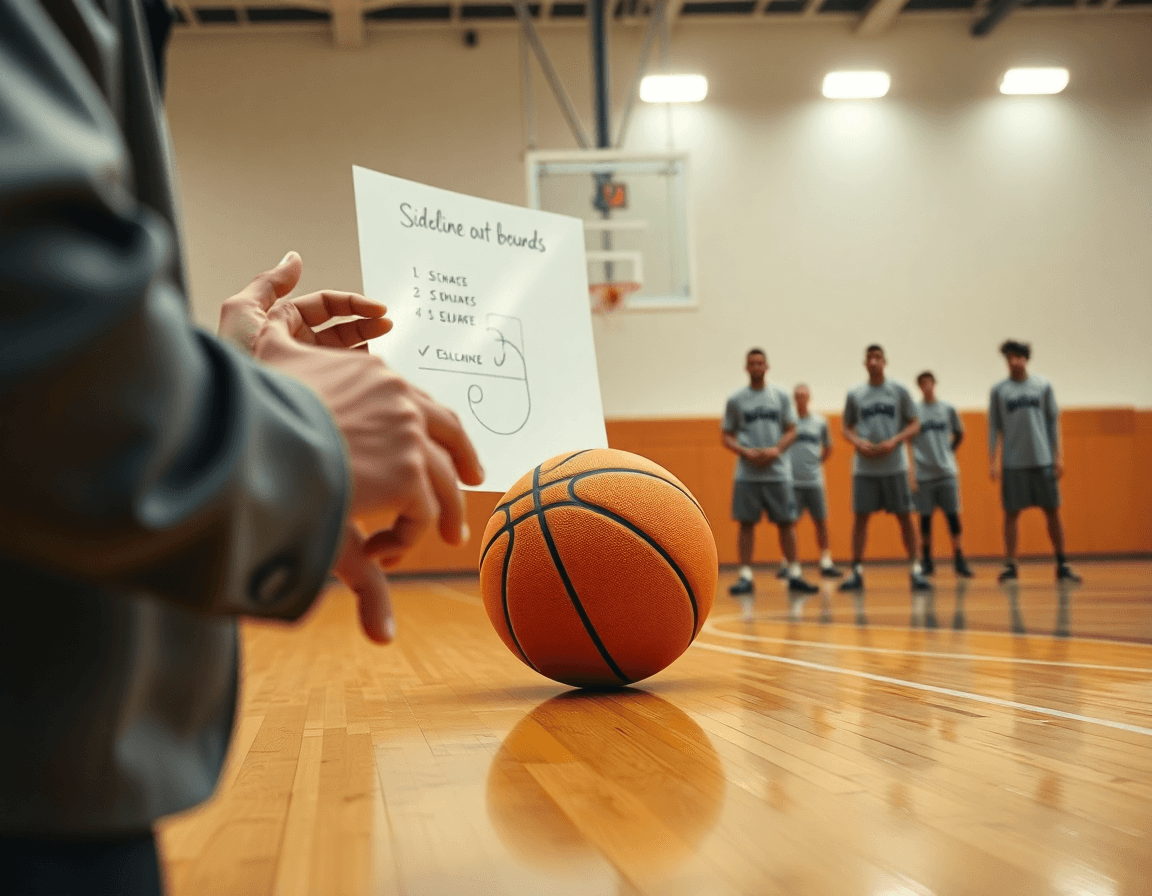
From plan to diagram: turning plays into visuals and PDFs
Sideline out of bounds plays don’t win games on paper. They win in practice, when a coach can take a concept and turn it into a visual the bench can follow under pressure. From concept to diagram to printable PDF: that’s my weekly workflow for inbound plays. I sketch the options on the court, then lock them into a clean inbound play diagram that captures timing, spacing, and the key reads for each SLOB variation.
Inside the Practice Plans, I drop the inbound play as a dedicated page: box set, stack set, or a simple double-screen action. Linking the concept to concrete actions makes it easier to assign roles to substitutes and to prep the scout for the opponent’s reactions. That way, every player knows where to be once the ball is inbounded.
On the Whiteboard, I schematic the paths: the inbound passer leading the sequence, the first cutter, the screening sequence, and where the ball goes if the primary option is covered. After the diagram is dialed in, I export to PDF so the team can pull it up later and we can attach it to the relevant Practice Plan.
Best part: a diagram library with every SLOB variation ready to go. I export-ready PDFs for assistants and substitutes, and I keep the PDFs attached to the Practice Plan for quick access during shootarounds or pregame prep.
That’s how I stay tight week to week: plan, diagram, PDF, repeat. When the inbound play diagram is ready, we’ve got a clear path—sideline inbound, box set, or stack set—so the sideline execution feels automatic for the whole team.
End-of-game sideline options: quick-hitters that seal the game
End-of-game sideline options demand clean reads and crisp execution. Identify 1–2 scalable end-of-game SLOBs that maximize late-clock efficiency. Design plays that read pressure, create openings for the inbounder, and offer a secondary option if the first read is denied. When the plan is solid, I drop these into Practice Plans, sketch the routes on the Whiteboard, export PDFs for assistants, and save the variants in Playlists/Shareable links for rapid access during timeouts.
Design SLOB 1: Box Set Baseline Read. Inbounder starts at the sideline, the ball moves to the top, and two cutters slip off a baseline screen to threaten the rim. Primary read is a quick release to a shooter on the wing for a quality look. If the defense denies, the secondary option uses a backdoor cut to the paint for a layup or a reset pass to the inbounder for a second clean look. This setup thrives against pressure and keeps the inbounder involved, with the box set giving you multiple clean angles in a tight window.
Design SLOB 2: Stack Set Quick-Reverse. Inbounder gets it from the sideline while a two-player stack creates space, the ball reverses to the top and a shooter on the weak side gets a clean look. If the defense overplays, trigger a quick back-cut for a layup or a skip pass to the opposite corner for a late-arriving shooter. This option shines when you need a reliable reset against a press and a quick trigger on the sideline out of bounds. Keep the variant handy in your sideline playbook and tailor it to your personnel.
Video workflow: clips, playlists, and sharing with players and assistants
During the weekly workflow, I pull and mark video clips from game and practice footage to isolate SLOB reads and sequences. I want our sideline inbound options—box set, stack set, down screen, back screen—clear in the film so the story is obvious: who reads the defense, who pops to the ball, and where the pass goes in different looks. A clean clip set also makes it easy for assistants to jump in, review, and annotate for next practice.
Next, I tag clips by play name (for example, “SLOB - Box Set X” or “SLOB - Stack Read”), then assemble them into playlists and share via shareable video links with the squad. Players can study the reads and routes on their own time, while assistants compare notes on the inbound reads and the timing of screens. The goal is a shared mental model: the box set reads vs. a stack, the nuance on a down screen, or the subtle curl off a back screen, all captured in a single, accessible library.
From a workflow perspective, I link these clips to scouting notes and drop them into the Practice Plans for easy access during film sessions or timeout huddles—especially the sideline inbound video we tag for specific opponents. In practice, I’ll pull a quick clip, walk through the read on the whiteboard, then push the related playlist to players’ devices. It keeps our weekly rhythm tight: clip, label, package, and push, so every inbound sequence—from the box set to the double screen—has a clear, repeatable process.
Practical weekly workflow to install and rehearse SLOBs
A practical weekly workflow to install sideline inbound plays starts with a tight, 60-minute cycle you run every week. On Monday, you set the base SLOBs in the Practice Plans: confirm the inbounder, select the plays—box set, stack set, down screen, back screen, double screen—and lock in the diagrams. This is how you execute the practice plan for SLOBs, and it keeps your sideline out of bounds sequences clean and repeatable.
Wednesday is about reinforcement: take those diagrams to the Whiteboard, walk routes and timing, and discuss the inbound options against different looks (inbounds pass). With the diagrams crisp, your assistants can follow the plan without guessing, and you square away call-and-response for the telltale moments of the play.
Friday is quick-hitters time: run a few 5-minute periods where the inbounders execute the set plays, tighten spacing, and tidy the routes. Have a short Video Clips handy to show the exact movement, then loop it for the team so every decision feels automatic under pressure.
Weekend review is where you close the loop: study clips, adjust any routes, and assign Playlists to players. Keep the feedback tight and actionable, using a concise clip to reinforce the rhythm of the inbound plays. By treating inbound sequences as a cohesive cycle—planning, diagramming, clipping, and sharing—you build a reliable routine that translates to game-day execution. All steps stay connected through Practice Plans, Whiteboard diagrams, Video Clips, and Playlists for a seamless cycle.
If you build plans like this every week, CourtSensei keeps your drill library, whiteboard, and video clips in one place — try it free.
FAQ
What is a sideline out-of-bounds play and when should you use it?
A sideline out-of-bounds play, or SLOB, is a designed scoring option drawn up from the sideline after a stoppage. It hinges on timing, spacing, and quick reads under pressure. Use SLOBs when you need a reliable bucket or to reset personnel and matchups late in the clock, after a timeout, or when defenders clamp down on the inbound.
How do you design an effective sideline inbound play for different defenses?
Approach begins with a clear weekly workflow and a handful of base sets you install each week. Map reads for man and zone, then layer in variations (back screens, cross screens) as defenses adjust. Keep timing tight, assign roles to players, and practice under pressure until reads feel automatic.
What are common sideline out-of-bounds looks and their reads?
Common SLOB looks include the box set, the stack set, and the circle sideline inbound. Box set uses a quick pass to the wing or a cutter with a down screen; if space closes, a back screen seals or a second screen frees the shooter. Stack set tightens the window with a cross or staggered screen, while circle keeps spacing and options flexible.
From plan to diagram: turning plays into visuals and PDFs?
Turn concept into practice with a simple weekly workflow: install, diagram, PDFs, and video. Start with a base SLOB diagram on the Whiteboard, export PDFs for assistants, and drop clips into player playlists. Keep a diagram library for quick access and ensure every inbound option has a clear timing and reads.
How can you defend against sideline out-of-bounds plays?
To defend SLOBs, pressure the inbound passer, deny the primary option, and overplay the top seams. Pre-scout the opponent’s SLOBs, assign a dedicated defender to front or deny the entry, and rehearse counter-rotations. Communicate early, switch on screens if needed, and vary looks so the ball handler can’t lock onto a single option.
What is an end-of-game sideline out-of-bounds play and when should you call it?
End-of-game SLOBs are 1–2 scalable options designed to beat pressure and capitalize on late-clock opportunities. Predefine the reads, a primary option, and a secondary option if the first is denied. Store these in Practice Plans, annotate diagrams, and rehearse them at game tempo so you can call them with confidence in the final minutes.