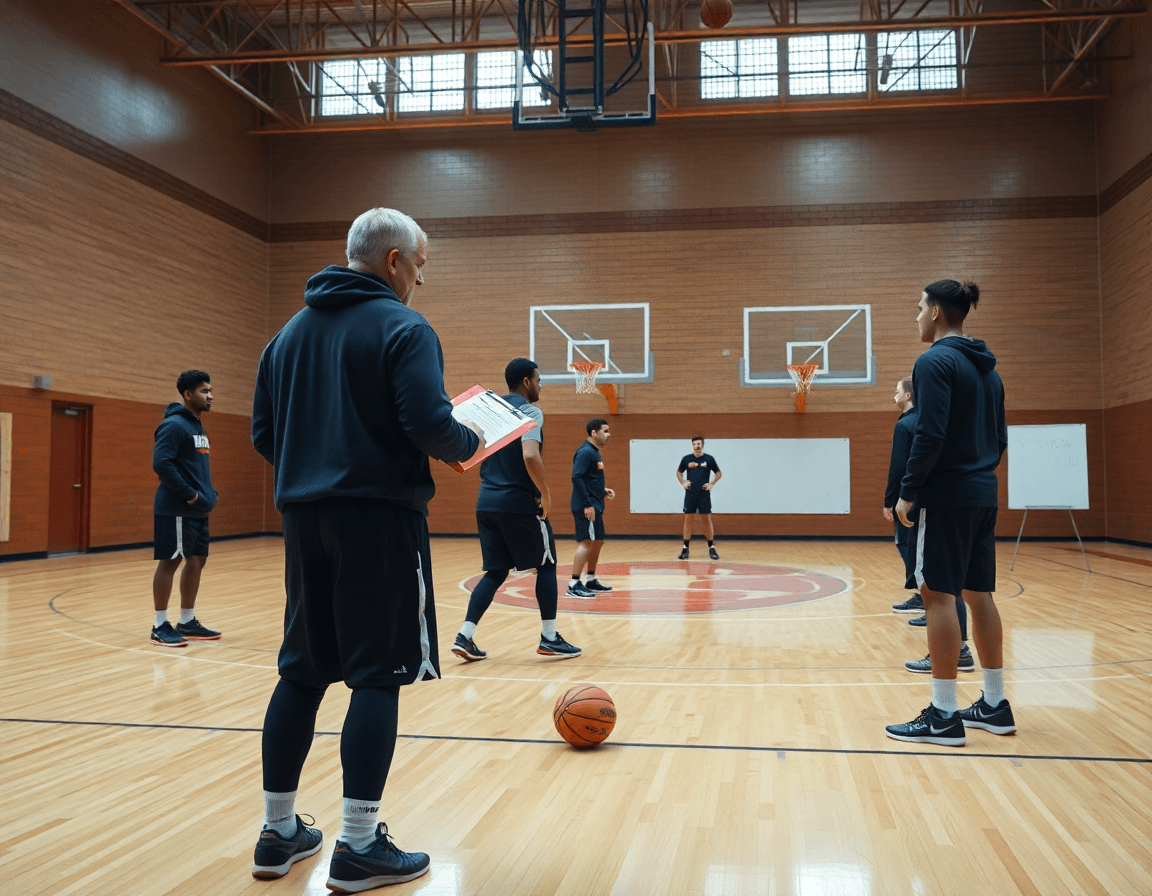
1 4 offense plays: Weekly Coach Workflow
A practical weekly workflow for coaching 1 4 offense plays: plan entries, install plays, build practice playbooks, and use video reviews to sharpen execution.

Key takeaways
- Solidify the baseline: master the 1-4 offense alignment and spacing, then annotate timing.
- Lock in entry methods: wing entry, dribble entry, and post entries, mapped to a time-structured plan for consistency.
- Design a progressive practice: teach action, run walk-throughs, add light defense, then compress to game-like pace.
- Install plays in a shared playbook with diagrams, clips, and scouting notes for repeatable execution.
- Leverage a time-structured training plan library to map your weekly rhythm, entries, and finish sequences.
Understanding the 1-4 Offense Framework
Understanding the 1-4 offense starts with the alignment. In its simplest form, one guard at the top initiates the action while four teammates occupy perimeter spots in stacked positions. You’ll run variants like 1-4 high offense and 1-4 low offense to stress the defense in different ways. A high stack puts the bigs around the elbows and FT line, while a low stack keeps players lower, enabling slips and immediate cuts.
Spacing is everything. With a 1-4 offense you want even width without clustering. Quick ball reversals and off-ball movement force the help to relocate, opening back-cut opportunities from the wings and driving lanes for the driver. Use a time-structured plan to rehearse timing, then clip and annotate key moments so every cutter and passer knows when to strike.
The framework connects with other formations as a transition concept. It can flow into a 4-out set when you want more perimeter shooting, or shift to a 3-out 2-in set to pair ball-screen options. Roles follow from there: the top guard becomes the primary decision-maker; wings space to the corners; the bigs read when to pop, slip, or seal. In a high stack, a post player might be the primary screen cutter; in a low stack, the post threats can dive or post to create advantages like a low double stack.
Communication in practice is crisp and repeatable. Use concise rules and reads for spacing, screens, and cuts. In your weekly plan, run a concise “rules and reads” progression, then bring in short video clips to illustrate the reads and show the reaction. When you prep for an opponent, your scouting notes focus on how their personnel defend the 1-4 framework and where the attack must start in your playbook.
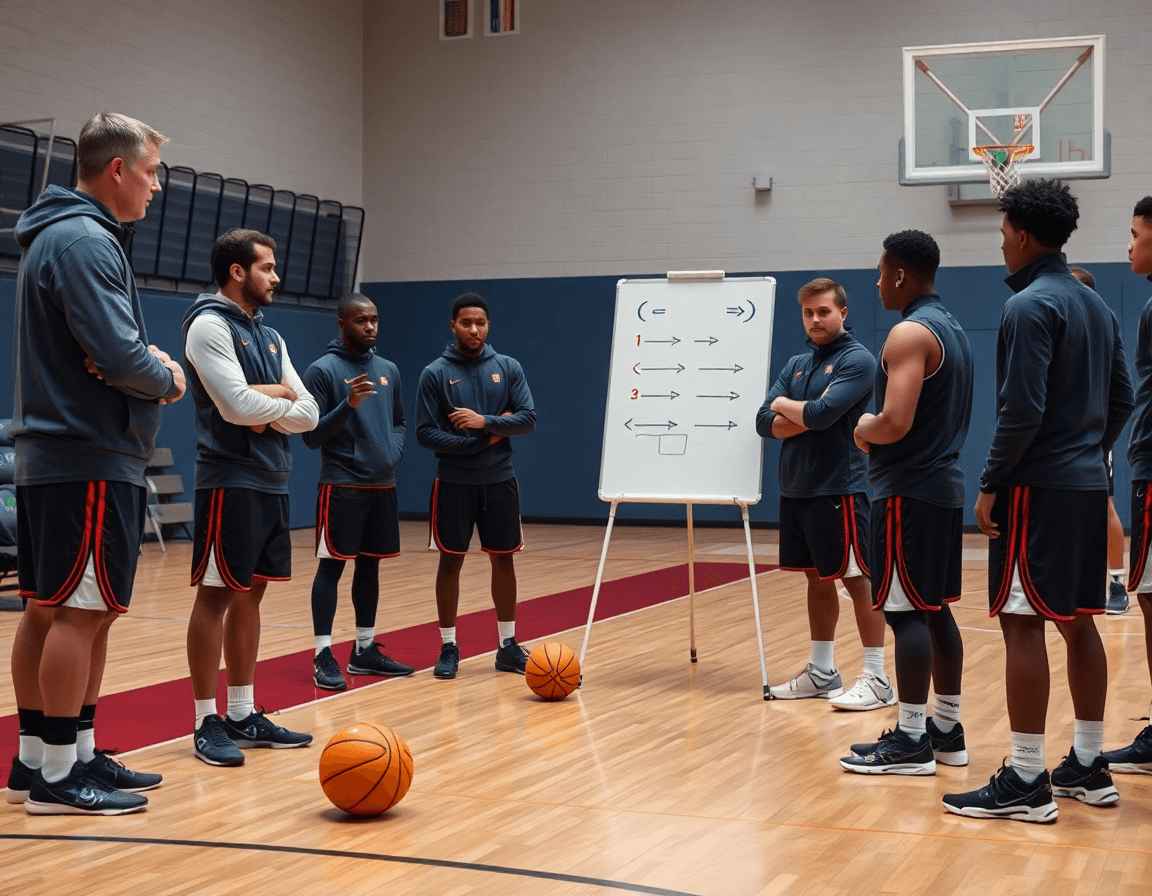
Entry Methods into the 1-4 Offense
Entry methods into the 1-4 offense give you multiple levers to initiate your set and attack gaps. In a weekly plan, you’ll lean on three primary paths: wing entry, dribble entry, and post entry. Each path creates a different angle of attack and tests how quickly spacing and ball movement can flow into the 1-4 offense. Use the time-structured training plan library to map these entries, annotate decision points, and rehearse them in a sequence so the team moves as one.
Wing entry: how the offense initiates from the wing and transitions into the 1-4 shape. The wing entry typically starts with a catch-and-pass or a quick screen-and-pop, then the ball advances to the top as players relocate to form the 1-4 shape. In practice, you script this sequence, draw the handoffs or passes, and use animation to lock in timing. You can create a couple of variants—into 1-4 high offense or into 1-4 stack offense—to expose the squad to different tempos without losing consistency.
Dribble entry: options when the ball starts at the top or wing and a dribble entry is used. A controlled dribble entry opens lanes for early ball reversals and late creases to the corners. You’ll script the dribble handoff, the slight off-ball movement, and the moment of entry into the 1-4 offense. Rehearse with short video clips, then drop the sequence into your playbook so assistants can review from a read-only link and you can track timing against your practice plan.
Post entry: seals, interior passes, and space creation from the post into the 1-4 structure. The post entry emphasizes strong seals, quick interior passes, and a deliberate exit into the wings. Script the sequence from seal to kick-out, animate the angles, and tag each decision point in the play. This path often feeds into variations like the low double stack or low offense.
How to script and rehearse each entry in a practice plan to build consistency. For every entry, attach a dedicated drill block, pair it with a short video clip, and sequence it within a weekly workflow. In CourtSensei, you can organize these entries alongside scouting notes and a complete playbook, ensuring every transition into the 1-4 offense is rehearsed before it hits the floor.

Sample 1-4 Plays to Install This Week
In this week’s run, zero in on 3–4 representative actions for the 1-4 offense plays to install first. Think in terms of options that flow into each other: a back-cut option off a ball reversal, a couple of pick-and-roll variants, and a spacing cue that invites reads. The goal is to have a compact, repeatable kit that can be dialed up or down depending on opponent and game flow, without overloading the floor.
Next, spell out the core read and reaction path for each action. Discuss spacing cues—where teammates line up, how to occupy gaps, and where the ball-side shooter can threaten—so you have clear, teachable triggers for defenders. Then map out counters against common matchups: how the action adjusts if the big hedges, or if the weak-side defender anticipates the cut. Tie in the relevant names from your playbook, like 4-out set or low double stack, so you’re building a language the bench can follow.
Now outline a simple progression to install and validate the actions. Start with a quick teach of the action, then rehearse with walk-throughs—no defense, just timing and reads. Add light live defense to stress decision-making, then move to a game-like pace where players execute under pressure. This sequence keeps players sharp while you monitor spacing, timing, and reaction as a unit.
Finally, document and reuse these plays in a shared playbook with clear diagrams and notes. Use the platform to store the action diagrams, clip key reps, and build across your week so the installation is repeatable—ready to pull into the next scouting note or game-prep batch.

Practical Workflow: Install 1-4 Plays in a Week
In a busy week, you install 1-4 offense plays through a practical, time-structured approach. Use CourtSensei's time-structured training plan library to map your weekly rhythm—space the entry points, reads, and finish sequences into your plan. Whether you’re running a 1-4 offense, a 1-4 high offense, or a 4-out set, this weekly workflow keeps installs clean and repeatable across practice blocks.
Day 1–2: install two plays with clear entry and finish sequences. Use the draw/animate tool to lock in spacing and reads, then export a PDF-ready diagram for your board.
Day 3: run situational drills and light live reps to reinforce reads. Use short video clips to reinforce reads and pull scouting notes into the coaching workspace for quick reference.
Day 4: simulate live defense scenarios and adjust spacing cues. Practice how the ball and players react under pressure, then tweak diagrams so reads remain option-based and clear.
Day 5: finalize play diagrams, assign roles, and prepare a printable playbook for assistants. With all clips, notes, and diagrams organized in your coaching workspace, you have a cohesive practice plan that supports consistent execution of the 1-4 offense in your weekly plan.
Teaching with Video, Clips, and Playlists
Plan the weekly routine around the 1-4 offense plays by starting with practice footage. Upload footage and select clips that illustrate key actions within each play. The visual library should cover the variants you coach most often—1-4 high offense, 1-4 stack offense, and 1-4 low offense—so you can ground your teaching in real examples. Use these clips to anchor your teaching in the plan, and highlight spacing, entry passes, and reads.
Clip and tag sequences to create focused teaching snippets. Break down the sequences by action—ball movement, off-ball cutting, screening, and reads—and tag them so a coach can pull a precise clip during a walk-through. The result is a library of concise clips that fit into your weekly drills and tempo, making it easier to demonstrate a concept on the floor.
Assemble playlists by play or by concept to guide practice sessions and reviews. Create a playlist for each 1-4 offense variant (for example, 4-out set or 3-out 2-in set) or by coaching concept (entry, spacing, screening). These playlists help structure your on-floor sessions and film reviews, so players see the same sequence across drills and scrimmages.
Export annotated sequences and PDFs to share with assistants and players. Annotated sequences give quick reminders at the whiteboard or in film sessions, while PDFs of the playbook export keep everyone aligned on the plan for the week. The combination of PDF export and annotated clips ensures your 1-4 offense plays are rehearsed consistently.
Scouting and Game Prep for 1-4 Offense
Start the week with scouting reports that feed the plan for the 1-4 offense. In weekly practice, a coach pulls opponent tendencies from film and notes, then maps those reactions to 1-4 offense looks—high, stack, or low sets. Use CourtSensei to link each scouting report to specific drills and plays, so the Monday session walks through a plan that already anticipates how the defense will react to entry options. It turns scattered clips into a coherent week of focused work.
To translate those tendencies into action, craft concise game prep notes that adapt the 1-4 framework to the upcoming opponent. The notes should summarize opponent tendencies that influence entry choices and wrinkle plays—how a team hedges ball screens against the 1-4 offense, when they trap in the corner, or switch front to slow the drive. In CourtSensei, attach clips to each note and build a playlist that staff can review before practice, ensuring everyone is on the same page when the defense tries to disrupt rhythm.
During the weekly workflow, capture progress and insights in a central coaching workspace so adjustments carry forward. After each matchup, summarize what worked in the 1-4 offense and what to tweak, then store it for the next week. The goal is a single source of truth where scouting material, game-prep notes, and clips stay organized, so a coach can quickly assemble a wrinkle for a West Coast 1-4 Stack Offense or a 4-out set when the matchup demands it.
FAQ
What is a 1-4 high offense and how does it look on the court?
1-4 high offense centers on a guard at the top with four players spaced around the perimeter, creating quick, decisive action. The high stack keeps options around the elbows and the free-throw line, letting you punch gaps with reversals, cuts, and slips. In your weekly plan, script timing, then clip and annotate reads so every cutter and passer knows when to strike. Practice emphasizes 1-4 high offense and spacing.
What are the entry methods into the 1-4 offense (wing entry, dribble entry, post entry) and when should you use each?
Entry methods into the 1-4 offense give you multiple levers to initiate action. Wing entry starts with catch-and-pass or a screen-and-pop to form the 1-4 shape; dribble entry opens early ball reversals; post entry feeds the wings through seals and quick passes. Script these in a time-structured plan, attach decision points, and rehearse them with short clips so assistants can review from a read-only link.
How does a 1-4 stack offense differ from other 1-4 variants?
The 1-4 stack offense shortens the spacing and keeps the post threats closer to the action compared with other 1-4 variants. A high stack leans on perimeter screens; a low stack emphasizes slips and post dives. Understanding these shifts helps you adjust reads, align your playbook, and map counters to opponent defenses without changing core reads.
What is a 1-4 low offense and when should you use it?
The 1-4 low offense keeps players lower to unlock slips, post dives, and secondary actions. It pressures interior defenses and pairs well with occasional kick-outs to shooters. Install it with a simple week-by-week progression, pairing drills with short video clips and clear reads that explain where the post and wings attack from the low stack.
What are common 1-4 offense plays and how do you install them in a week?
Common 1-4 offense plays blend back-cuts, select pick-and-roll variants, and spacing cues to invite reads. Install them in a compact, repeatable kit using a time-structured training plan library, then store diagrams and key reps in a shared playbook with clip references. Map counters for common matchups and build a language your bench can follow.
How do you practice a 1-4 high offense in a weekly workflow?
Practical workflow for installing a 1-4 high offense starts with a weekly rhythm: define entry points, reads, and finish sequences, then rehearse in sequence. Use video clips to illustrate reads, integrate them into your scouting notes, and share a read-only link for assistants. This cadence keeps spacing tight, timing consistent, and decisions crisp under pressure.