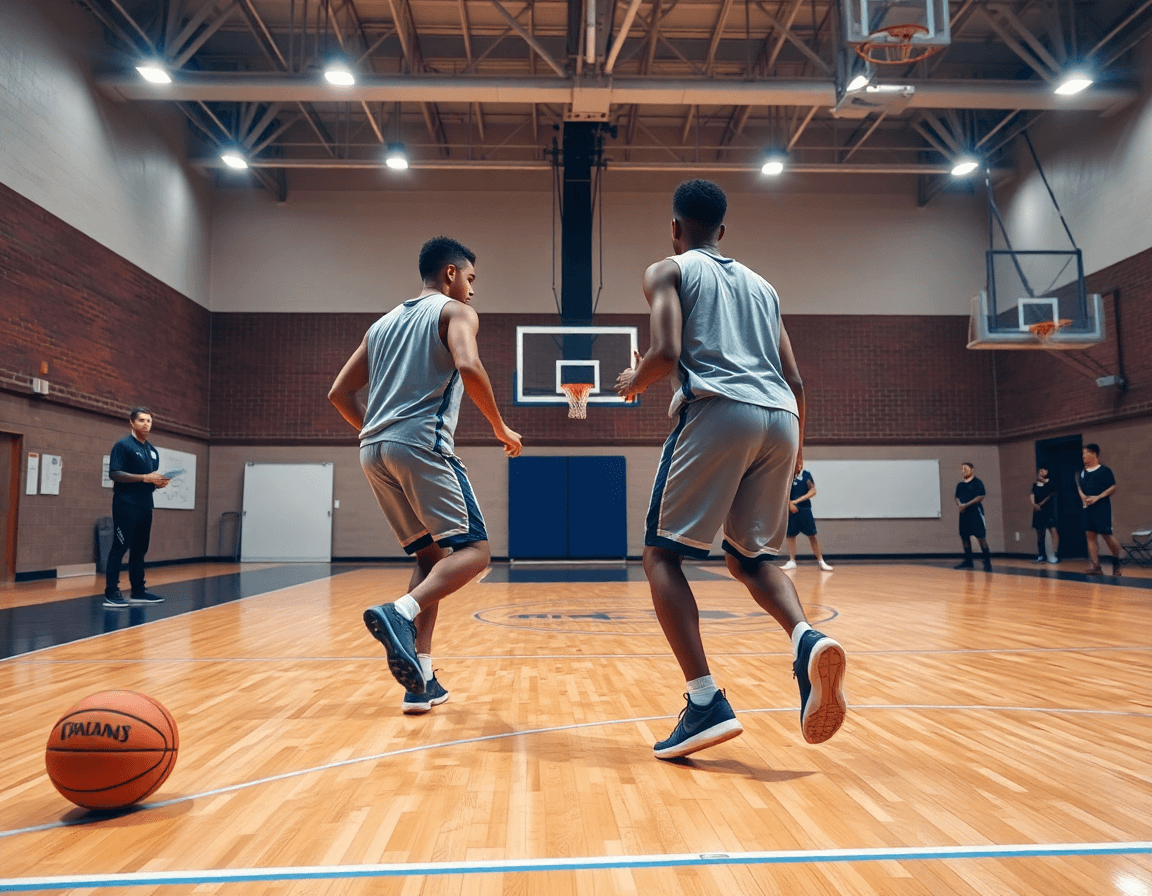
2 man dribbling drills for weekly practice
Coach-focused guide to 2 man dribbling drills for your weekly plan. Build ball handling, decision-making, and transition play with practical progressions.

Key takeaways
- Set a clear weekly objective aligned to a core 2-man drill; track progress with simple progressions.
- Incorporate diagrams and clips to visualize spacing and reads; ensure players see reads before moves.
- Progressive two-man sequences from 2-on-1 reads to half-court transitions; emphasize outlet timing and decision speed.
- Incorporate pace variation to mirror game tempo; pair with a playlist and scouting notes for rapid adjustments.
- Keep a cohesive week plan by linking diagrams and video clips in a shared playbook.
Why 2-Man Dribbling Drills Matter This Week
This week, the focus is on 2-man dribbling drills, or two-man ball handling drills, because they force partner-based decision-making and chemistry under pressure. When two players handle the ball together, reads become quicker and more instinctive, especially in tight spaces.
These drills simulate game pace in a controlled setting, sharpening transition timing and tempo. The week’s plan weaves them into the rhythm of other sessions so the pairings stay fresh without fragmenting the workload. By stacking sequences—from a simple drive and dish to a quick two-man fast break—the team practices flow, not just technique.
In practice planning, use playbook diagrams to visualize two-man sequences for fast reference. A clean diagram on the board helps shooters and ball handlers sync on cuts, screens, and outlet passes as the action evolves. Pair drills with a short video clip showing the exact hand-offs and decision points, then drop them into a playlist for the week. This keeps the learning compact and repeatable, especially when the clock is short and tempo matters.
Support each session with scouting notes that capture how opponents pressure two-man sequences: where the gaps open during a drive, how defenders angle to the dribble battle, and which outlets trigger the fastest transition. These notes translate into adjustments in the weekly plan, ensuring the 2-man drill work translates to game-ready timing. When diagrams, clips, playlists, and scouting converge in a single workspace, the coach can execute a cohesive week of training without relying on external analytics.
Workflow: Build Your Weekly 2-Man Drill Plan
Define a clear weekly objective. For example, focus on outlet-to-drive timing on fast breaks or sharpening the read on a two-man fast break. In your weekly plan, anchor that objective with a core 2-man drill and map out simple progressions. This frames practice blocks and keeps your coaching staff aligned around a single, measurable goal, and reinforces how 2-man dribbling drills fit into the week.
Add a core 2-man drill (for example, a drive-and-dish sequence) and build variations for subsequent sessions—like a two-man fast break option or a quick, contested dribble battle. Use diagrams to visualize spacing and decision points so players see the read before they make the move. Each variation should still feed back to the same weekly objective.
Lay out the blocks with 3-4 practice blocks that rotate the core drill and add progressive challenges. For each block, define explicit drill sequencing and success cues—spacing, timing, and reads that matter for the outlet pass, baseline drive, and drive-and-dish options. Attach or link video clips illustrating each step; export the plan as a PDF for staff.
Organize drills into a shared playlist or collection for easy access during warm-ups and plan updates. Link in scouting notes on opponent tendencies to adjust the drill emphasis. This workflow uses diagrams, video clips, playlists, and scouting notes to support a coach’s weekly routine without relying on AI analysis.
Progressions: From 2-on-1 to Full-Court Transition
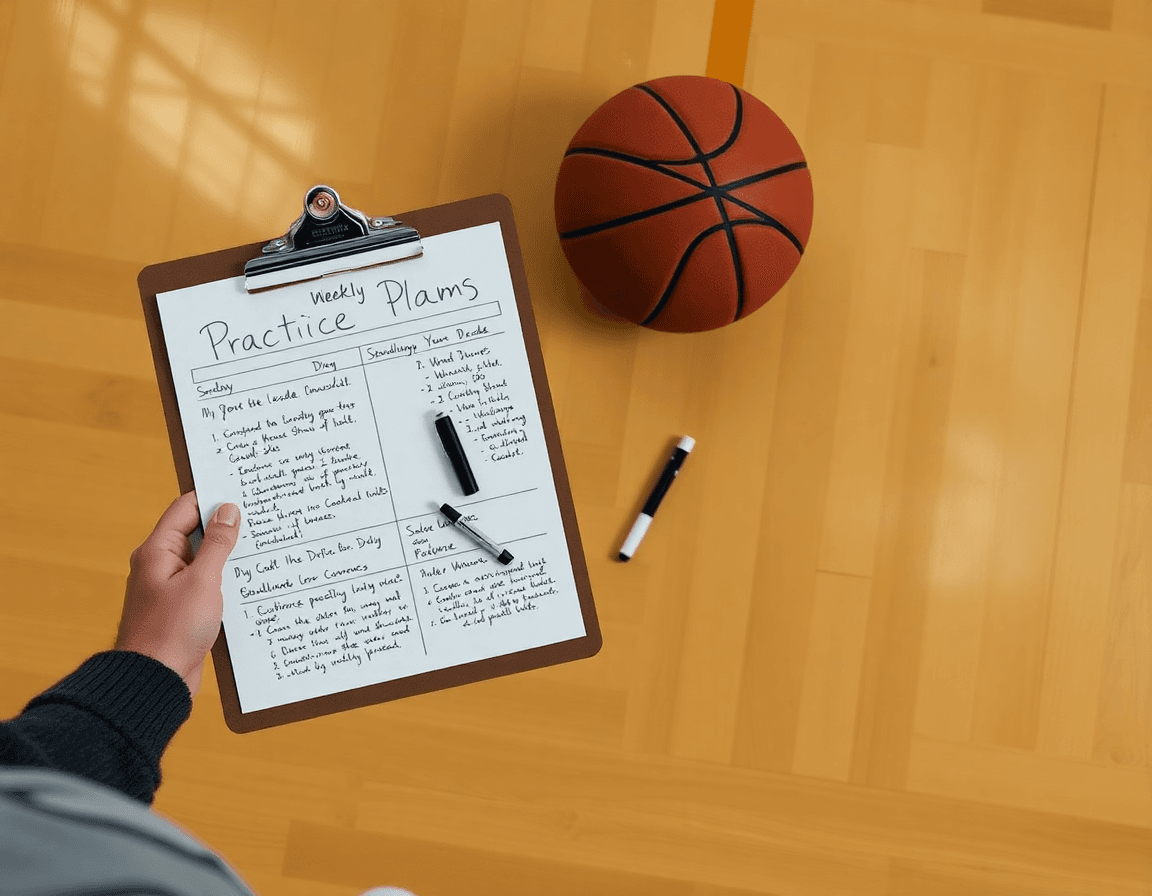
Progression starts with a 2-on-1 attack reads, emphasizing outlet passes and lane runners. In the weekly plan, this is the first step of a two-man progression, supported by a clean diagram on the clipboard that shows the outlet passer and the two runners. A short video clip of the read anchors the drill entry, so the sequence is easy to review in a team session. A scouting note can capture typical defender responses and what triggers the outlet pass, helping you teach the concept with clear cues.
Advance to half-court decision-making, then baseline drives and drive-and-dish transitions. At half-court, players read angles, intercepting passing lanes and choosing when to pull up or accelerate. This leads to baseline drives that culminate in a drive-and-dish to the weak side. Each stage gets a dedicated drill entry and a clip, so the weekly plan can be reviewed in minutes. The playbook links the action to a read, a pass, and a finish, with scouting notes on coverages and help-side reactions.
To mirror game tempo, incorporate pace variations to simulate the rhythm of live action and the pressure of defender presence. Alternate controlled, technique-focused reps with accelerated sequences that stress ball-handling under fatigue. Tag these as a pace drill variant and pair with a clip that shows spacing, timing, and outlet timing under pressure. This helps you coach transitions without slowing down the flow of practice, maintaining emphasis on ball movement and decision speed.
Map each progression to a specific drill entry and clip for quick review, so you can pull the sequence during prep. In the weekly workflow, attach a two-man progression playlist that includes diagrams, video clips, and a scouting note for the next session, ensuring a smooth, repeatable process across practices.
Drawing and Animating 2-Man Actions for Your Playbook
Start with clear diagrams of two-man actions—pass, drive, finish—mapped to timing and lanes. In your playbook, label each entry pass, the reads by the ball handler, and the path of the cutter. For a baseline drive into a drive-and-dish sequence, mark where the defender slides, where the outlet pass initiates, and where the finish should occur. These diagrams give you a visual spine for your weekly plan, and they anchor your 2 man dribbling drills in a concrete sequence. Keep the terminology tight: timing cues, lane assignments, and reads.
Link each diagram to the drill it represents in your weekly plan. For example, connect a baseline drive into a 2-man drill and a finishing rep that stresses decision speed. Tag the drill with secondary keywords like “dribble battle” or “outlet pass” so the library stays searchable inside your coaching workspace. When you have a short video clip, drop it into the session playlist and cue players to watch the read and lane flow before you run it on the court. This approach helps you synchronize drawing plays with practical on-court reps, from warm-up to live action.
Export annotated playbooks as PDFs for team reference and opponent scouting prep. The PDFs carry your diagrams, the timing cues, and the linked drills from the week, so assistants and scouts can study the two-man actions without logging in. Include a short scouting note section alongside each play to outline counters you expect from the opponent. In practice, this workflow keeps your playbook living—diagrams, videos, playlists, and notes all stitched together for a clean, repeatable weekly cycle.

Video Integration: Clip, Organize, and Share Drills
After practice, you upload footage of the 2-man dribbling drills and use clip editing to trim to the moments that matter—tight handles under pressure, the drive-and-dish sequence, and the outlet pass that starts the break. The resulting video clips are tagged by drill type so you can quickly pull up a specific scenario during your weekly plan.
With clips organized, build playlists of related two-man scenarios for rapid review. A playlist might pair drive-and-dish sequences with two-man fast break reactions or a 2-on-1 defense rep, giving you a concise reference for scouting and practice design. Playlists help you see patterns at a glance and speed up your tactical decisions on the floor.
Share read-only links with staff for asynchronous feedback, so assistants can add notes to the clips without altering the originals. This keeps your weekly workflow intact—quick reviews of the clip editing results, targeted notes on a 2-man drill like “drive and dish,” and feedback that informs the next practice plan. Read-only links enable a clean, collaborative loop while you stay in control of the material.
Scouting-Driven 2-Man Game Prep
To tailor your weekly plan, lean on scouting reports to shape your 2-man drill work around opponent tendencies. If scouting reveals the defense struggles with pressure on the ball, design 2-man drills that emphasize a quick outlet pass, a two-man fast break, and a drive-and-dish sequence. Use a simple diagram to map the routes in the drill, then pair it with a short video clip showing the timing of ball handlers and finishers. The goal is to practice ball handling under pressure while keeping pace between drives and passes.
Frame the drills with specific opponent defense and decision points: when the defense shows help rotations, add a decision point where the ball handler chooses between driving, passing to the corner, or resetting the play. Tie these into drill objectives and emphasize elements like 2-on-1 defense, decision fidelity, and finish at the rim or with an outlet pass. Keeping a clear focus on opponent tendencies helps you select the most impactful two-man drill variants, such as "drive and dish" or "dribble battle" sequences, without drifting into generic work.
Attach scouting and game-prep notes within the coaching workspace for quick reference during plan execution. Include a labeled diagram, a short video clip, and the scouting note so the staff can glance at the plan before practice. This workflow helps your weekly routine stay cohesive: the 2-man dribbling drills feed into the playbook via diagrams and clips, while game-prep notes sharpen adjustments against the opponent’s tendencies on game day. All of this sits alongside your plan, archived as a single, accessible resource for fast reference.
Practical Workflow: Week-By-Week Checklist
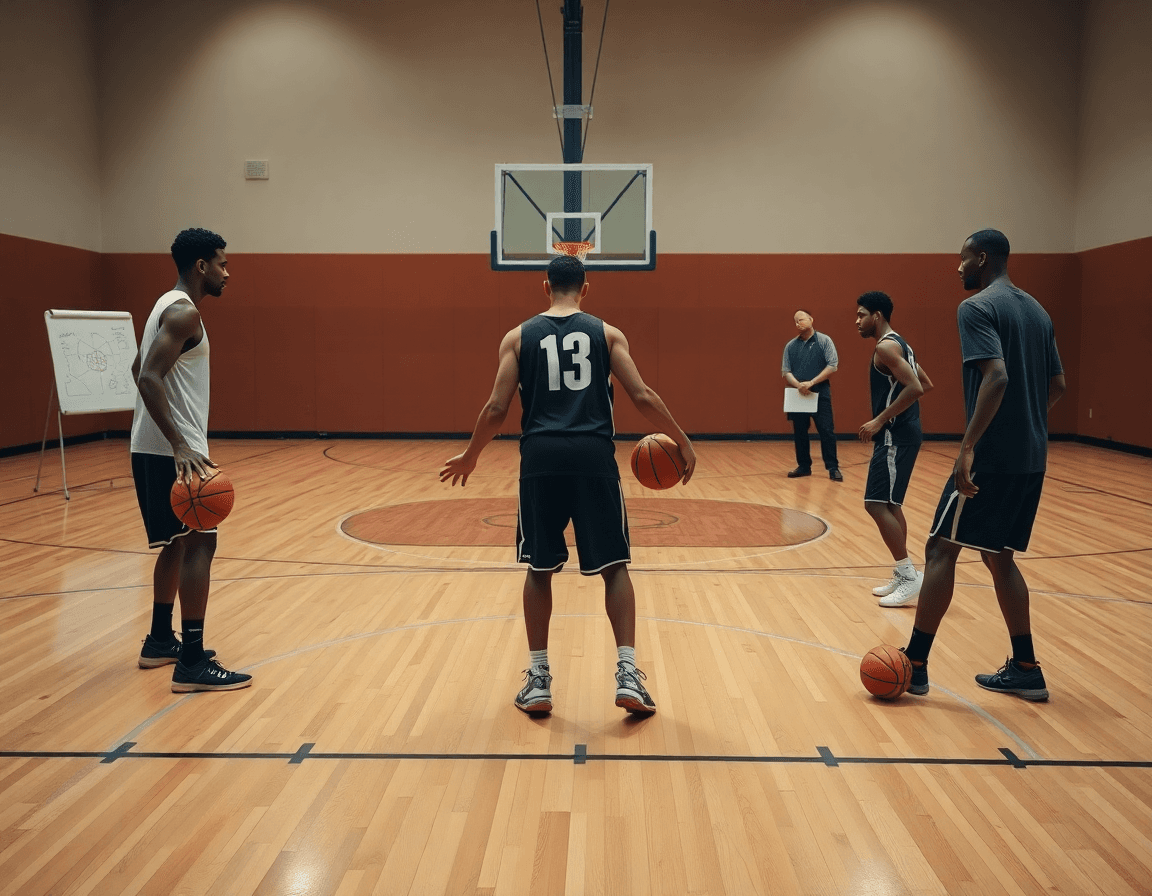
Transform your weekly routine with a practical framework to embed 2-man dribbling drills into a coherent weekly workflow. By wiring diagrams, video clips, playlists, and scouting notes into your training plans, you create a repeatable sequence that builds ball handling and decision-making without relying on AI analysis.
Define weekly objective for 2-man drills. Begin by defining a clear weekly objective for 2-man drills. Tie it to the season’s needs—whether it’s tightening the drive-and-dish reads or sharpening ball-handling under pressure—and connect it to your scouting notes.
Build or load a structured plan in the training library. Create or load a structured plan in the training library, using diagrams to map the progression of 2-man drills and attaching it to the team playbook.
Schedule 3-4 practice blocks focused on progression. Schedule 3-4 practice blocks that progress from basic ball-handling to more complex reads—dribble battles, two-man fast breaks, baseline drives—while tracking progression.
Create or attach a video playlist for review. Create or attach a video playlist that showcases 2-man drill concepts—dribble battles, two-man fast breaks, and drive-and-dish sequences—and label clips for quick review.
Clip, tag, and summarize key takeaways from each session. Clip each session, tag clips by drill type (2-man drill, two-man fast break, 2-on-1 defense), and summarize key takeaways for later reference.
Review progress with the team and capture feedback. In a brief team session, review progress and capture feedback on what clicked and what needs polish—focus on how players read in 2-man situations.
Adjust next week's plan based on outcomes and scouting notes. Adjust next week's plan based on outcomes and scouting notes, refining targets for ball-handling, outlet passes, and drive-and-dish timing.
Export a shareable plan and playbook for staff. Export a shareable plan and playbook for staff as a PDF, so assistants and coaches can follow the same week-by-week workflow and diagrams.
FAQ
What are the goals of 2-man drills in basketball training?
Bold 2-man drills matter because they force partner-based decision-making and chemistry under pressure. With two ball handlers, reads become quicker and spacing more deliberate in tight spaces. They mirror game pace, sharpening transition timing and tempo. Build the week around a core drill and map simple progressions. Use clear playbook diagrams to visualize reads, cuts, and passes, then sync short video clips into a weekly playlist.
How do you run a 2-man fast-break drill in a weekly plan?
To run a 2-man fast-break drill in a weekly plan, start with a simple outlet-to-drive sequence: the outlet passes ahead to a runner, the other ball handler fills the lane, and the finish is at the rim. Add defender pressure to simulate pace, then progress to 3-on-2 to sharpen decisions. Use clear diagrams on the board to show spacing and reads, attach a short video clip, and place it in a weekly playlist.
How can I improve ball handling with a partner drill?
Partner drills sharpen ball handling by forcing pressure and quick exchanges. Start with tandem dribble moves, attack-and-replace patterns, and read-and-react reads. Progress to tempo changes, light contact, and decision-making under fatigue. Tie to your weekly plan with a paired playlist and video clips showing the exact hand-offs and reads, plus diagrams for spacing to keep reps efficient.
What does a 1-on-1 plus half-court drill look like in practice?
Think of it as a progression: start with 1-on-1 at half-court to establish space, pace, and decision points, then add a partner to create a two-man read in the second phase. Emphasize option reads, spacing, and outlet timing. Use clear diagrams on the board to lock in the reads, then assign it to a dedicated block in your weekly plan.
How can you practice ball handling while moving in two-player drills?
Move with purpose in two-player drills by keeping players moving and reading each other’s cues. Maintain ball protection, change of pace, and precise footwork. Use moving screens and outlet timing to generate flow. Track outcomes with a weekly playlist and a clip library; the diagrams map where reads occur and where to pass to keep reps efficient.
How can 2-man drills improve a team's two-man game and transition offense?
Two-man drills build a streamlined two-man game by linking reads to passes, finishes, and outlet timing. They sharpen the pace of transitions and reduce hesitation in break opportunities. Use scouting notes to anticipate defender pressure and adjust playbook entries. When diagrams, clips, and playbook items live in the same coaching workspace, the team practices the transition sequence with game-ready timing.