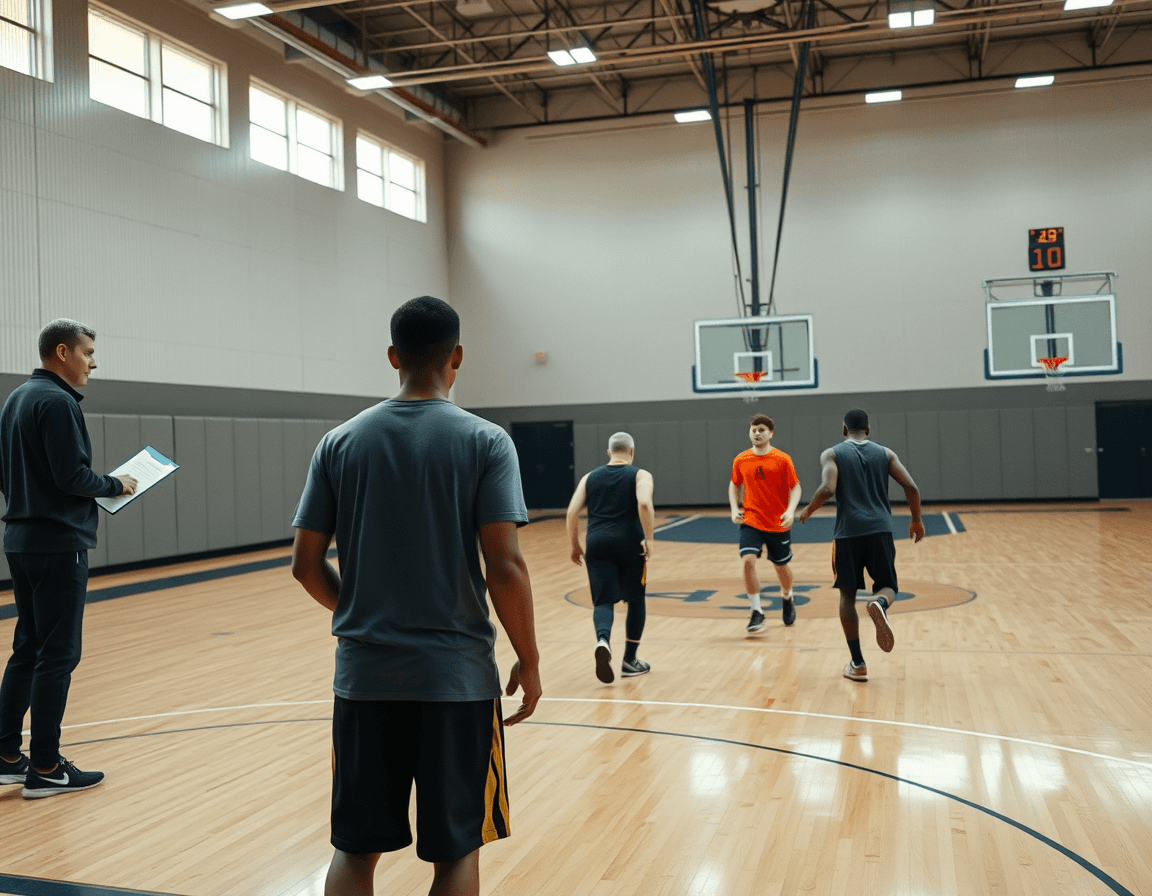
Basketball Drills for 4 Players: Weekly Plan
Discover a practical weekly workflow of basketball drills for 4 players, with setup guides, rotation patterns, and progression ideas for coaches.

Key takeaways
- Use time-structured plans with 4-player drills to maximize reps and keep everyone engaged through weekly blocks.
- Start with Figure-8 Rebounding Drill and progress to 2-on-2 – Front 4-Corners to sharpen decision-making.
- Define lanes and a steady rotation ladder to ensure equal reps and predictable flow.
- Capture clips and notes in coaching workspace; share with staff via read-only links.
- Keep cues simple and emphasize spacing in drills to improve decision-making under pressure.
Why four-player drills fit your weekly plan
Four-player drills fit neatly into a weekly plan because they maximize reps in a controlled space. You can keep every athlete engaged through small-group work tailored to 4-player drills on the floor. Using time-structured training plans lets you develop both offense and defense concurrently, and it stays manageable within typical practice windows. As you progress, you move from basic sequences to more complex ones without overwhelming players, and you create scalable rotation patterns that fit multiple blocks in the week.
Within the 4-player framework, you can run micro-drills that build both ends of the floor. For example, start with the Figure-8 Rebounding Drill to establish box-out timing and second-chance effort, then transition to the 2-on-2 – Front 4-Corners Drill to sharpen decision-making with a four-player rhythm. Layer in the Layup Drill with Pass to emphasize finishing on the move. These short cycles create a natural progression from basic to more complex sequences while keeping players in the action.
On the workflow side, you can line up the week with CourtSensei's time-structured training plans, reuse reliable drill templates, and capture a short video clip from a 4-player drill block. After practice, export a clean playbook to share sequences with staff, and drop scouting notes into your coaching workspace for quick reference during game prep. Sharing sequences with staff can use read-only links for review, ensuring everyone stays aligned without clutter.
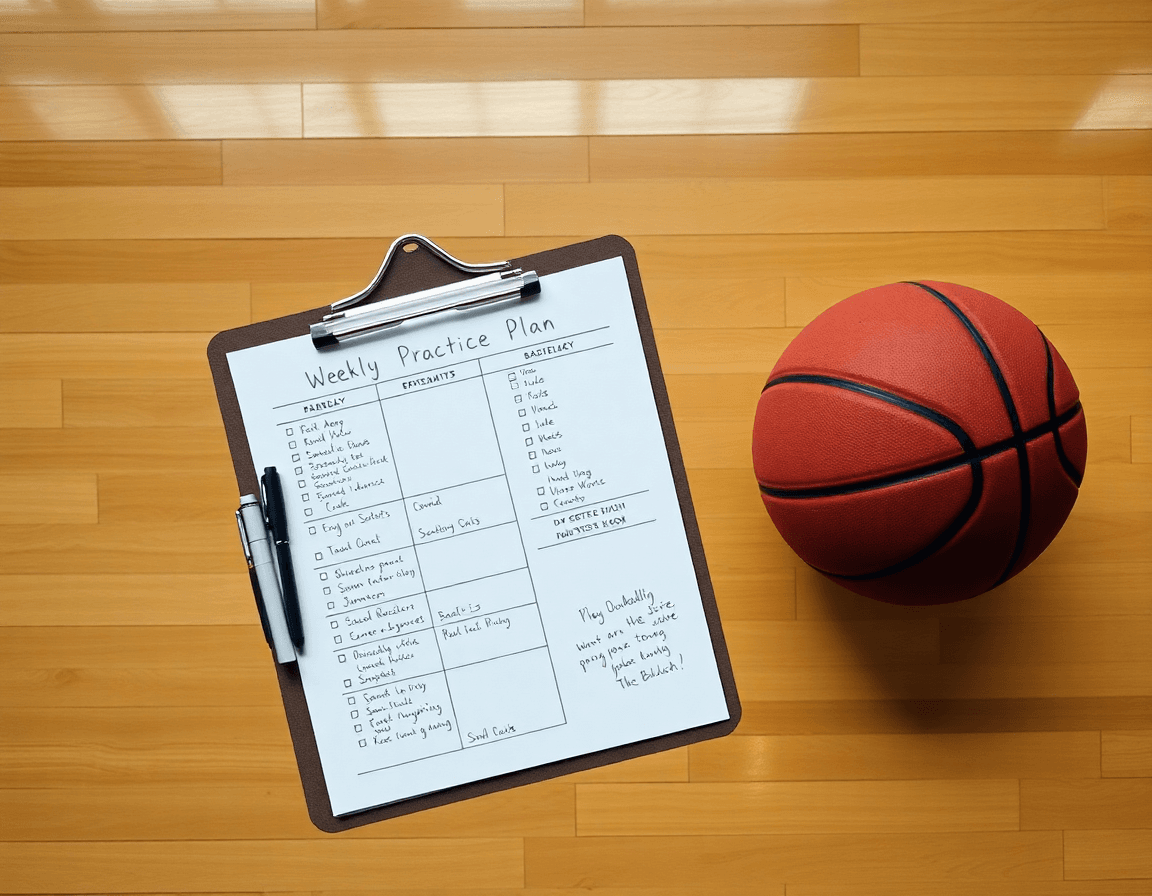
Core drill families for four players
These core drill families form the backbone of a weekly rhythm for basketball drills for 4 players. The four families—transition and spacing, rebounding, passing-and-cutting, and defensive balance—answer the four-player realities on both ends of the floor. In CourtSensei, each family slots into a time-structured training plan block with a drill template, plus scouting notes kept in the coaching workspace for quick reference.
Within transition and spacing, the core sequence centers on 2-on-2 and 4-man fastbreak. Start with 2-on-2—two attackers push tempo while two defenders sprint back. The focus is spacing reads, outlet timing, and finishing at the rim. The plan can progress from 2-on-2 – Front 4-Corners Drill to the full 4-man fastbreak, reinforcing decision-making under pressure. A quick clip of the break goes into the Transition playlist for later review.
Rebounding-focused drills emphasize boxing out and timing. The Figure-8 Rebounding Drill isolates footwork and positioning, while the Rebounding Circuit Drill adds multi-station work to practice crash angles and quick outlets. In a four-player group, one rebounder cycles through each role while teammates space for transition. Attach a clip to the sequence and log timing cues in the scouting workspace.
Passing-and-cutting variants develop timing under pressure. The Layup Drill with Pass uses a catch-and-pass into a cut, while Mystery Partner pairs a passer with a moving cutter who doesn’t know who will receive the ball until contact—simulating contested space. Set a progression from simple reads to more dynamic options, and keep clips in a playlist for later critique. If pace allows, slot in 3-on-1 – 5-Second Drill.
Small-group defensive balance and rotation drills round out the week. The Defensive Balance Drill – Bib Snatcher challenges players to maintain stance and recover angles through quick rotations. Use this block to rehearse help-and-recover concepts and to document notes in the coaching workspace while clips support staff discussion.

Setting up rotations and spacing
Setting up rotations and spacing in a 4-player week starts with defining lanes, spots, and roles to minimize downtime between reps. In a standard setup, two players operate on the wings, one at the top, and one at the rim with the ball handler initiating each action. This creates clear lanes for entry passes, dribble cuts, and outlet options. Use a simple rotation ladder so everyone stays engaged: after a full sequence, the players slide to the next spot in a fixed order, ensuring a steady flow and equal reps for each role. Map this into a time-structured training plan using drill templates, then export a quick playbook of the sequences for staff review or scouting notes. lanes and a steady rotation ladder keep the flow predictable and easy to scout later.
Incorporate clear cues for when to fill, curl, screen, or finish at the rim so decisions happen in real time rather than waiting for the whistle. Keep drills verbally simple to keep attention on spacing in drills and timing, not on miscommunications. In practice, you might run a sequence that blends the Figure-8 Rebounding Drill with Layup Drill with Pass, followed by 2-on-2 – Front 4-Corners Drill, to emphasize the 4-player rotation and spacing in drills. Include a quick Defensive Balance Drill – Bib Snatcher to ensure balance as players move. For scouting notes, record which rotation patterns created open looks and where adjustments were needed, then share a concise summary in the coaching workspace alongside the video clips to support staff discussions about future games. The goal is to sharpen decision-making within a cohesive rotation.

Practical 60-Minute Workflow for 4-Player Drills
Start with a focused warm-up and activation (5-7 minutes) that primes hips, knees, and ankles and gets the ball in motion. Use dynamic movement, light sprints, and quick ball handling to set tempo. Record this first block in your time-structured plan for easy reference later.
Block A focuses on 2-on-2 or 4-man fastbreak sequences with basic rotations. Two players sprint the transition, while others fill outlets and lanes to create early decision-making on outlet and finish. Keep rotations simple and reuse this drill template across weeks.
Block B (12-15 minutes) targets rebounding and finishing under pressure. Use the Figure-8 Rebounding Drill or the Rebounding Circuit Drill to sharpen timing and second chances. Set two stations: box-out work on one, and finish at the rim on the other, rotating every 2-3 minutes.
Block C (10 minutes) moves to transition-focused sequences and resets. Simulate pressure after a make or miss with quick transition sequences, and test spacing in resets. Try the Front 4-Corners drill and sprinkle in a 3-on-1 – 5-Second Drill to push pace and decision speed.
Block D (5-8 minutes) closes with a quick scrimmage or skill-polish drill. Options include 1-on-0 – 5 Shots in 24 Seconds for pace or a short Mystery Partner Drill for live reads. End with a brief, focused debrief.
Finish with a concise debrief and notes for the next practice. In the coaching workspace, attach scouting notes and share sequences with staff via a read-only link. The plan stays clear and transportable, without implying automated analytics.
Recording, reviewing, and sharing drill sequences
After a practice focused on basketball drills for 4 players, upload the footage to CourtSensei’s coaching workspace. You can clip key transitions and decisions, then build focused playlists around each sequence. For example, capture a Figure-8 Rebounding Drill, followed by a 2-on-2 – Front 4-Corners Drill, and finish with a Layup Drill with Pass. This approach creates a practical video workflow that you can reuse week to week, keeping the drills organized and easy to review on a tablet or notebook during future sessions.
Share read-only links or export PDFs of play sequences for staff and assistants. This keeps the play sequences accessible without giving edit rights, which is useful when coordinating scouting notes and game prep across sessions. Use PDF export and shareable links to distribute the exact clips, notes, and diagrams that sit with each drill sequence, so the staff can follow the plan without guessing.
Organize drill sequences into a playbook-like structure in the coaching workspace so you can pull the exact sequence for a future session. Group items by drill family (Figure-8 Rebounding Drill, 2-on-2 – Front 4-Corners Drill, Layup Drill with Pass) and attach clips, notes, and scouting observations. This makes it easy to rehearse a weekly plan and keep a consistent workflow for your 4-player sessions, with each sequence ready to run from memory if needed.
Scouting notes and game-prep for 4-player drills
After every 4-player drill block, the coach should capture concise observations from reps to tailor future sessions. For examples like the Figure-8 Rebounding Drill or the 2-on-2 – Front 4-Corners Drill, note who tracks the ball, who communicates, and where decisions break down under pressure. These scouting notes help align the weekly plan with what’s happening on the floor and provide a clear bridge to upcoming game prep.
Link drill outcomes to broader game prep goals and opponent tendencies. If the Layup Drill with Pass reveals weak rim protection, plan additional emphasis on finishing through contact and active pressure in the next session. If the 2-on-2 – Mystery Partner Drill exposes spacing issues, tag that observation to anticipated opponent sets and adjust the scouting notes accordingly. The aim is to make practice decisions that translate directly to on-cloor habits when it matters most.
Store notes in a centralized coaching workspace for quick reference. Tag entries by drill name (Figure-8 Rebounding Drill, Rebounding Circuit Drill, 3-on-1 – 5-Second Drill) and attach a short video clip that illustrates the rep that sparked the observation. This keeps a clean thread from drill reps to game prep and makes it easy to revisit key moments during planning and scouting.
Share sequences with staff without clutter. Use read-only links to circulate relevant scouting notes and video clips, so assistants can prep their parts of the plan ahead of team meetings. The goal is a cohesive week where observations drive adjustments, and the coaching workspace remains the single source of truth for 4-player drill data.
FAQ
What are good basketball drills for 4 players?
Four-player drills pair well with a weekly rhythm because you keep all athletes engaged in small groups. Core families include transition/spacing (2-on-2 tempo, 4-man fastbreak), rebounding (Figure-8 Rebounding), passing-and-cutting (Layup Drill with Pass, Mystery Partner), and defensive balance (Bib Snatcher). Use CourtSensei's time-structured training plans and drill templates to sequence these blocks, then export a clean playbook and attach scouting notes in the coaching workspace.
How do you run a 2-on-2 drill with four players?
To run a 2-on-2 drill with four players, pair two attackers against two defenders with clear spacing and outlet timing. Rotate roles so every player experiences offense and defense. Start simple, then add decisions—pass, cut, and finish—without slowing the flow. Capture a short clip for your Transition playlist and save the sequence in a shareable playbook to review with staff.
What is a 4-man fastbreak drill?
A 4-man fastbreak drill trains tempo and decision-making when four players push the ball from defense to finish. The setup usually has two sprinting downcourt and two filling outlets, with spacing reads and outlet timing dictating the next pass. Progress to Front 4-Corners and log the break in the Transition playlist. Export the sequence as a brief clip and reference it in your coaching workspace.
How can you improve rebounding with four players?
To improve rebounding with four players, run targeted drills like Figure-8 Rebounding and a Rebounding Circuit that cycles roles—box out, crash, outlet. Emphasize timing and positioning so one rebounder loops through duties while teammates space for outlet passes. Attach a clip to the sequence and log timing cues in the scouting notes, then review the footage in the coaching workspace with the staff.
How do you rotate players in 4-player drills?
Setting up rotations with four players starts with defined lanes and roles to minimize downtime. Use a rotation ladder: wings, top, rim, then repeat in a fixed order so everyone gets equal reps. Map this into your time-structured plan and export a quick playbook of sequences for staff review or scouting notes.
What are the benefits of practicing with four players at a time?
Practicing with four players yields more reps, better engagement, and faster read-and-react in tight spaces. It supports a clear weekly plan by keeping blocks compact and scalable. Record short clips, log quick scouting notes, and share a read-only link so staff reviews stay aligned. This approach aligns with CourtSensei's templates and coaching workspace, which streamline planning and review without extra fluff.