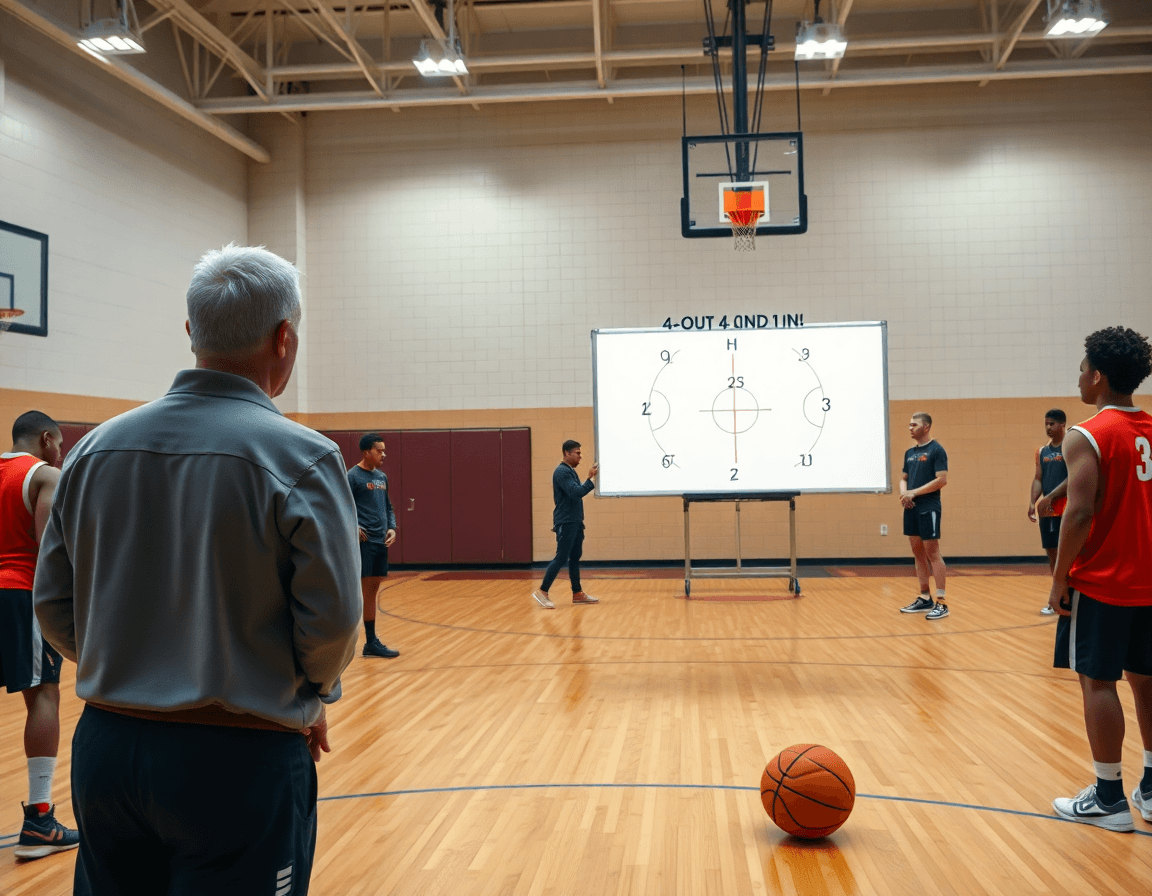
How to Run a 4-Out 1-In Pick-and-Roll Offense
Coach's guide to running a 4-out 1-in pick-and-roll offense with spacing and post touches; practical weekly planning and video workflows for coaches.

Key takeaways
- Clarify spacing and roles in the 4-out 1-in offense to guide weekly drills.
- Choose a formation (high, spread, or low) based on opponents and personnel.
- Outline 3–4 core actions and build timing drills around ball screens and reads to promote consistency.
- Create a weekly plan linking drills, live reps, and review with PDFs and playlists.
- Integrate diagrams and videos into a single workspace for accessible game prep.
Understanding 4-out 1-in for weekly planning
Your weekly plan starts with a clear picture of the 4-out 1-in offense and the spacing you want on every action. Define how the four perimeter players and the post occupy space from the catch to the screen, so each drill has a purpose. In this framework, roles 1–5 guide practice priorities and support game prep notes in your workspace.
Choose a formation—high, spread, or low—based on opponents, personnel, and practice goals. A high look can emphasize post touches and ball reversals; spread keeps lanes open for ball screens; a low formation can threaten with downhill post action. This decision drives the weekly actions and the drills you build.
Outline 3–4 core actions to run this week: ball screens, cuts, post touches, and reads. For each action, set up a drill block that builds timing and decision-making. Use CourtSensei to diagram ball screens and spacing, add drawings or animations to show angles, and attach a short video clip for a quick cue that fits your plan.
Create a simple weekly plan that sequences drills, live reps, and review time. Map sessions to blocks: install 1–2 actions, run live reps, then review film. Export a practice plan as a PDF, curate clips into a playlist, and share a read-only link for assistants. Link actions, drills, and scouting notes in a single coaching workspace to keep game prep aligned.
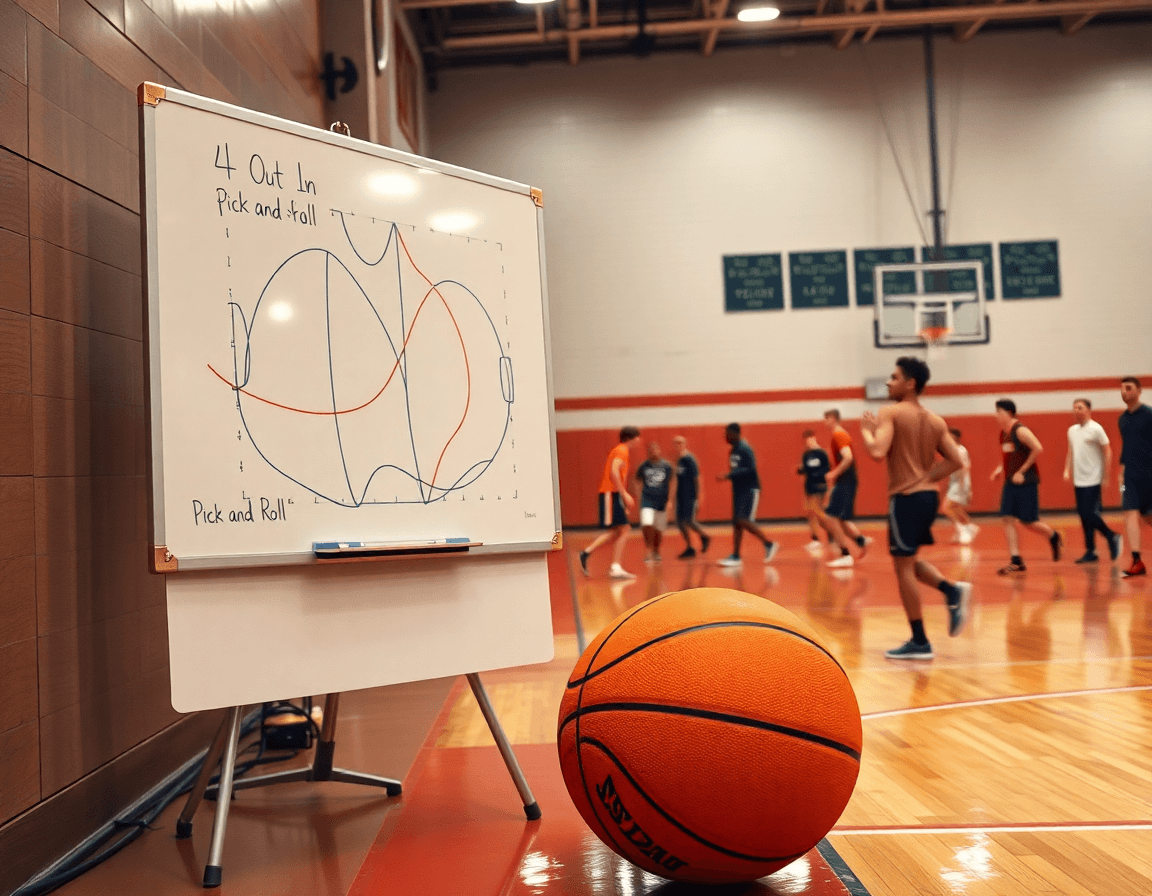
Core actions: ball screens, cuts, and post touches
Core actions in a 4-out 1-in offense hinge on three levers: ball screens, cuts, and post touches. In your weekly plan, you build time-structured drills that rehearse reads from the top, wings, and the low block. With CourtSensei, you diagram each sequence and then animate the action so you can see a guard using a ball screen, the options off the screen, and how spacing affects decision-making. The aim is to generate immediate scoring options or drives off the ball screen, while the post touch threatens the defense and opens kick-outs or rolls. If the first read isn’t available, you predefine secondary reads and rotations.
Diagrams and animations help you show how to weave the ball screen into the 4-out spacing, with shallow cuts from the perimeter to pull help and keep the lane open for the post touch. You can outline high-post and low-post options, from a quick decision at the top to a post entry that collapses the defense. CourtSensei lets you build a full playbook for the week, export PDFs for practice plans, and link the actions to the video clips that illustrate the reads. That mix makes it easy to teach the sequence—ball screen, cut, post touch, and a rotation if the read isn’t there.
Workflow in practice: build a game-week package around ball screens and post touches, with a short video clip for each read, a playlist of examples, and a scouting note on how the opponent hedges the screen. Share the diagrams and PDFs via read-only links, and connect actions, drills, and scouting notes in your coaching workspace for weekly planning and game prep. This approach supports a steady cadence of practice and clear in-game reads without overloading the session.

Formations: high, low, and spread
High post looks in a 4-out 1-in offense create inside-out options with compact spacing and the post opposite the ball. A coach can use this setup to force the defense to choose between guarding interior seams or chasing shooters around the arc. CourtSensei supports this approach by letting you build time-structured drills and a playbook for high-post actions, diagram ball screens, spacing, and post touches with drawings and animations. Export PDFs of the practice plan, curate video clips into playlists, and share read-only links. All of it ties into a single coaching workspace, keeping weekly planning and game prep aligned with the high-post action.
Low post looks leverage post pressure and back-to-the-basket reads, with guard-to-guard spacing relief that opens kick-outs or skip passes. A coach can pair this with a steady stream of ball screens and cuts to create mismatches, then use diagrams to teach decision points. CourtSensei lets you diagram low-post ball screens, build time-structured drills, and assemble a playbook for back-to-the-basket options. Export PDFs for the practice plan, curate video clips into playlists, and share read-only links with staff. All of it connects in a single coaching workspace that keeps scouting notes and game prep aligned with the low-post sequence.
Spread looks push players wide, opening driving lanes and more 3-point looks. In a 4-out 1-in offense, spacing becomes the backbone of the attack, allowing ball handlers to read help and find shooters or a downhill drive. A coach can diagram ball screens, drive-and-kick sequences, and post-entry reads, then export PDFs of the practice plan, build video playlists, and share read-only links for staff. CourtSensei ties actions, drills, and scouting notes into a single coaching workspace, so weekly planning and game prep stay aligned with the spread. Match the formation to the opponent’s coverage and your personnel strengths.

Weekly workflow: planning, practice, and film
Kick off the week in a single workspace that houses time-structured drills and playbooks for a 4-out 1-in offense. Build a training plan that pairs plays with drills and game prep notes, so what you teach on Tuesday lines up with what you review on Friday. This keeps planning tight for HS or club seasons where every session builds toward spacing, ball movement, and decisive ball screens.
Diagram each action with simple drawings or animations for quick on-court reference. Whether it's a ball screen angle, a flare cut, or an entry into the 4-out spacing, a visual cue lets you coach players through reads without flipping through notebooks. You can annotate post touches in the high post or low post areas, show a down screen sequence, and iterate options for the 4-out 1-in offense.
Export PDFs of the playbook sections for pre-practice handouts and coach notes. A clean PDF export of playbook sections—ball screens, spacing, and post touch options—lets you distribute clear guidance to players and staff ahead of drills. Tie together the 4-out motion offense with its options so players know what to expect when they step on the floor.
Clip and organize practice footage into playlists for review with players and staff. Short video clips aligned to the weekly plan reinforce what to do on the court and where the 4-out 1-in spacing breaks down during a ball screen. You can share read-only links to keep critiques focused and constructive. All of this sits in the coaching workspace, synchronized with scouting notes and the playbook—a true example of your video workflows in action.
Building a playbook and clip library
Build a cohesive playbook of 4-out 1-in actions, ball-screen variations, and post options. CourtSensei lets you diagram ball screens, spacing, and post touches with drawings and simple animations so staffers can visualize the sequence without guessing. Map out the core actions for the weekly plan—from spacing against different defenses to post touches off a ball screen—and create a reliable reference point for practice and game prep.
Assemble clips into a robust clip library and then into playlists tied to each formation or action sequence. A short clip can illustrate a down screen into a spread, a high-post entry pass, or a curl off a ball screen. Keep the clips organized by formation—4-out 1-in offense, 4-out motion, or the pick-and-roll variant—so coaches can study a scenario quickly. You can also export PDFs of the accompanying practice plans for offline sharing.
Share read-only links with staff or assistants for onboarding and quick review. This keeps everyone aligned during weekly planning and game prep, while protecting your videos. Link a drill, a clip, and a scouting note to a single formation so new assistants can ramp up fast without micromanagement. All of it lives in the coaching workspace, ready for the next session.
Finally, connect drills, clips, and scouting reads to create a single source of truth for practice. With this workflow, the weekly plan and game prep sit in one place—your coaching workspace—so staff can pull a drill, watch a clip, and review a scouting note before the next session. In a 4-out 1-in framework, this keeps spacing, ball screens, and post options connected across the week.
Scouting and game prep for 4-out 1-in
To execute a 4-out 1-in pick-and-roll offense effectively, start with a clear scouting report of the upcoming opponent. Collect opponent tendencies that affect spacing, ball-screen pressure, and post help. In CourtSensei, that information lives in a single coaching workspace, ready to translate into the weekly plan for practice and game prep.
Turn those notes into actionable reads for your 4-out 1-in system or your 4-out motion offense if you run that version. Map each tendency to a concrete adjustment in ball-screen action, spacing, and post touches—like when to slip the ball screen, when to flare, or how to attack with a high-post entry. This is your game prep: align the reads with your core actions and keep the base plays intact.
Use CourtSensei to translate adjustments into practice. Build time-structured drills and a playbook that diagram ball screens, spacing, and post touches with drawings/animations. Export PDF exports of your practice plan so staff can follow along, and keep everything in one place for weekly planning.
Curate video clips into playlists to reinforce reads, and share read-only links so assistants can review the scouting material without altering files. This keeps game prep efficient: reference clips for a ball-screen read or a spacing tweak within your 4-out offense.
Finally, connect actions, drills, and scouting notes inside the coaching workspace so weekly planning and game prep stay aligned. When an opponent shifts to a new defense, you can quickly update the reads and push targeted reps without overhauling core actions in the 4-out 1-in offense.
FAQ
What is a 4-out 1-in offense?
A 4-out 1-in offense places four players on the perimeter and one post player, creating true spacing from catch to action. The objective is to generate driving lanes, post-entry options, and kick opportunities while keeping the defense honest with ball movement. Roles 1–5 guide practice priorities and game-prep notes in your workspace.
How do you run a 4-out 1-in offense?
Build your week around a clear plan: select a formation (formation) based on personnel and opponent. Outline 3–4 core actions—ball screens and cuts and post touches—and map drills to build timing and reads. Diagram with CourtSensei drawings, attach short video clips, export a PDF practice plan, and share a read-only playlist with staff. Keep actions linked to scouting notes in the workspace.
What are the benefits of a 4-out 1-in motion offense?
Benefits include consistent spacing that opens driving lanes and kick-out chances, plus flexible options off ball screens and post entries. The structure supports multiple looks without heavy sets, making it adaptable for youth and high school. With time-structured drills, it teaches decision-making, reads from top and wings, and keeps players engaged with clear roles.
How does the pick-and-roll fit into a 4-out 1-in offense?
In a 4-out 1-in framework, the pick-and-roll serves as the primary action through a ball screen from the post or a guard. The screen at the top or on the wing creates immediate options: drive, shoot, or kick to shooters. Teach reads off the screen, spacing consequences, and post options when help arrives. Diagram the screen and connect clips in your workspace.
What are common 4-out 1-in formations (high, low, spread)?
Common looks include: high-post, where the post sits above the elbow to threaten inside-outs; low-post, using back-to-basket reads and post-entry feeds; and spread, widening spacing to maximize driving lanes. Each formation changes where ball screens and cuts occur and alters reads. Use diagrams to illustrate angles and post-entry options for the week.
What are typical reads in a 4-out 1-in offense?
Key reads flow from the ball screen: if the guard turns the corner, decide on drive, pull-up, or kick-out. Wings read off reversals and backcuts, while the post looks for entry passes or occupancies that collapse the defense. Define secondary reads if the first option isn’t available, and map rotations to keep spacing intact.
How can a 4-out 1-in offense be used at youth or high school levels?
For youth teams, simplify the install: pace the week, focus on 1–2 core actions, and keep reads simple. At high school, you can layer more actions and post options, but preserve spacing and ball-screen timing. Use CourtSensei to build a small playbook, export PDFs, and link clips for quick cues during practice.