
Basketball Dry Erase Board Walmart: Weekly Plan
Using basketball dry erase board Walmart for weekly planning and on-court diagrams, plus how CourtSensei unifies drills, videos, and scouting.

Key takeaways
- Make the Walmart dry erase board your weekly rhythm anchor for quick, visible planning and alignment.
- Use clear on-court visuals like a full court diagram and half court diagram to reduce second-guessing.
- Choose a double-sided option with magnets to swap shells and keep lineups visible during practice.
- Turn the board into a planning hub during timeouts, guiding real-time adjustments.
- Bridge to digital with CourtSensei by capturing diagrams for the coaching workspace and playbooks.
Why a Walmart Dry Erase Board Fits a Coach’s Weekly Rhythm
For many programs, a basketball dry erase board Walmart sits at the center of the weekly rhythm. It’s the quick, low-friction tool you reach for after practice, during timeouts, and in early-week meetings to sketch ideas and lines. The board is the visible anchor that keeps input organized as the week unfolds, before a deeper dive into digital playbooks. It’s a practical starting point that makes the transition to a more integrated workflow smoother.
On-court visibility with a full court diagram and a half court diagram helps players grasp concepts quickly. A quick swipe of a marker brings spacing, timing, and routes into focus, so communication stays clear during drills and scrimmages. That clarity reduces second-guessing and keeps the core actions crisp as you move from practice to game prep.
Portability and options—single/double-sided, magnets, markers—support dynamic practice setups from gym to gym. With a double-sided layout, you can show a defensive shell on one side and a tempo change on the other, while magnets keep clips and lineup cards in place during a busy session.
A physical board serves as a quick planning hub during timeouts and early-week sessions, letting the staff annotate adjustments in real time and keep ideas visible for the whole group.
It can be a bridge to a digital workflow by capturing diagrams that later get recreated in the coaching workspace. From there, CourtSensei extends that workflow with digital playbooks, video integration, drill libraries, and centralized scouting within a single coaching workspace.
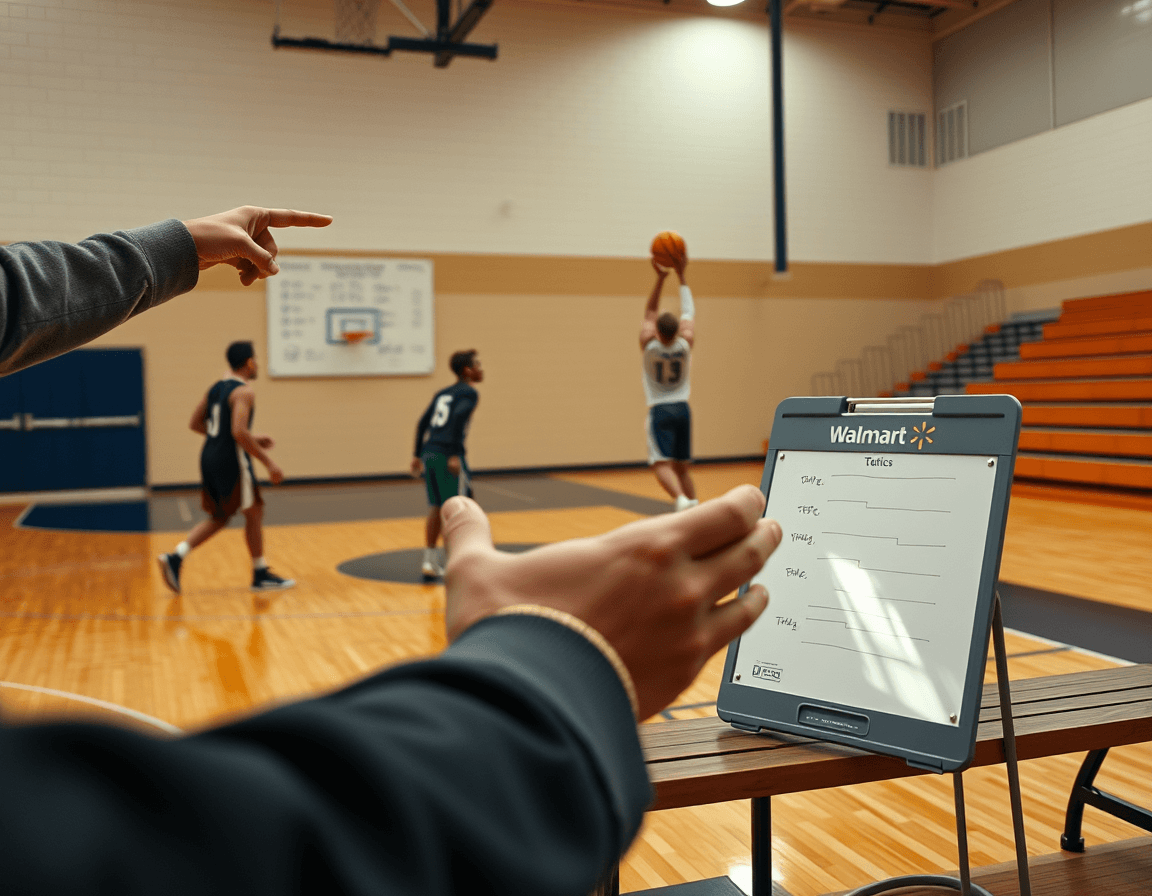
Choosing the Right Size and Features for Your Team
Choosing the right board starts with your space and your roster. First, assess your practice space and roster size to pick a board that’s visible to the whole group. In a tight gym, a compact surface with clear margins helps drills move smoothly; in a larger facility, a bigger board on a sturdy stand keeps diagrams legible from the sideline. The goal is quick comprehension during station work and fast transitions between drills, so both size and placement matter. A basketball dry erase board from Walmart can be a practical starting point, but the key is selecting one that won’t force you to crane your neck or crowd the bench when the play calls pile up.
Once size is set, look for features that keep the plan moving. A double-sided option lets you flip from quick on-court diagrams to full-game diagrams without stepping off the floor. On one side, use a full court diagram; on the reverse, a half court diagram with a ready-made lineup chart for quick substitutions. Check that markers are included so diagrams and notes stay accessible during drills. This is where the weekly plan begins to blend with CourtSensei: the ideas sketched on the board can feed into digital playbooks, drill libraries, and centralized scouting within a single coaching workspace, keeping your plan cohesive from chalkboard to screen.

From Board to Playbook: Translating On-Court Diagrams to Digital Plans
Starting the week with a basketball dry erase board from Walmart, you map out the core sets and what to emphasize in practice. In CourtSensei, you can re-create or stylize those on-board plays using the drawing and animation tools to build a digital version of your plan. Turn a full-court diagram into a sequence you can scrub and replay, with movements highlighted to reinforce the action. That becomes a clean, searchable playbooks foundation.
Next, organize drills into a library of drills and connect them to the corresponding plays for quick reference during sessions. When you pull up a play, you can instantly access the linked drills, see progression options, and tailor the sequence for your roster. The workflow keeps your scouting notes, video clips, and practice reps in one place, so you’re not juggling multiple tools on game night.
Finally, export diagrams and PDFs for sharing with assistants, players, and scouts. A crisp PDF export keeps diagrams legible on a basketball coaching clipboard and in a briefing packet, while the digital playbook stays editable for next week’s tweaks. The goal is to preserve the coach’s plan in a portable format without losing the depth of the on-court diagram and the linked drill library.

Practical Workflow Step: Five-Stage Weekly Routine
As a head coach, the week starts around the bench and a basketball dry erase board walmart. It’s the visual anchor for planning, turning ideas into actionable tasks. Use the board to sketch weekly goals, map key matchups, and lay out a rough practice timeline. When you walk into the gym, a clear plan on the board helps you stay focused from warmups to film review, while staff see the same page at a glance.
Stage 1 – Prep: sketch weekly goals and key matchups on the dry erase board. This is where you build your checklist for X in weekly training and note opponent tendencies you’ll stress early in the week. With the board in view, you adjust matchups and time blocks before on-court work begins.
Stage 2 – Practice mapping: outline daily goals and drill progression on the board. Map how you’ll install the action early in the week, ramp to full pace, and circle back for review. Use a few diagrams—a full court diagram and a half court diagram—to visualize spacing and rotations, then translate that into on-floor cues.
Stage 3 – Capture: record and clip pivotal moments from practice or film. Note the exact clips you’ll pull for a quick drill recap, and mark their location on the board so you can reference them in the film room. A simple step toward integrating video without losing the tactile feel of the chalkboard.
Stage 4 – Digitize: transfer plays and drills into digital playbooks and playlists. This is where CourtSensei extends the workflow, aggregating plays, drills, and sequences in one coaching workspace. The board seeds a growing library—think two-sided or double-sided playbooks, organized for fast access during scouting or pregame prep.
Stage 5 – Scout & share: compile scouting notes and share PDFs/read-only links with staff. Centralize notes, opponent tendencies, and game-prep memos in the coaching workspace, then push PDFs or read-only links to assistants so everyone stays aligned for the week ahead.
Video, Clips, and Scouting: Unifying On-Court Plans with Digital Tools
Starting your week with a Walmart basketball dry erase board sets the foundation for planning. You sketch the offense and defense with full court diagrams and a clean lineup chart, so the staff can read the flow at a glance. That board is your anchor, but the real power comes when you bring it into CourtSensei, where digital playbooks and a centralized coaching workspace extend the plan into the week. In this workflow, you line up plays with built-in drills from your library, and you reference a simple sequence on-screen while you coach on the floor.
Upload videos, trim clips, and organize playlists to align with board-planned plays. Attach scouting reports and game-prep notes to relevant plays and drills.
Use read-only links to share curated playbooks and clips with assistants or opponents’ analysts. This keeps your workflow secure and your coaching notes accessible across devices, so you can prep on the go without losing context.
Checklist for Weekly On-Court to Off-Court Integration
If you’re starting the week with a basketball dry erase board Walmart has on the shelf, you’re not alone. It’s the anchor for your weekly plan, letting you sketch primary plays, assignments, and tempo on a two-sided board that shows both full-court flow and half-court setup. This is the checklist for X in weekly training you can adapt to your program.
On-court diagrams are the first half of the puzzle. In the workflow, you digitize key diagrams and attach corresponding drills in the digital workspace, so the concepts survive practice and translate to drill sequences. A dry erase board is still a reference, but the digital repository keeps everything organized for quick access during film review and planning.
Next, link video clips to the relevant plays and export a shareable PDF playbook for the staff. Having clips tied to each play makes walkthroughs smoother and reduces misreads on game night, while the PDF provides a portable reference that travels with the team through meetings and bus rides.
As you assemble scouting notes and prep materials for the upcoming opponent, that intel lives alongside your action plans. Keep tendencies, counters, and situational replies in one place so adjustments stay clear and actionable.
Finally, distribute the final plan to the coaching staff and captains before the next session, closing the loop from court to classroom. A clean handoff—on paper and in the digital workspace—helps everyone stay aligned as you move from on-court to off-court preparation.
FAQ
What is a basketball coaching board used for?
Think of the dry erase board as the weekly planning hub. It's a quick, visible tool to sketch plays, spacing, and rotations during practice, timeouts, and meetings. It anchors your plan, helps the staff stay aligned, and makes it easy to transfer ideas into digital playbooks and scouting in CourtSensei after you walk off the floor.
Do Walmart basketball coaching boards come with markers?
Not always. Some Walmart boards ship with markers, but many listings exclude them. Before you buy, check the product details. If markers aren’t included, pick low-bleed dry-erase markers and a cleaner that won’t smudge. For a coach’s workflow, you’ll still be able to capture diagrams and later transfer them into CourtSensei.
Are these boards magnetic?
Magnet support varies by model. Some Walmart boards include magnets or magnetic strips to hold lineups and inserts; others rely on clips. If magnets matter for quick substitutions, read the product specs and reviews. A magnetic surface pairs well with a fast, on-floor workflow and cleanly ties to the digital playbook in CourtSensei.
Do they show full-court and half-court diagrams?
Yes. Many boards offer both views, often on opposite sides as a double-sided surface. You can showcase a full-court diagram on one side and a half-court diagram with a lineup. Quick access to both keeps spacing and rotations clear for on-floor cues and later digital integration in CourtSensei.
Is the board portable for on-court use?
Portability varies by size and stand. Look for a compact, lightweight design with a sturdy base or portable stand so diagrams stay readable from the sideline. A portable board lets you walk between groups and still reference the board. In CourtSensei, those on-floor sketches can be captured and organized into your digital coaching workspace.
What sizes do these coaching boards come in?
Boards range from compact 12-15 inch surfaces to large boards; the right size depends on your space and how many players you need to see. Consider visibility from the sideline and the ability to annotate quickly. And remember, CourtSensei can integrate your on-board diagrams into digital playbooks for the week.